Republic of PolandPolish historyWarsawPolish-Lithuanian CommonwealthPolish economy

Poland: A Comprehensive Journey Through History, Culture, and Geography

Republic of Poland The Republic of Poland (Rzeczpospolita Polska) is a unitary parliamentary republic located in Central Europe. Known for its resilient spirit and rich cultural heritage,...

Republic of Poland

The Republic of Poland (Rzeczpospolita Polska) is a unitary parliamentary republic located in Central Europe. Known for its resilient spirit and rich cultural heritage, Poland serves as a bridge between Western and Eastern Europe, blending a complex historical narrative with a modern, thriving economy.

From the ancient forests of the east to the Baltic coast in the north, Poland is a land of diverse landscapes and deep-rooted traditions. Today, it stands as a key member of the European Union, balancing its historical identity with a forward-looking approach to governance and technology.
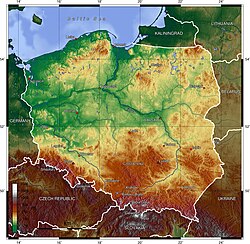
Topographic map of Poland

Key Facts

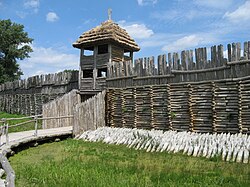
A reconstruction of a Bronze Age Lusatian culture settlement in Biskupin, 8th century BC
  • Capital: Warsaw, the largest city and economic hub.
  • Official Language: Polish.
  • Government: Unitary parliamentary republic with a President and Prime Minister.
  • Currency: Złoty (PLN).
  • Population: Approximately 37.3 million (2026 estimate).
  • GDP (PPP): $2.164 trillion (2026 estimate).
  • National Symbol: The Polish White Eagle.

A Legacy of Resilience: Polish History
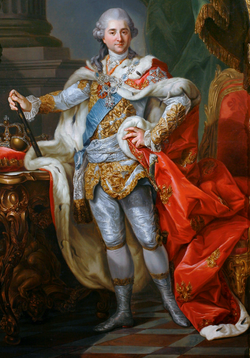
Stanisław II Augustus, the last King of Poland, reigned from 1764 until his abdication on 25 November 1795.

Early Statehood and the Golden Age

Poland's formal statehood began with the Baptism of Poland on April 14, 966, under Duke Mieszko I, who accepted Christianity via the Roman Church. By 1025, Bolesław I the Brave was crowned king, establishing the Kingdom of Poland.
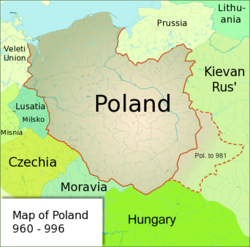
Poland under the rule of Duke Mieszko I, whose acceptance of Christianity under the auspices of the Roman Church and the Baptism of Poland marked the beginning of statehood in 966. His son, Bolesław I the Brave, was crowned king in 1025

The nation saw significant growth under Casimir III the Great (1333–1370), the only Polish king to receive the title of "Great," who reformed the legal code and expanded the country's infrastructure.
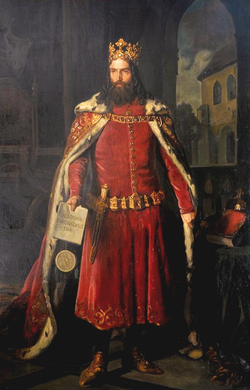
Casimir III the Great is the only Polish king to receive the title of Great. He built extensively during his reign, and reformed the Polish army along with the country's legal code, 1333–1370.

A pivotal moment in military history occurred on July 15, 1410, at the Battle of Grunwald, where the Kingdom of Poland achieved a decisive victory over the Teutonic Knights.
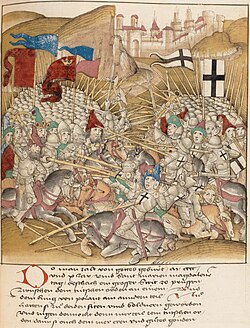
The Battle of Grunwald was fought against the German Order of Teutonic Knights, and resulted in a decisive victory for the Kingdom of Poland, 15 July 1410.

The Commonwealth and the Partitions

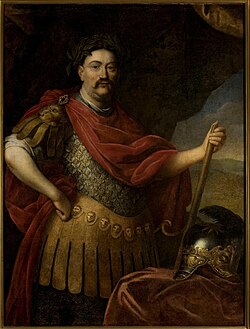
In 1569, the Polish–Lithuanian Commonwealth was formed, eventually becoming the largest country in Europe by 1619. This era was marked by significant political influence and military triumphs, such as King John III Sobieski's defeat of the Ottoman Turks at the Battle of Vienna in 1683.
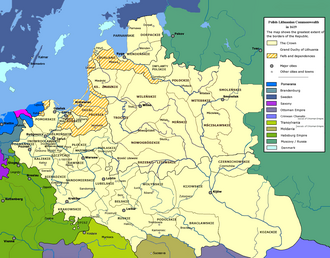
The Polish–Lithuanian Commonwealth at its greatest extent in 1619. At that time it was the largest country in Europe
King John III Sobieski defeated the Ottoman Turks at the Battle of Vienna on 12 September 1683.

However, internal instability and external pressure led to the partitions of Poland. Between 1772 and 1795, the Kingdom of Prussia, the Russian Empire, and the Austrian Habsburg Monarchy divided the territory, erasing Poland from the map until the end of the 18th century.
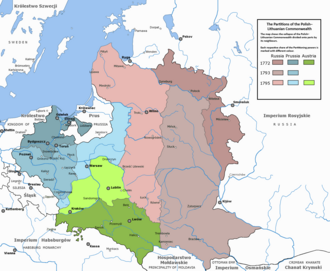
The partitions of Poland, carried out by the Kingdom of Prussia (blue), the Russian Empire (brown), and the Austrian Habsburg Monarchy (green) in 1772, 1793 and 1795

The Modern Era: Independence and Conflict

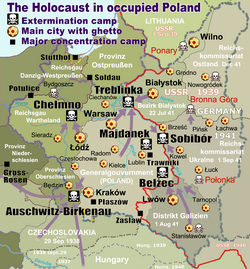
Poland regained its independence in 1918, led by statesman Marshal Józef Piłsudski. This Second Republic was short-lived, as the nation was invaded in 1939, triggering World War II. During the Nazi occupation, Poland suffered immense tragedy, including the Holocaust, with numerous ghettos and extermination camps established on its soil.
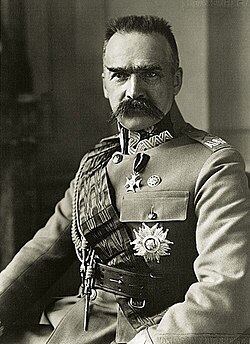
Chief of State Marshal Józef Piłsudski was a hero of the Polish independence campaign and the nation's premiere statesman from 1918 until his death on 12 May 1935.
Map of the Holocaust in German-occupied Poland with marked deportation routes, major ghettos and Nazi extermination camps. The border in 1941 between Nazi Germany and the Soviet Union is marked in red.

Following the war, Poland existed as a communist People's Republic until the late 20th century. The rise of the Solidarity movement played a crucial role in the transition to democracy, leading to the establishment of the Third Republic on December 31, 1989.
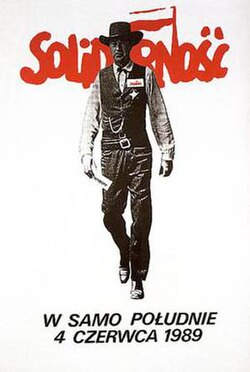
At High Noon, 4 June 1989—political poster featuring Gary Cooper to encourage votes for the Solidarity party in the 1989 elections

Geography and Environment

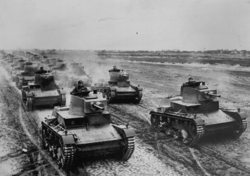
Polish Army 7TP tanks on military manoeuvres shortly before the invasion of Poland in 1939

Poland's geography is characterized by a varied terrain, ranging from the Baltic coast in the north to the Tatra Mountains in the south, part of the Carpathian massif.
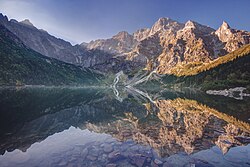
Morskie Oko alpine lake in the Tatra Mountains, part of the Carpathian massif

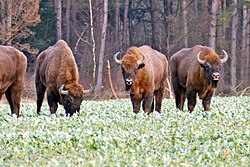
The climate is generally classified under the Köppen-Geiger system as temperate. The country is also home to unique biodiversity, most notably the European bison (żubr) found in the UNESCO-protected Białowieża Forest.
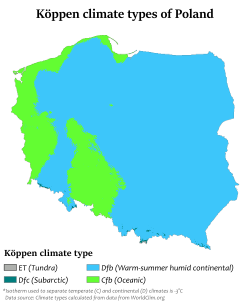
Köppen-Geiger climate classification map of Poland
The European bison (żubr), one of Poland's national animals, is commonly found at the ancient and UNESCO-protected Białowieża Forest.

Government, Economy, and Infrastructure
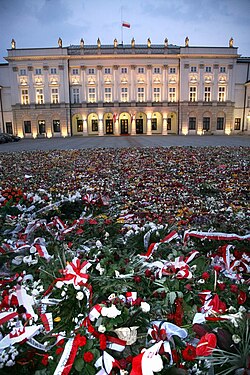
Flowers in front of the Presidential Palace following the death of Poland's top government officials in a plane crash on 10 April 2010

Political Structure

Poland operates as a parliamentary republic. The legislature consists of two houses: the Sejm (lower house) and the Senate (upper house). The government is led by the Prime Minister, while the President serves as the head of state.
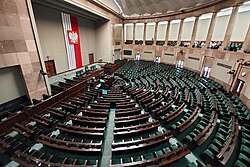
The Sejm is the lower house of the parliament of Poland.

Economic Profile

Poland possesses a robust economy with a nominal GDP estimated at $1.134 trillion for 2026. The country has maintained a low inequality rate (Gini index of 24.9) and a very high Human Development Index (HDI) of 0.906.

Economic and Demographic Overview (2025-2026 Estimates)
Indicator Value
Nominal GDP $1.134 Trillion
GDP (PPP) $2.164 Trillion
Unemployment Rate 3.3%
CPI Inflation (May 2024) 2.5%
Population Density 126/km²

Infrastructure and Urban Centers

Warsaw serves as the primary economic and political hub, while Kraków remains a cultural center, home to the historic Wawel Castle and the Jagiellonian University, one of the world's oldest higher learning institutions.
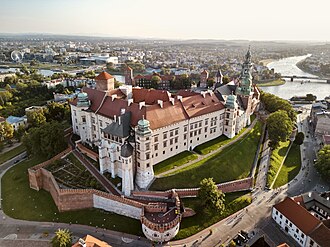
Wawel Castle in Kraków, seat of Polish kings from 1038 until the capital was moved to Warsaw in 1596
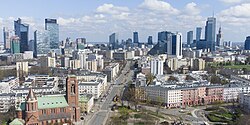
Warsaw is the largest city in Poland, and an economic hub of the country.
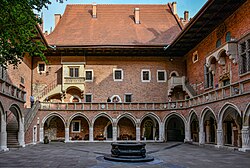
Jagiellonian University in Kraków, one of the world's oldest institutions of higher learning

The country is divided into 16 voivodeships (administrative regions). The Silesian region, particularly the Katowice metropolitan area, is the most densely populated part of the country.
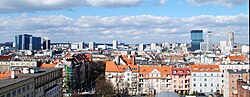
The metropolitan area of Katowice is the largest urban conurbation, with Upper Silesia being the most densely populated region in Poland.

Culture and Society

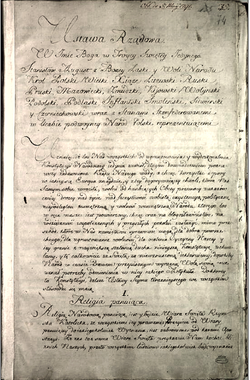
The Constitution of 3 May adopted in 1791 was the first modern constitution in Europe.

Polish culture is deeply influenced by its Catholic heritage, with 71.3% of the population identifying as Catholic. Significant figures like Pope John Paul II have left an indelible mark on the national identity.
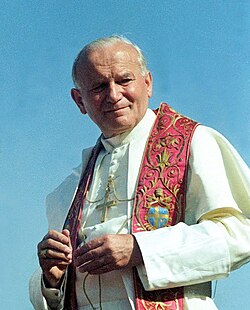
John Paul II, born Karol Wojtyła, held the papacy between 1978 and 2005 and was the first Pole to become Pope.

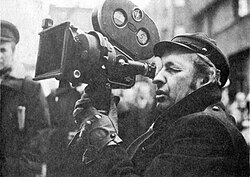
The nation's culinary traditions are well-known, with staples such as kielbasa (sausage) and rye bread. In the arts, Poland has produced world-renowned figures such as film director Andrzej Wajda.
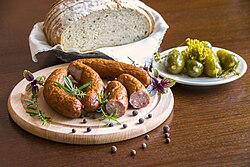
Kielbasa sausage, a staple of Polish cuisine, with pickled cucumbers and rye bread
Andrzej Wajda (1926–2016), renowned Polish film director

Frequently Asked Questions
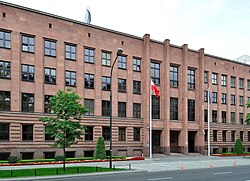
The Ministry of Foreign Affairs, located in Warsaw
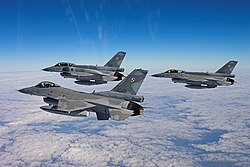
Polish Air Force F-16s, a single-engine multirole fighter aircraft
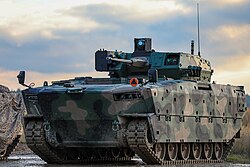
The amphibious infantry fighting vehicle Borsuk
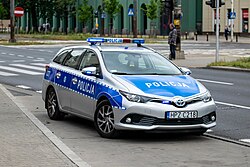
A Toyota Auris patrol car belonging to the Polish State Police Service (Policja)
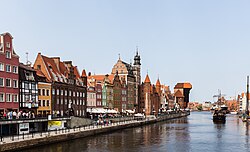
Gdańsk, located on the Baltic in the north of Poland, is a major seaport as well as an economic and tourist zone.
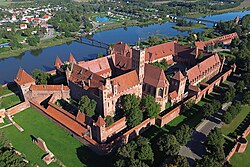
Malbork Castle is the largest castle in the world measured by land area and a UNESCO World Heritage Site.
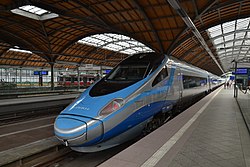
PKP Intercity Pendolino at the Wrocław railway station
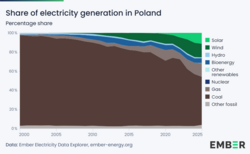
Share of electricity generation in Poland - percentage share
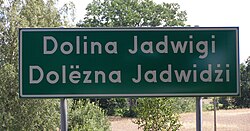
Dolina Jadwigi—a bilingual Polish-Kashubian road sign with the village name
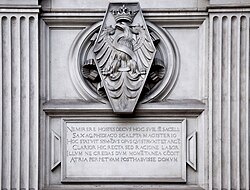
The Polish White Eagle is Poland's enduring national and cultural symbol.
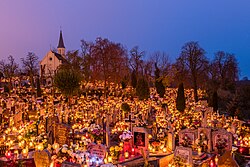
All Saints' Day on 1 November is one of the most important public holidays in Poland.
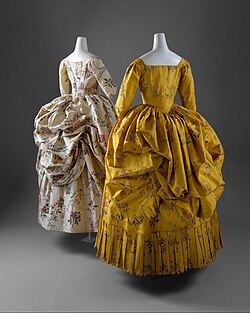
Traditional polonaise dresses, 1780–1785
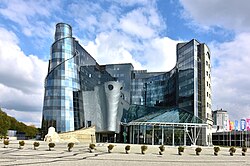
Headquarters of the publicly funded national television network TVP in Warsaw
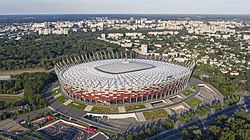
The Kazimierz Górski National Stadium in Warsaw, home of the national football team

When did Poland become a sovereign state?

Poland's statehood began with the Baptism of Poland in 966, and it became a kingdom in 1025. After periods of partition and foreign rule, it regained independence in 1918.

What is the significance of the Sejm?

The Sejm is the lower house of the Polish parliament and plays a central role in the country's legislative process.

Which city is the largest in Poland?

Warsaw is the largest city, serving as both the capital and the primary economic hub of the nation.

What is the Polish-Lithuanian Commonwealth?

Formed in 1569, it was a dual state that, at its peak in 1619, was the largest country in Europe.

What is the official currency of Poland?

The official currency is the Złoty (PLN).