Pliny the Elder's Naturalis Historia: The Ancient World's First Encyclopedia
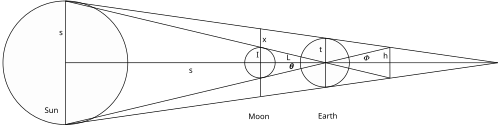
Written between AD 77 and 79 in Ancient Rome, the Naturalis Historia (Natural History) stands as one of the most ambitious intellectual undertakings of antiquity. Authored by Pliny the Elder, this massive work served as a comprehensive encyclopedia of the known world, blending popular science, ethnography, and art history into a single, monumental record of human knowledge.
Pliny's goal was to catalog the entirety of nature and human achievement. In his preface, he claims to have compiled 20,000 facts sourced from approximately 2,000 books and 100 select authors. Modern analysis of his authorities reveals a network of over 400 sources, including 327 Greek and 146 Roman contributors.
Key Facts
- Author: Pliny the Elder, writing in Latin during the 1st century AD.
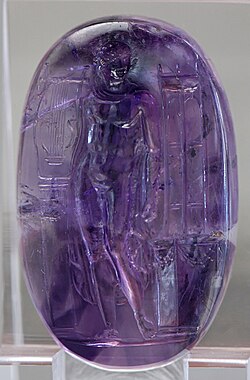
- Scope: Covers astronomy, geography, zoology, botany, pharmacology, mineralogy, and art.
- Scale: Contains 37 books based on thousands of external sources.
- Legacy: Heavily influenced medieval intellectual life and early scientific thought.
- Preservation: Survived through approximately 307 medieval manuscripts.
Structure and Content
The Naturalis Historia is organized logically, moving from the celestial heavens down to the depths of the earth. The work is divided into several thematic volumes:
| Volume | Books | Primary Subjects |
|---|---|---|
| I | 1–2 | Preface, Astronomy, and Meteorology |
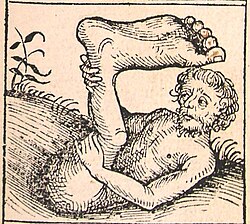
| II | 3–7 | Geography, Ethnography, Anthropology, and Human Physiology |
| III | 8–11 | Zoology (Mammals, Birds, Insects, and Marine Life) |
| IV–VII | 12–27 | Botany, Agriculture, Horticulture, and Medicine |
| VIII | 28–32 | Pharmacology, Magic, and Aquatic Life |
| IX–X | 33–37 | Mineralogy, Metallurgy, and Art History |
The Natural World and Medicine
Pliny's botanical and medical sections are particularly extensive. In Books XX through XXIX, he discusses medicine and plants used for drugs, listing over 900 different remedies. This exceeded the catalogs of other famous ancient authorities like Dioscorides (600 drugs), Galen (650), and Theophrastus (550). He notably documented the effects of opium, noting its ability to induce sleep and its potential to be fatal.
Art and Mineralogy
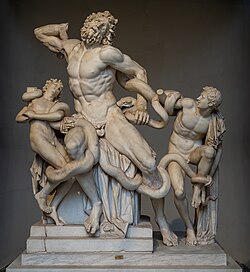
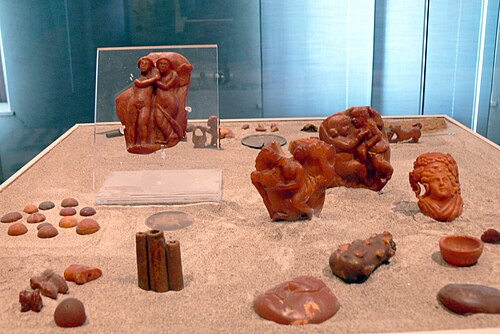
The final books of the encyclopedia transition into the study of minerals and the arts. Pliny provides detailed accounts of sculpture and painting, often citing Greek epigrams and authorities such as Varro. He famously praised the marble statue Laocoön and His Sons, attributing it to the Rhodian sculptors Agesander, Athenodoros, and Polydorus.
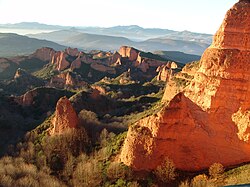
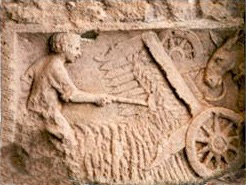
His interest in mineralogy extended to the practical application of mining. He described the Ruina montium technique, a sophisticated Roman mining method used to extract gold, most notably at the site of Las Médulas.
Manuscript Tradition and Publication
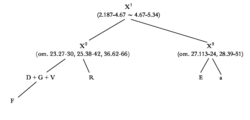
The transmission of the Naturalis Historia through the centuries is a complex journey of copying and preservation. There are roughly 307 extant medieval manuscripts. These are generally categorized into Vetustiores (older manuscripts from the 8th and 9th centuries) and Recentiores (later prototypes).
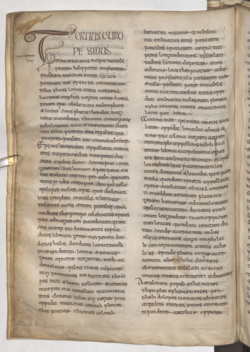
Early copies include Uncial codices (a majuscule script used in early Greek and Latin manuscripts) from the 5th and 6th centuries, some of which became palimpsests—parchments that were scraped clean and reused for other texts.
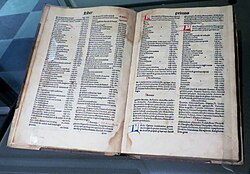
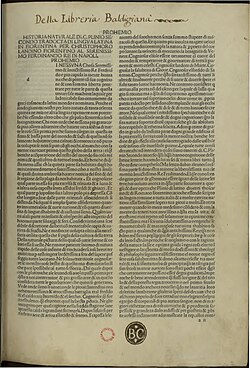
The work eventually entered the era of print with the editio princeps (first printed edition) in 1469 in Venice, printed by Johann of Speyer.
![The Natural History of Pliny in a mid-12th-century manuscript from the Abbey of Saint-Vincent [fr], Le Mans, France](/images/81/ca/81cace1b4ea53c74a35e618bbee7ee1e2196d35f1cd8eaeafab5aa6f1241b59a.jpg)
Historical Reception and Criticism
During the Middle Ages, Pliny's influence was immense. Isidore of Seville's Etymologiae relied heavily on Pliny, which in turn influenced Vincent of Beauvais's Speculum Maius. However, this reliance on book-based knowledge over direct observation has led some historians to argue that Pliny's work may have slowed the progress of Western science by encouraging the repetition of errors.
By the early modern period, critics began to challenge his methodology. In 1509, Niccolò Leoniceno published De Erroribus Plinii (On Pliny's Errors), arguing that Pliny lacked a proper scientific method and sufficient knowledge of philosophy and medicine. Similarly, Sir Thomas Browne expressed skepticism regarding Pliny's dependability in his 1646 work Pseudodoxia Epidemica.
Frequently Asked Questions
How many sources did Pliny the Elder use?
Pliny claimed to have used 2,000 books and 100 select authors. Extant lists of his authorities identify more than 400 sources, consisting of 327 Greek and 146 Roman writers.
What is the significance of the Laocoön and His Sons statue in the text?
Pliny regarded this marble statue as superior to all other pictures and bronzes in the world, attributing its creation to three sculptors from the island of Rhodes: Agesander, Athenodoros, and Polydorus.
How did Pliny's work influence the Middle Ages?
Pliny's work was a primary source for medieval encyclopedists like Isidore of Seville and Vincent of Beauvais, shaping the intellectual landscape of the era through its comprehensive (though sometimes unverified) collection of facts.
What was the 'Ruina montium' mentioned in the text?
Ruina montium was a Roman mining technique used for gold extraction, which caused significant landscape changes, as seen today at the site of Las Médulas.
Which modern editions are available for study?
The work is covered in its entirety by the Teubner, Loeb Classical Library, and Collection Budé editorial series, providing Latin texts alongside English or French translations.