Pliny the Elder: The Roman Polymath and Architect of the First Encyclopedia
Gaius Plinius Secundus, known to history as Pliny the Elder, was a man of boundless curiosity. A Roman author, naturalist, scientist, and military commander, he lived a life that bridged the gap between administrative duty and intellectual pursuit. While he served the Roman Empire in various high-ranking capacities, his most enduring legacy is his monumental work, the Naturalis Historia (Natural History), a 37-volume encyclopedia that set the standard for organized human knowledge for centuries.
Pliny's life was defined by a relentless drive to investigate the natural and geographic phenomena of the world. He spent much of his spare time studying and writing, often conducting field research to ensure his observations were grounded in reality. This dedication to empirical evidence made him a unique figure in the early Roman Empire.
![One of the Xanten Horse-Phalerae located in the British Museum, measuring 10.5 cm (4.1 in).[10] It bears an inscription formed from punched dots: PLINIO PRAEF EQ; i.e., Plinio praefecto equitum, "Pliny prefect of cavalry". It was perhaps issued to every man in Pliny's unit. The figure is the bust of the emperor.](/images/30/03/300361a6d5e8eaaf131d979e61346ca21a48dbc0237c5b69bfc499d9e21b9a33.jpg)
Key Facts
- Full Name: Gaius Plinius Secundus
- Born: AD 23 or 24 in Novum Comum (modern Como)
- Died: 25 August AD 79 at Stabiae during the eruption of Mount Vesuvius
- Major Work: Naturalis Historia (37 volumes)
- Key Roles: Naturalist, military commander, procurator, and friend of Emperor Vespasian
- Legacy: Created an editorial model for future encyclopedias
Early Life and Background
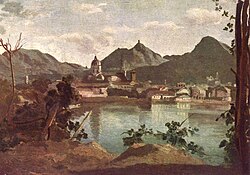
Pliny's origins are rooted in the multi-ethnic community of Novum Comum, a colony founded by Julius Caesar in 59 BC to secure the Alpine region. While some theories suggest a connection to Verona, most evidence points to his family hailing from the area near modern-day Como. His father was an equestrian named Gaius Plinius Celer, and his mother was Marcella.
Growing up in a Romanized community, Pliny was part of a society that valued both military service and civic administration. This dual upbringing prepared him for a career that would see him transition from a junior officer to a high-ranking provincial governor.
Military and Administrative Career
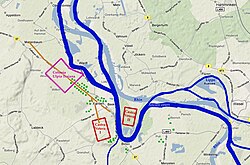
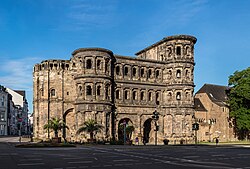
Pliny's military service included a significant tenure in Germania Inferior. He served as a praefectus alae (commander of a cavalry wing), leading a battalion of approximately 480 men. During this time, he was stationed at Castra Vetera, a major Roman base on the lower Rhine.
Beyond the battlefield, Pliny held several procuratorships—administrative positions managing imperial finances and affairs in various provinces. Scholars have identified several key roles held by Pliny:
- Gallia Narbonensis: Around AD 70
- Africa: Between AD 70–72
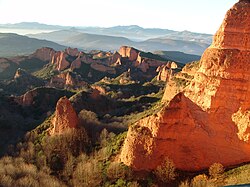
- Hispania Tarraconensis: Around AD 72–74, where he documented local populations and geography
- Gallia Belgica: Likely around AD 74–76
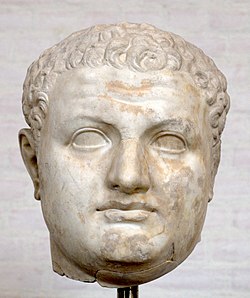
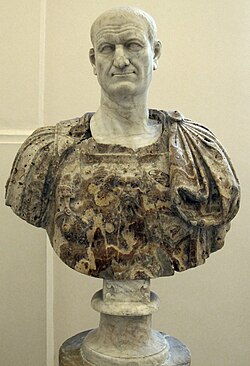
His administrative expertise was matched by his social standing; he was a friend of the Emperor Vespasian and lived in close proximity to the imperial family during his later years.
The Creation of Naturalis Historia
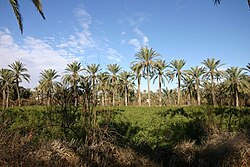
Pliny's most significant achievement was the Naturalis Historia. This massive undertaking was intended to be a comprehensive collection of all known knowledge regarding the natural world. It covered diverse fields including botany, zoology, astronomy, geology, and mineralogy.
The process of compiling this work was as rigorous as the content itself. Pliny utilized a system of dictation: one servant would read aloud from various sources while another transcribed the text. To maintain his productivity during the winter, he provided his scribes with gloves and long sleeves to prevent his writing hand from stiffening in the cold. His collection of extracts grew to approximately 160 volumes before the final 37-volume work was completed around AD 77.
A Foundation for Future Knowledge
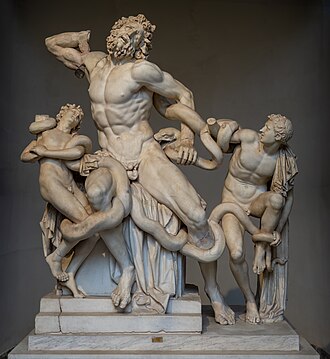
The Naturalis Historia served as more than just a contemporary record; it became a vital reference for the history of art and science. Pliny's descriptions of artistic techniques and materials provided a primary source for later Renaissance scholars, such as Giorgio Vasari and Lorenzo Ghiberti. Furthermore, many of his observations on mining technology, such as hushing (a method of using water to expose mineral veins), have been confirmed by modern archaeology.
The Final Days: Mount Vesuvius
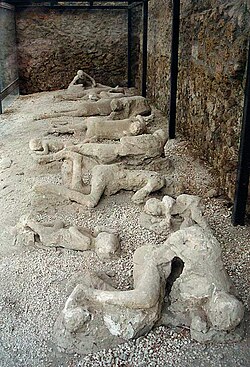
Pliny's life came to an end during one of history's most famous natural disasters: the eruption of Mount Vesuvius in AD 79. While serving as the commander of the imperial fleet at Misenum, he witnessed the eruption. His death at Stabiae remains a defining moment in the history of volcanology, and the tragic circumstances of the event are immortalized through the study of the casualties left behind by the pyroclastic surges.
Summary of Pliny the Elder's Life and Work
| Category | Details |
|---|---|
| Primary Work | Naturalis Historia (37 volumes) |
| Scientific Fields | Botany, Zoology, Geology, Astronomy, Mineralogy |
| Military Rank | Praefectus alae (Cavalry Wing Commander) |
| Key Provinces | Germania Inferior, Hispania, Gallia Narbonensis, Africa |
| Date of Death | August 25, AD 79 |
Frequently Asked Questions
What was Pliny the Elder's most famous achievement?
His most famous achievement was writing the Naturalis Historia, which is considered one of the first encyclopedias in history, covering a vast array of scientific and natural topics.
How did Pliny the Elder collect his information?
He used a method of dictation where one servant read from various texts while another wrote down the extracts. He often worked while bathing and maintained a massive collection of roughly 160 volumes of research.
What was Pliny's relationship to the Roman Emperors?
Pliny was a friend of Emperor Vespasian and held several important administrative roles (procuratorships) as an official agent of the empire.
How did Pliny the Elder die?
He died in AD 79 at Stabiae during the catastrophic eruption of Mount Vesuvius while he was stationed at Misenum.
Why is his work important to modern science and art?
His writings provide essential historical data on ancient technology, mining, and the natural world. Additionally, his descriptions of art and artists served as a foundational reference for Renaissance scholars.