Understanding Plant Stems: Structure, Function, and Importance
In the complex world of vascular plants, the stem serves as one of the two primary structural axes, the other being the root. While often overlooked in favor of colorful flowers or lush leaves, the stem is a sophisticated biological engine. It acts as a support system, a transport highway, and even a site for energy production. Whether it is the massive trunk of a redwood or the tiny, creeping stem of a garden weed, these structures are essential for plant survival.
Key Facts
- The stem is a primary structural axis that supports leaves, flowers, and fruits.
- Nodes are the specific points on a stem where leaves, branches, or buds attach.
- Xylem transports water upward, while phloem distributes nutrients throughout the plant.
- Meristems are specialized tissues within the stem that allow for the continuous production of new living tissue.
- Stems can exist both above the ground and as specialized underground structures.
The Anatomy of a Stem
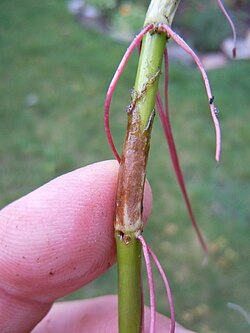
To understand how a plant grows, one must first understand its basic architecture. A stem is typically divided into two repeating parts: nodes and internodes. Nodes are the specific points of attachment for leaves and can also host axillary buds—small growths that may eventually develop into branches, flowers, or cones. In some species, nodes can even produce adventitious roots (roots growing from non-root tissue) or tendrils used for climbing.
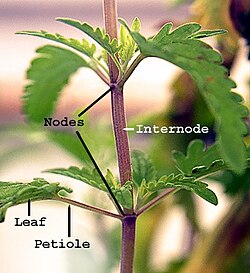
The internode is the section of the stem located between two successive nodes. The length of the internode can vary significantly depending on the species and environmental conditions.
It is important to distinguish between a "stem" and a "shoot." While the terms are often used interchangeably, a shoot generally refers to the entire new growth of a plant, which includes the stem as well as the leaves and flowers attached to it.
Core Functions of the Stem
The stem is far more than just a biological pillar; it performs several critical roles that sustain the plant's life cycle.
| Function | Description |
|---|---|
| Support | Elevates leaves toward sunlight and holds flowers and fruits in place. |
| Transport | Moves water, minerals, and nutrients between roots and shoots. |
| Storage | Acts as a reservoir for nutrients and water. |
| Photosynthesis | Contributes to energy production, especially in green stems. |
| Growth | Produces new living tissue through specialized meristem cells. |
Internal Tissue Systems
The internal complexity of a stem is organized into three main tissue types: dermal tissue, ground tissue, and vascular tissue. Dermal tissue forms the outer protective layer, primarily composed of epidermal cells, and helps regulate gas exchange. Ground tissue surrounds the vascular system and is composed of cells like parenchyma, collenchyma, and sclerenchyma, which assist in metabolism, storage, and structural support.
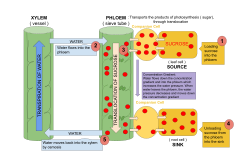
The most vital components for plant movement are the two "pipe-like" tissues within the vascular system: xylem and phloem. Xylem tissue transports water from the roots upward, driven by mechanisms such as transpiration pull (the suction created by evaporation from leaves), capillary action, and root pressure. Phloem tissue, consisting of sieve tubes and companion cells, distributes food (sugars) produced during photosynthesis to the rest of the plant. These two tissues are separated by the cambium, a layer of cells that divides to produce new xylem or phloem.
Specialized Stem Variations
Evolution has shaped stems into a vast array of specialized forms to suit different environments and reproductive strategies. These variations can be categorized by their growth habits, their location, or their specific biological purpose.
Growth Habits and Forms
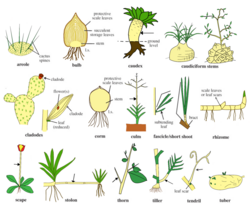
Plants exhibit diverse growth patterns. Arborescent plants are trees with woody stems and a single trunk, while herbaceous plants have non-woody stems that typically die back at the end of a growing season. Some plants appear to have no stem at all; these are described as acaulescent, though they actually possess extremely short stems. Other plants grow in tangled clumps, known as caespitose, or lie flat against the ground with tips turning upward, a habit called decumbent.
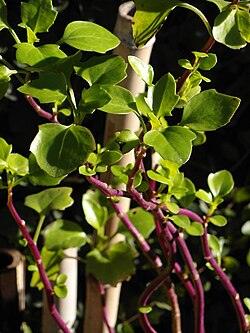
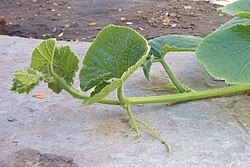
For plants that need to reach new areas, climbing stems wrap around structures, while runners (a type of stolon) grow horizontally along the soil surface to produce new plantlets at their nodes.
Underground and Reproductive Stems
Many plants utilize stems for survival beneath the soil. Rhizomes are horizontal underground stems used for storage and reproduction, while tubers are swollen underground stems adapted for nutrient storage, such as the potato. Other specialized underground structures include bulbs (short vertical stems with fleshy leaves, like onions) and corms (enlarged storage stems, like taro).
Modified Stems
Some stems have evolved to look like other organs. A cladode is a flattened stem that functions like a leaf for photosynthesis, such as the pads of a cactus. In some plants, like the banana, a pseudostem is formed by the tightly rolled bases of leaves rather than true woody tissue. Additionally, some stems are modified for protection, such as thorns (modified stems with sharp points) or prickles (sharpened extensions of the stem's outer layers).
Stem Classification and Structure
The internal arrangement of vascular tissues varies significantly across different plant groups, which helps botanists classify them.
Dicot Stems
In dicot stems, primary growth features a central pith surrounded by a distinct ring of vascular bundles. Many dicots undergo secondary growth, where the vascular cambium and cork cambium increase the stem's diameter. This process creates wood (secondary xylem). In temperate climates, this seasonal growth creates annual rings, which can be used in dendrochronology to study past climates. As the stem grows, the outer layers are replaced by a protective periderm, which includes lenticels—pores that allow for gas exchange.
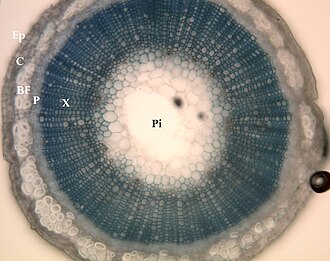
The woody stem of a mature tree is called a trunk. Within the trunk, the sapwood is the outer, active layer used for fluid transport, while the heartwood is the darker, inactive center that provides structural support.

Monocot Stems
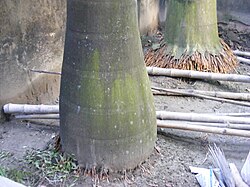
Unlike the ring-like arrangement in dicots, monocot stems have vascular bundles scattered throughout the tissue, though they are often more concentrated toward the outside. Most monocots do not produce secondary growth and therefore lack true wood, though exceptions like palms and bamboo exist.
Gymnosperm Stems
All gymnosperms are woody plants. Their stems are structurally similar to woody dicots, but they typically produce only tracheids in their xylem rather than the vessels found in dicots. Their wood is often referred to as "softwood."
Fern Stems
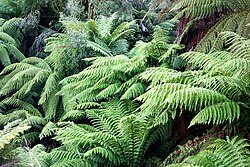
Most ferns utilize rhizomes rather than vertical stems. However, tree ferns can develop vertical stems reaching up to 20 meters. Fern stem anatomy is unique because the vascular tissue often features leaf gaps, where the tissue branches off to support a frond.
Economic and Industrial Importance
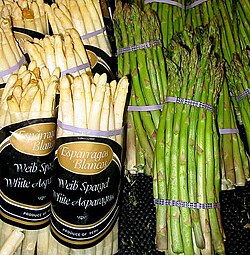
Human civilization has relied heavily on the diverse functions of plant stems. They are a primary source of food, including staples like potatoes and taro, and sugar sources like sugarcane and maple syrup. Many medicinal compounds are derived from stems, such as quinine from cinchona bark and curare from tropical vines.
Beyond food and medicine, stems provide essential industrial materials. Wood is used for everything from construction and furniture to paper pulp and musical instruments. Other materials include cork from oak bark, rubber from tree trunks, and bast fibers (like flax and hemp) used for textiles and rope. Even decorative elements, such as the white bark of birch or the twisted branches of certain willows, are valued in horticulture.
Frequently Asked Questions
What is the difference between a stem and a shoot?
A stem is a single structural axis of a plant, whereas a "shoot" is a broader term that refers to the entire new growth of a plant, including the stem, leaves, and flowers.
How do plants transport water and food through their stems?
Plants use two specialized tissues: xylem transports water and minerals upward using transpiration pull and root pressure, while phloem distributes food (sugars) from the leaves to the rest of the plant.
What is the difference between a dicot and a monocot stem?
In dicot stems, vascular bundles are typically arranged in a distinct ring, whereas in monocot stems, the vascular bundles are scattered throughout the stem tissue.
What is the difference between heartwood and sapwood?
Sapwood is the outer, living layer of secondary xylem that actively transports fluids. Heartwood is the darker, inner part of the wood that is no longer active in transport and serves primarily for structural support.
Can stems grow underground?
Yes, many plants have specialized underground stems, such as rhizomes, tubers, bulbs, and corms, which are used for nutrient storage and reproduction.