Planck Constant: The Fundamental Scale of Quantum Mechanics
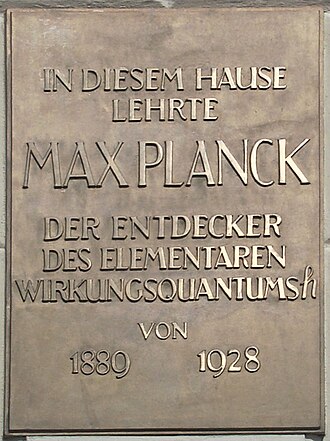
In the realm of physics, few values are as pivotal as the Planck constant. Postulated by Max Planck in 1900, this constant serves as the bridge between the macroscopic world we experience and the microscopic world of atoms and subatomic particles. It defines the scale at which quantum effects become significant, fundamentally altering our understanding of energy, light, and matter.
Originally introduced to solve the mystery of black-body radiation—the way objects emit thermal radiation—Planck described this value as the "quantum of action." This discovery was so transformative that Max Planck was awarded the 1918 Nobel Prize in Physics for his discovery of energy quanta.
Key Facts
- Exact Value: 6.626 070 15 × 10-34 J⋅Hz (defined as part of the SI system).
- SI Unit: Joule-second (J·s), which is equivalent to kg⋅m²/s.
- Primary Role: Relates the energy of a photon to its frequency.
- Metrological Use: Used to define the official SI unit of mass, the kilogram.
- Reduced Form: The reduced Planck constant (ℏ) is h divided by 2π, used extensively in quantum equations.
The Origin: Black-Body Radiation and the Ultraviolet Catastrophe
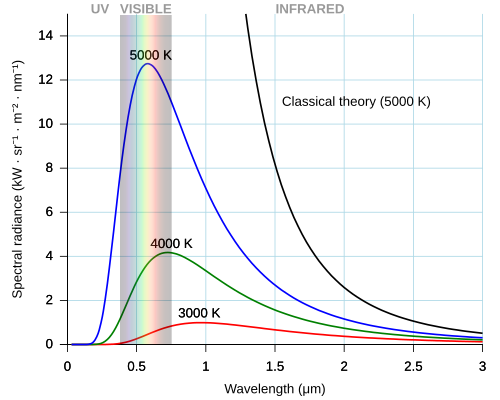
At the turn of the 20th century, classical physics faced a crisis known as the ultraviolet catastrophe. Classical electromagnetism predicted that a black body (an idealized object that absorbs all radiation) would emit infinite energy at shorter wavelengths, such as ultraviolet light, which contradicted experimental observations.
Max Planck resolved this by proposing that energy is not emitted in a continuous wave, but in discrete packets called quanta. The energy of these packets is proportional to their frequency, with the Planck constant serving as the proportionality constant.
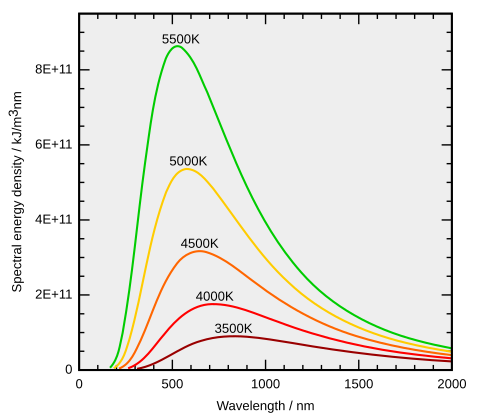
While Planck initially viewed this as a mathematical convenience, Albert Einstein expanded the theory in 1905. Einstein proposed that the electromagnetic wave itself consists of these minimal elements of energy, a concept that laid the groundwork for the modern understanding of photons.
Applications in Modern Physics
The Photoelectric Effect
The Planck constant is central to the photoelectric effect, where electrons (photoelectrons) are emitted from a material's surface when light shines upon it. Einstein used the concept of light quanta to explain this phenomenon, proving that light behaves as both a wave and a particle. This work earned Einstein the Nobel Prize in 1921.
Atomic Structure and the Bohr Model
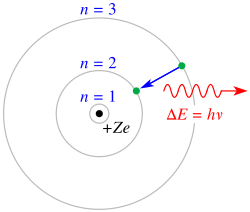
In 1913, Niels Bohr integrated the Planck constant into his model of the atom. Bohr proposed that electrons orbit the nucleus only in specific, quantized energy levels. He introduced the reduced Planck constant (denoted as ℏ or "h-bar"), which represents the quantum of angular momentum.
The Uncertainty Principle and Wave-Particle Duality
The constant also appears in the Heisenberg Uncertainty Principle and the de Broglie wavelength formula, which describes the wave-like behavior of particles. It establishes that there is a fundamental limit to the precision with which certain pairs of physical properties, such as position and momentum, can be known simultaneously.
Metrology and the Definition of the Kilogram
Because the Planck constant has an exact, fixed value, it is now used in metrology to define the kilogram. Rather than relying on a physical prototype (like the former International Prototype of the Kilogram), the kilogram is now defined by fixing the value of h. This is achieved using high-precision instruments like the Kibble balance, ensuring that the unit of mass is universal and unchanging.
| Constant | Symbol | Approximate Value | SI Unit |
|---|---|---|---|
| Planck Constant | h | 6.626 070 15 × 10-34 | J⋅s (or J⋅Hz⁻¹) |
| Reduced Planck Constant | ℏ | 1.054 571 817... × 10-34 | J⋅s |
Significance of the Value
The incredibly small magnitude of the Planck constant explains why we do not notice quantum effects in daily life. For instance, a single photon of green light carries a tiny amount of energy (approximately 3.58 × 10⁻¹⁹ J). However, when aggregated, these quanta become significant. One mole of photons carries roughly 216 kJ of energy, which is comparable to the energy found in a small fresh apple.
Frequently Asked Questions
What is the difference between h and ℏ?
The Planck constant (h) is the original proportionality constant. The reduced Planck constant (ℏ), also known as h-bar, is simply h divided by 2π. It is used more frequently in quantum mechanics because it simplifies equations involving angular frequency and angular momentum.
Why is the Planck constant used to define the kilogram?
Using a fundamental constant of nature ensures that the definition of mass is stable and reproducible anywhere in the universe, removing the need for a physical object that could degrade or change over time.
What was the "ultraviolet catastrophe"?
It was a failure of classical physics to predict the intensity of radiation from a black body. Classical theory predicted that energy would increase infinitely as the wavelength decreased, whereas Planck's constant showed that energy is quantized, matching experimental results.
How does the Planck constant relate to photon energy?
The energy (E) of a photon is calculated by multiplying the Planck constant (h) by the frequency (f) of the light: E = hf. This means higher-frequency light, like X-rays, carries more energy per photon than lower-frequency light, like radio waves.