Max Planck Medal: The Highest Honor in Theoretical Physics
In the world of science, few accolades carry as much prestige as those granted by the German Physical Society (Deutsche Physikalische Gesellschaft), the largest organization of physicists globally. Among its honors, the Max Planck Medal stands as the pinnacle of recognition for extraordinary achievements in theoretical physics—the branch of physics that uses mathematical models and abstractions of physical objects to rationalize, explain, and predict natural phenomena.
Established in 1929, the medal is typically awarded annually to a single individual who has made a profound impact on the field. Recipients are honored with a gold medal and a hand-written parchment, symbolizing the intersection of rigorous science and timeless tradition.
Key Facts
- Awarding Body: German Physical Society (Deutsche Physikalische Gesellschaft).
- Field of Focus: Extraordinary achievements in theoretical physics.
- Established: 1929.
- Physical Prize: A gold medal and hand-written parchment.
- Frequency: Generally awarded annually to one person.
A History of Resilience and Recognition
The history of the Max Planck Medal reflects not only the evolution of physics but also the turbulence of the 20th century. While the award has been consistent since its inception, there have been a few exceptions where the medal was not granted.
One notable historical anomaly occurred in 1943. During this time, the Berlin foundry responsible for crafting the awards was hit by a bomb. Unable to produce the traditional gold medals, the board of directors of the German Physical Society made the pragmatic decision to manufacture the awards using a substitute metal, with the promise that the gold medals would be delivered at a later date.
Theoretical vs. Experimental Honors
It is important to distinguish the Max Planck Medal from other honors granted by the society. While the Max Planck Medal is reserved for theoretical contributions, the Stern–Gerlach Medal is the highest award granted by the German Physical Society for outstanding results in experimental physics.
Notable Recipients Through the Decades
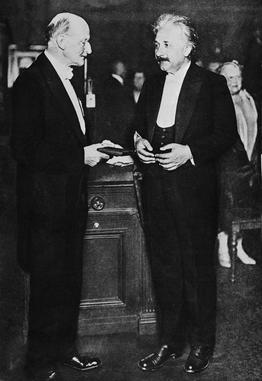
The list of laureates reads like a directory of the most influential minds in science. The inaugural award in 1929 was presented to both Max Planck and Albert Einstein. Over the following century, the medal has been bestowed upon legendary figures such as Enrico Fermi, Paul Dirac, and Wolfgang Pauli, continuing into the modern era with recent recipients like Erwin Frey (2024) and the upcoming awardee Kurt Kremer (2026).
The following table provides a snapshot of some of the most prominent recipients across different eras of the award.
| Year | Recipient(s) | Significance |
|---|---|---|
| 1929 | Max Planck and Albert Einstein | Inaugural recipients |
| 1949 | Lise Meitner and Otto Hahn | Joint awardees |
| 1954 | Enrico Fermi | Theoretical physics pioneer |
| 2011 | Giorgio Parisi | Modern theoretical physics |
| 2026 | Kurt Kremer | Future recipient |
Frequently Asked Questions
What is the Max Planck Medal?
The Max Planck Medal is the highest honor awarded by the German Physical Society for extraordinary achievements in the field of theoretical physics.
Who is eligible to receive the award?
The award is typically given to a single physicist who has demonstrated exceptional contributions to theoretical physics, though in some years, multiple recipients have been honored.
How does it differ from the Stern–Gerlach Medal?
The Max Planck Medal recognizes achievements in theoretical physics, whereas the Stern–Gerlach Medal is the society's highest honor for experimental physics.
Were there any years when the medal was not awarded?
Yes, there were several gaps, including 1934–1936, 1939–1941, 1945–1947, 1965, 1971, and 1980.
What happened to the 1943 medal?
Due to a bombing of the Berlin foundry in 1943, the medal was initially produced in a substitute metal before the gold versions were delivered later.