Piranha: Facts, Taxonomy, and the Truth Behind the Reputation
The piranha is perhaps one of the most misunderstood creatures in the animal kingdom. Often depicted in popular culture as mindless eating machines capable of stripping a large animal to the bone in seconds, these South American fish are far more complex. From their diverse diets to their social behaviors, piranhas play a vital role in their ecosystems, though they remain a source of fascination and fear for humans.
Key Facts
- Origin: Indigenous to the Amazon basin, Orinoco, Guianas, Paraguay–Paraná, and São Francisco river systems.
- Diet: Omnivorous, consuming fish, insects, fruits, seeds, and detritus.
- Size: Most species range from 12 to 35 cm, though the red-bellied piranha can reach 50 cm.
- Behavior: Schooling is primarily a defense mechanism against predators, not a cooperative hunting strategy.
- Etymology: The name comes from the Old Tupi word pirãîa, meaning "scissors."
Taxonomy and Evolution
Piranhas belong to the family Serrasalmidae, which also includes omnivorous relatives known as pacus. Historically, "true piranhas" were defined by their specialized teeth and limited to four genera: Pristobrycon, Pygocentrus, Pygopristis, and Serrasalmus.
Modern cladistic analysis—the method of grouping organisms based on common ancestry—has shifted these definitions. Some researchers suggest the group should be restricted to Serrasalmus, Pygocentrus, and part of Pristobrycon, while others argue for a broader inclusion. Currently, most members of the subfamily Serrasalminae are referred to as piranhas, with the exception of the basal Metynnis, commonly known as "silver dollars." The exact number of species remains contested, with estimates ranging from fewer than 30 to over 60.
Distribution and Global Presence
While piranhas are native to South American river systems, species richness varies by region. The Amazon basin is the most diverse, hosting approximately 25 species, followed by the Orinoco with 16. Most species are endemic to a single river system, though the red-bellied piranha is found across several.
Interestingly, piranhas have appeared in non-native waters. They have been discovered in Kaptai Lake in Bangladesh and the Lijiang River in China, likely introduced by illegal exotic fish traders. In the United States, reported piranha captures are often misidentifications of the red-bellied pacu (Piaractus brachypomus).
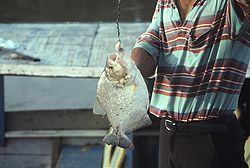
Physical Characteristics and Size
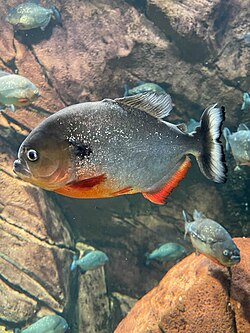
Most piranhas are relatively small, typically measuring between 12 and 35 cm (5–14 in). The red-bellied piranha is the largest living species, reaching up to 50 cm (20 in). While some claims suggest São Francisco piranhas reach 60 cm, these are not widely confirmed.
The fossil record reveals even larger ancestors. The extinct Megapiranha, which lived 8 to 10 million years ago, reached approximately 71 cm (28 in), with some estimates suggesting they could have grown as large as 128 cm (50 in).
Ecology and Diet
The reputation of the piranha as a ferocious predator is largely exaggerated. While the red-bellied piranha (Pygocentrus nattereri) is known to hunt, research indicates that their schooling behavior is actually a response to fear. They group together for protection from predators such as dolphins, caimans, and cormorants.
Contrary to the image of a pure carnivore, piranhas are omnivorous. Their diets vary by species, age, and season. While many primarily eat other fish, they also consume:
- Vertebrates: Small mammals, birds, and reptiles.
- Invertebrates: Insects and crustaceans.
- Plant matter: Fruits, seeds, leaves, and detritus.
Some species have highly specialized diets; for example, Serrasalmus elongatus is a scale-eater, feeding primarily on the scales and fins of other fish.
Relationship with Humans
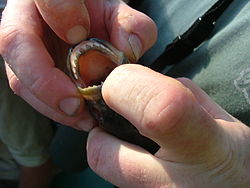
Piranhas are popular in the aquarium trade, with Pygocentrus nattereri being the most common. Experts recommend keeping them alone or in groups of four or more to reduce aggression; pairs often fight, leading to injuries such as the loss of an eye.
In the wild, attacks on humans are generally minor, usually resulting in bites to the hands or feet. For instance, hundreds of minor bites were reported in Brazil and Argentina between 2007 and 2013. Fatalities are extremely rare and often occur after a person has already drowned, leaving the body available for scavenging.
The Roosevelt Account
Much of the piranha's fearsome reputation stems from a 1913 expedition by former US President Theodore Roosevelt. In his book Through the Brazilian Wilderness, Roosevelt described a demonstration where local fishermen blocked off a section of the river and starved piranhas for several days. When a cow was pushed into the water, the hungry fish skeletonized it rapidly. While dramatic, this scenario does not reflect the natural behavior of piranhas in a healthy ecosystem.
Summary of Piranha Characteristics
| Feature | Details |
|---|---|
| Scientific Family | Serrasalmidae |
| Primary Habitat | South American River Basins (Amazon, Orinoco, etc.) |
| Average Size | 12–35 cm (up to 50 cm for red-bellied) |
| Dietary Type | Omnivorous (Fish, seeds, fruits, insects) |
| Social Structure | Schooling (primarily for defense) |
Frequently Asked Questions
Are piranhas actually dangerous to humans?
Most piranha attacks result in only minor injuries to the extremities. While they can be aggressive, they are generally timid and do not actively hunt humans.
Do piranhas hunt in schools to kill prey?
No. Recent research suggests that piranhas school primarily for protection from their own predators, such as caimans and dolphins, rather than for cooperative hunting.
What do piranhas eat?
Piranhas are omnivores. Depending on the species, they eat other fish, insects, crustaceans, fruits, seeds, and organic detritus.
How large can a piranha grow?
Most species stay between 12 and 35 cm. The red-bellied piranha can reach 50 cm, while the extinct Megapiranha may have reached up to 128 cm.
Why are they called "scissors"?
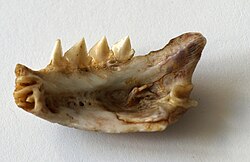
The name is derived from the Old Tupi word pirãîa, which translates to "scissors," referring to the fish's sharp, shearing teeth.