Pierre Magnol and the Birth of Plant Families
In the history of biological sciences, few contributions are as fundamental as the organization of life into groups. Pierre Magnol (1638–1715) was a pioneering French botanist who fundamentally changed how we categorize the natural world. By introducing the concept of plant families, Magnol moved botany away from simple lists and toward a natural classification system based on shared characteristics.
Most of Magnol's life and work were centered in Montpellier, a city that served as a global hub for medicine and botany during the 17th century. His journey from a student of medicine to a Director of the Royal Botanic Garden reflects both the intellectual vibrancy of his era and the personal challenges he faced due to the religious tensions of the time.
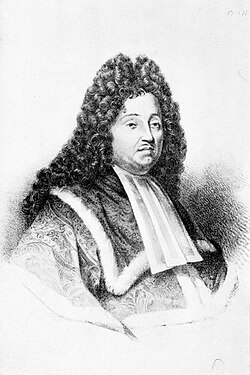
Key Facts
- Primary Contribution: First to publish the concept of plant families based on shared morphological characters.
- Major Work: Prodromus historiae generalis plantarum (1689).
- Academic Roles: Professor of Medicine and Director of the Royal Botanic Garden of Montpellier.
- Legacy: The genus Magnolia was named in his honor by Charles Plumier.
- Education: Earned his M.D. from the University of Montpellier in 1659.
Early Life and Education
Born on June 8, 1638, Pierre Magnol grew up in a family deeply rooted in pharmacy and medicine. His father, Claude, and grandfather, Jean, were both apothecaries (pharmacists), and his mother came from a family of physicians. While his older brother Cesar followed the family trade, Pierre pursued a path in medicine, enrolling at the University of Montpellier on May 19, 1655.
Montpellier was an ideal environment for an aspiring naturalist. The University of Montpellier had established the first French botanic garden in 1593, donated by King Henry IV for the study of pharmacology. The institution had already hosted legendary figures such as François Rabelais and Charles de l'Ecluse. Magnol received his doctor's degree (M.D.) on January 11, 1659, after which he dedicated himself more intensely to the study of botany.
Religious Struggles and Professional Career
Magnol's professional ascent was not without obstacles. Raised in the tradition of Calvinism (Protestantism), he lived during a period of significant religious volatility. Although the Edict of Nantes had previously granted religious freedom, discrimination remained prevalent. Magnol was denied the position of "Demonstrator of plants" in 1664 and the chair of Professor of medicine in 1667 specifically because of his faith.
Following the revocation of the Edict of Nantes in 1685, Magnol converted to Catholicism. This transition cleared the path for his official appointments. In 1687, he finally became the Demonstrator of plants at the botanic garden of Montpellier. His career continued to climb: he was nominated as a doctor to the king's court in 1693, appointed Professor of medicine in 1694, and served as Director of the botanic garden in 1696.
Magnol was also a highly connected scholar, corresponding with international botanists like John Ray and James Petiver. He helped found the Société Royale des Sciences de Montpellier in 1706 and eventually held a seat in the Académie Royale des Sciences de Paris starting in 1709.
The Invention of Plant Families
Magnol's most enduring legacy is the invention of the plant family. Before Magnol, plants were often grouped by arbitrary or single characteristics. In his 1689 work, Prodromus historiae generalis plantarum, he proposed a natural classification based on combinations of morphological characters (the physical form and structure of the plant).
By using 76 tables to group plants with common features, Magnol created a system that allowed for rapid identification and provided an early conceptual step toward the "tree of life." His influence extended to his students, which included the renowned botanist Joseph Pitton de Tournefort and the brothers Antoine and Bernard de Jussieu.
Summary of Major Publications
| Year | Title | Focus |
|---|---|---|
| 1676/1686 | Botanicum Monspeliense | Flora and plant index of the Montpellier region. |
| 1689 | Prodromus historiae generalis plantarum | Introduction of plant families via classification tables. |
| 1697 | Hortus regius Monspeliense | Catalogue of plants in the Royal Garden of Montpellier. |
| 1720 | Novus caracter plantarum | Posthumous treatise on herbs, shrubs, and trees. |
The Magnolia Legacy
The scientific community honored Magnol's contributions through eponymy. In 1703, Charles Plumier named a flowering tree from Martinique Magnolia in his honor. This name was later adopted by William Sherard and eventually integrated into the system of Carl Linnaeus in Species plantarum. Today, the Magnolia genus is recognized worldwide for its large, ornamental flowering trees.
Frequently Asked Questions
What was Pierre Magnol's main contribution to botany?
Pierre Magnol was the first to publish the concept of plant families, creating a natural classification system based on shared morphological characters rather than single traits.
How did religion affect Magnol's career?
As a Protestant in a predominantly Catholic state, Magnol faced significant religious discrimination and was denied several high-ranking academic positions until he converted to Catholicism in 1685.
Where did Pierre Magnol conduct most of his research?
Magnol spent the majority of his life and career in Montpellier, France, where he studied at the university and eventually directed the Royal Botanic Garden.
Who named the Magnolia tree after him?
The genus was named by the botanist Charles Plumier in 1703, and the name was later standardized by William Sherard and Carl Linnaeus.
What is the significance of the Prodromus historiae generalis plantarum?
Published in 1689, this work introduced 76 tables that grouped plants into families, serving as a precursor to the modern general history of plants and the concept of the tree of life.