The Fascinating World of Aquilegia: Understanding the Diversity of Columbines
With their delicate, spurred petals and striking colors, columbines are among the most beloved wildflowers in gardens and wilderness areas alike. Known scientifically as Aquilegia, this genus of plants is as complex in its classification as it is beautiful in its appearance. From the rocky slopes of the Rockies to the meadows of Europe, these plants exhibit a remarkable range of diversity that continues to challenge botanists today.
The Taxonomic Puzzle of Columbines
One of the most intriguing aspects of Aquilegia is the ongoing debate regarding exactly how many species exist. In botany, taxa (singular: taxon) refers to groups of one or more populations of an organism that are recognized as a distinct unit. Depending on which authority you consult, the number of columbine taxa varies wildly.
As of May 2025, the Royal Botanic Gardens, Kew's Plants of the World Online recognizes 130 species. However, other taxonomic authorities provide estimates ranging from as few as 70 to over 400. For instance, Philip A. Munz recorded 67 species in 1946, while the International Plant Names Index lists over 500, and Tropicos lists more than 200.
This discrepancy is largely due to different philosophies in botanical classification. American botanist Robert Nold suggested that the high number of named species and varieties stems from a 19th-century habit of naming specimens that possessed only minute differences. Conversely, Italian botanist Enio Nardi argued that those who recognize fewer than 100 species may be underestimating the "splitting" of species into subspecies, many of which were originally described as full species and remain accepted in various indices.
The Type Species: Aquilegia vulgaris
In biological classification, a type species is the species used as the definitive example to describe a genus. For this group, the type species is Aquilegia vulgaris, commonly known as the European columbine or "granny's nightcap."
A. vulgaris is noted for its high level of physical variability. Many other European columbines are so morphologically similar to A. vulgaris that they are difficult to distinguish visually. Furthermore, this species is often used as a broad category that encompasses columbines from North Africa and the Iberian Peninsula. Enio Nardi has noted that the decision not to recognize these as separate species is often based more on cultural tradition than on scientific evidence.
Global Diversity and Notable Species
The genus Aquilegia spans a vast array of environments, resulting in a wide variety of specialized species. These range from the Colorado blue columbine (Aquilegia coerulea), a stunning high-altitude bloom, to the Canadian columbine (Aquilegia canadensis), also known as the wild columbine.
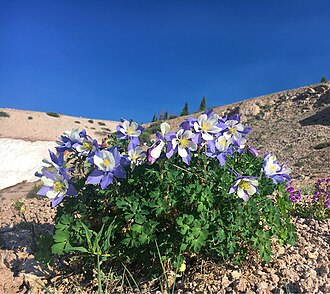
Other notable examples include the golden columbine (A. chrysantha), the crimson columbine (A. formosa), and the Siberian columbine (A. sibirica). Some species have evolved unique traits, such as the spurless columbine (A. ecalcarata), which lacks the characteristic nectar spurs found in most other members of the genus.
Key Facts
- Genus Name: Aquilegia (commonly known as columbines).
- Species Count: Highly debated, ranging from 67 to over 500 depending on the authority.
- Kew Gardens Estimate: 130 species (as of May 2025).
- Type Species: Aquilegia vulgaris (European columbine).
- Taxonomic Conflict: Disagreements exist between "splitters" (who name more species) and those who prefer broader classifications.
Summary of Selected Aquilegia Species
| Scientific Name | Common Name(s) | Region/Note |
|---|---|---|
| Aquilegia vulgaris | European columbine, Granny's nightcap | Type species; highly variable |
| Aquilegia coerulea | Colorado blue columbine | United States (Colorado) |
| Aquilegia canadensis | Canadian columbine, Wild columbine | North America |
| Aquilegia formosa | Crimson columbine, Western columbine | Western North America |
| Aquilegia ecalcarata | Spurless columbine, False columbine | Lacks typical nectar spurs |
| Aquilegia chrysantha | Golden columbine | North America |
Frequently Asked Questions
Why is there such a large difference in the number of columbine species reported?
The difference arises from varying taxonomic approaches. Some botanists follow a practice of "splitting," where even minutely distinct specimens are given their own names. Others use broader definitions, which results in a lower total count of species but a higher number of varieties or subspecies.
What is the "type species" of the Aquilegia genus?
The type species is Aquilegia vulgaris, the European columbine. It serves as the primary reference point for the genus, though it is known for having significant physical variability.
What does "spurless columbine" mean?
The spurless columbine (Aquilegia ecalcarata) is a species that does not possess the characteristic nectar spurs—the long, tube-like extensions of the petals—that are typical of most other columbines.
Which organization provides the most current species count for Aquilegia?
As of May 2025, the Royal Botanic Gardens, Kew's Plants of the World Online recognizes 130 species, though other indices like the International Plant Names Index (IPNI) list over 500 taxa.
Are all European columbines considered the same species?
Many European columbines are morphologically similar to A. vulgaris and are often grouped under that name. However, some botanists argue that this grouping is based on tradition rather than scientific evidence, particularly regarding North African and Iberian varieties.