Phylum: The Essential Rank of Biological Classification
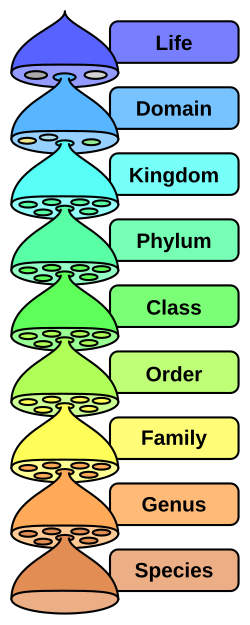
In the vast system of biological classification, a phylum (plural: phyla) serves as a critical taxonomic rank. It sits positioned below the kingdom and above the class, acting as a primary filter to group organisms based on shared fundamental characteristics. While the term is universal in zoology, botanists traditionally used the term division; however, the International Code of Nomenclature for algae, fungi, and plants now accepts both terms as equivalent.
The distribution of phyla varies significantly across the kingdoms of life. Depending on the definitions used, the animal kingdom (Animalia) contains approximately 32 phyla, the plant kingdom (Plantae) contains about 14, and the fungus kingdom (Fungi) consists of roughly eight. Modern research in phylogenetics—the study of evolutionary relationships—continues to refine these groupings by uncovering how phyla relate within larger clades, such as Ecdysozoa and Embryophyta.
Key Facts
- Hierarchy: A phylum is ranked below a kingdom and above a class.
- Terminology: In botany, "division" is the traditional equivalent of "phylum."
- Etymology: Coined in 1866 by Ernst Haeckel from the Greek phylon, meaning "race" or "stock."
- Scope: Animalia has ~32 phyla, Plantae has ~14, and Fungi has ~8.
- Basis: Classification is traditionally based on body plans and genetic relationships.
The History and Evolution of the Term
The concept of the phylum was introduced by Ernst Haeckel in 1866. Haeckel observed that while species evolve constantly, certain groups retain consistent features that distinguish them as a "self-contained unity." He defined this aggregate of species, all evolving from a single common original form (such as vertebrates), as a Stamm or Phylon.
Parallel to this, August W. Eichler introduced the term "division" in 1883 to classify plants into five primary groups. Over time, the definitions of zoological phyla have evolved, moving away from the early six Linnaean classes and the four "embranchements" proposed by Georges Cuvier toward more genetically informed models.
Major Phyla Across Kingdoms
Animal Kingdom (Animalia)
Animal phyla are often distinguished by their body plan—the structural organization of the organism. These range from the simplest forms, like Porifera (sponges), to highly complex organisms like Chordata (vertebrates and their relatives).
Plant Kingdom (Plantae)
Plant divisions are categorized by their vascular systems and reproductive methods. This includes non-vascular plants like Bryophyta (mosses) and highly evolved vascular plants like Angiospermae (flowering plants).
Fungus Kingdom (Fungi)
Fungal divisions are primarily distinguished by their spore-producing structures, such as the sac-like structures in Ascomycota or the club-like structures in Basidiomycota.
Beyond these three, phyla are also identified within Protists, Bacteria, and Archaea, though the naming conventions and validity of these ranks can vary according to different biological codes.
Summary of Representative Phyla
| Kingdom | Phylum/Division | Common Name | Distinguishing Characteristic |
|---|---|---|---|
| Animalia | Chordata | Chordates | Hollow dorsal nerve cord, notochord |
| Animalia | Arthropoda | Arthropods | Jointed limbs, chitin exoskeleton |
| Plantae | Angiospermae | Flowering plants | Flowers and fruit |
| Plantae | Bryophyta | Mosses | No vascular system |
| Fungi | Basidiomycota | Club fungi | Basidia (club-shaped spores) |
| Fungi | Ascomycota | Sac fungi | Asci (sac-like spores) |
Frequently Asked Questions
What is the difference between a phylum and a division?
Historically, "phylum" was used for animals and "division" was used for plants, algae, and fungi. Today, the International Code of Nomenclature for algae, fungi, and plants considers them equivalent taxonomic ranks.
Who created the term phylum?
The term was coined in 1866 by Ernst Haeckel, derived from the Greek word phylon, meaning race, stock, or tribe.
How many phyla are there in the animal kingdom?
Depending on the scientific definition used, there are approximately 32 phyla within the kingdom Animalia.
What is the primary basis for grouping organisms into a phylum?
Organisms are grouped into phyla based on their fundamental body plan (structural organization) and their genetic relationships, indicating a common evolutionary origin.
Which phylum contains the most species?
Among animals, the phylum Arthropoda is the most diverse, with over 1.25 million extant species described.