Photosynthesis: The Biological Engine of Life on Earth
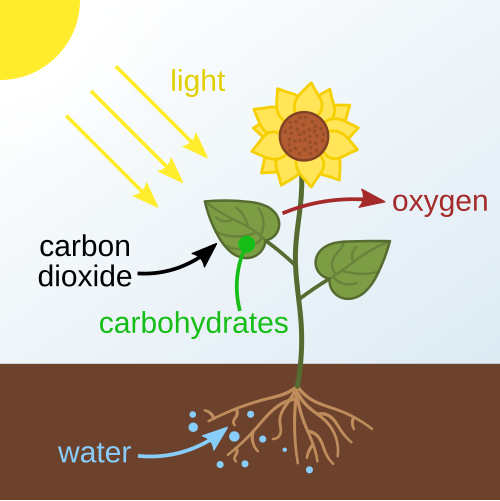
Photosynthesis is a complex system of biological processes used by autotrophic organisms—such as plants, algae, and cyanobacteria—to convert light energy, typically from the sun, into chemical energy. This energy fuels their metabolism and forms the foundation of most food chains on Earth. By storing energy within the bonds of organic compounds like glucose, starches, and cellulose, these organisms create a vital energy reserve that can later be released through cellular respiration.
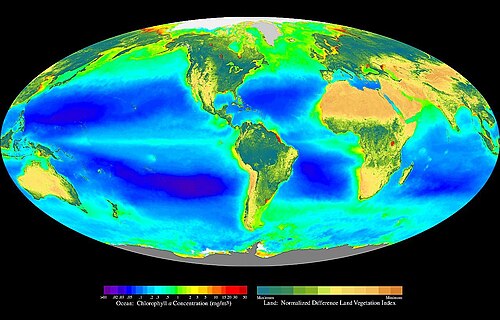
Beyond fueling individual organisms, photosynthesis is responsible for producing and maintaining the oxygen levels in Earth's atmosphere, making complex aerobic life possible.
Key Facts
- Primary Function: Converts light energy into chemical energy (carbohydrates).
- Byproducts: Oxygenic photosynthesis releases oxygen as a byproduct of splitting water.
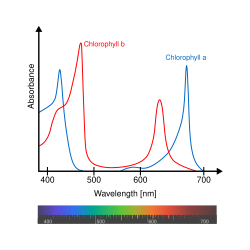
- Key Pigments: Chlorophylls absorb red and blue light while reflecting green.
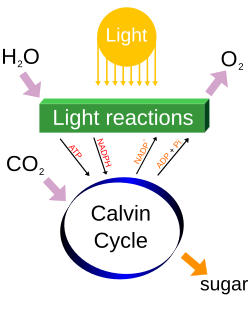
- Energy Currency: The process generates ATP and NADPH to power carbon fixation.
- Global Impact: Supplies the majority of biological energy for complex life on Earth.
Types of Photosynthesis
Oxygenic Photosynthesis
This is the most common form, performed by plants, algae, and cyanobacteria. It uses water as an electron donor, splitting the molecule to release oxygen gas (O2) into the atmosphere.
Anoxygenic Photosynthesis
Some bacteria, such as purple bacteria, perform anoxygenic photosynthesis, which does not produce oxygen. Instead of water, these organisms use substances like hydrogen sulfide as a reductant, releasing sulfur as a byproduct. Additionally, certain Archaea (e.g., Halobacterium) use a pigment called retinal to create a proton gradient across their cell membranes to synthesize ATP directly, a process that may represent one of the earliest forms of photosynthesis on Earth.
The Machinery of Photosynthesis
Chloroplasts and Pigments
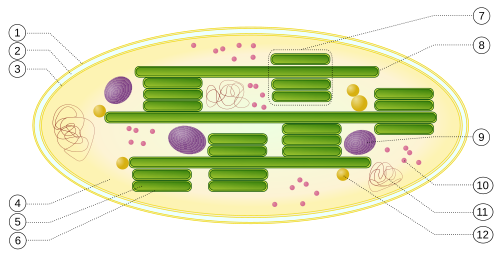
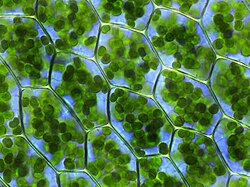
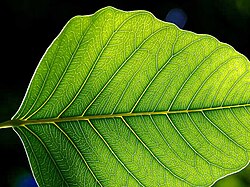
In plants, photosynthesis occurs primarily in the leaves within specialized organelles called chloroplasts. These organelles contain thylakoid membranes where light-harvesting pigments, mainly chlorophyll a and b, are located. These pigments absorb specific wavelengths of light to trigger the chemical reactions.
The Two-Stage Process
Photosynthesis is divided into two main stages: the light-dependent reactions and the light-independent reactions.
1. Light-Dependent Reactions
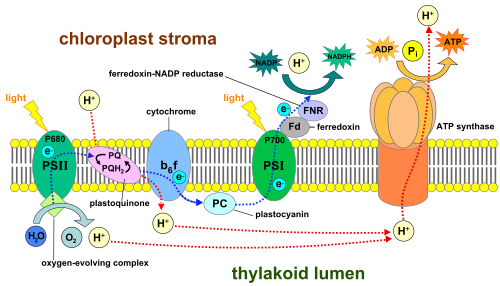
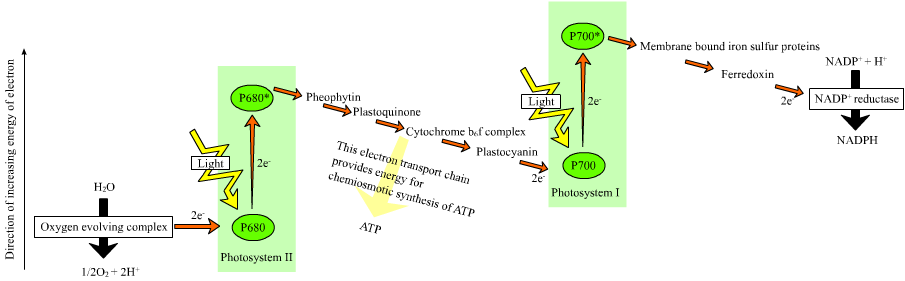
Occurring in the thylakoid membranes, these reactions absorb photons to strip electrons from water. This process, often described by the Z scheme, produces oxygen and creates two high-energy molecules: ATP (adenosine triphosphate) and NADPH (reduced nicotinamide adenine dinucleotide phosphate).
2. Light-Independent Reactions (The Calvin Cycle)
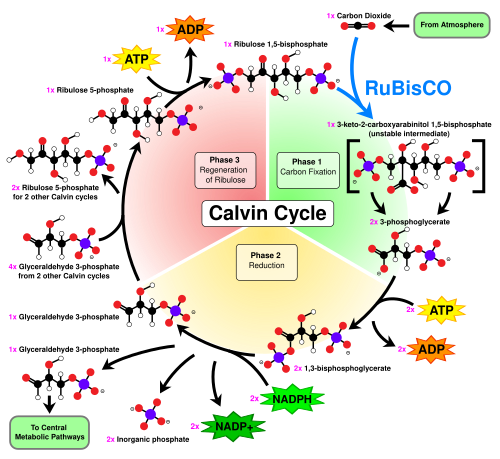
Taking place in the stroma (the aqueous fluid of the chloroplast), the Calvin cycle uses the ATP and NADPH generated in the first stage to fix carbon dioxide (CO2) into stable organic sugars.
Carbon Fixation and Efficiency
C3 and C4 Pathways
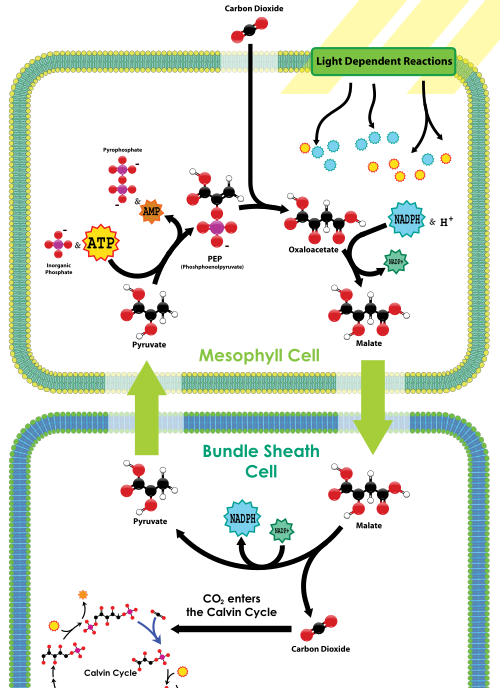
Most plants use the C3 pathway for carbon fixation. However, some plants have evolved C4 photosynthesis, a more efficient mechanism for capturing CO2 in hot or dry environments, reducing the wastefulness of photorespiration.
Photorespiration
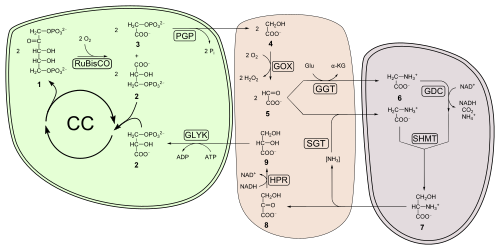
Photorespiration occurs when the enzyme RuBisCO binds to oxygen instead of carbon dioxide. This is generally disadvantageous to the plant as it consumes energy and releases previously fixed carbon, reducing overall photosynthetic efficiency.
Photosynthetic Timeline and Kinetics
The transition from capturing a photon to producing a sugar molecule happens across vastly different timescales, from femtoseconds to full seconds.
| Stage | Event | Site | Time Scale |
|---|---|---|---|
| 1 | Energy transfer in antenna chlorophyll | Thylakoid membranes | Femtosecond to picosecond |
| 2 | Electron transfer in photochemical reactions | Thylakoid membranes | Picosecond to nanosecond |
| 3 | Electron transport chain and ATP synthesis | Thylakoid membranes | Microsecond to millisecond |
| 4 | Carbon fixation and product export | Stroma and cytosol | Millisecond to second |
Factors Influencing Photosynthesis
The rate of photosynthesis is primarily governed by four environmental factors:
- Light: Both the intensity (irradiance) and the wavelength of light affect the energy available for the reaction.
- Water: Essential as an electron donor; water stress can limit the process.
- Carbon Dioxide: The concentration of CO2 determines the rate of carbon fixation.
- Temperature: Affects the enzymatic activity, including the efficiency of RuBisCO.
Frequently Asked Questions
What is the difference between oxygenic and anoxygenic photosynthesis?
Oxygenic photosynthesis uses water as an electron donor and releases oxygen as a byproduct. Anoxygenic photosynthesis uses other substances, such as hydrogen sulfide, and does not produce oxygen.
Where exactly does photosynthesis take place in a plant?
The primary site is the leaf, specifically within the chloroplasts of the plant cells. The light-dependent reactions occur in the thylakoid membranes, while the light-independent reactions occur in the stroma.
What are the primary products of photosynthesis?
The main products are carbohydrates (such as glucose and starch), which store chemical energy, and oxygen, which is released into the atmosphere.
Why is photorespiration considered disadvantageous?
Photorespiration occurs when RuBisCO uses oxygen instead of carbon dioxide, which wastes energy and reduces the amount of carbon the plant can fix into sugars.
What role do chlorophylls play in the process?
Chlorophylls are pigments that absorb light energy (specifically in the red and blue spectra). This energy is used to excite electrons, initiating the chemical reactions that eventually produce ATP and NADPH.