Biochemistry: The Chemical Foundations of Life
Biochemistry, also known as biological chemistry, is the scientific study of the chemical processes that occur within and relate to living organisms. Positioned at the intersection of biology and chemistry, it seeks to explain how complex biological molecules give rise to the processes that sustain life within and between cells. By understanding these chemical bases, scientists can better comprehend the structure and function of tissues, organs, and entire organisms.
The field is generally divided into three primary disciplines: structural biology (the study of molecular architecture), enzymology (the study of biological catalysts), and metabolism (the chemical reactions that harness energy). Together, these fields provide the methodology used to uncover nearly all areas of the modern life sciences.
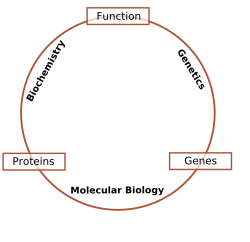
Key Facts
- Biochemistry focuses on biological macromolecules: proteins, nucleic acids, carbohydrates, and lipids.
- Metabolism consists of the chemical reactions cells use to extract energy from their environment.
- Aerobic respiration is significantly more efficient than anaerobic processes, producing up to 32 ATP molecules per glucose molecule.
- The field is closely linked to molecular biology, which examines the molecular mechanisms of biological phenomena.
- Key historical milestones include the discovery of the DNA structure and the "one gene, one enzyme" hypothesis.
The Evolution of Biochemistry
While the roots of biochemistry can be traced back to the ancient Greeks, it emerged as a distinct scientific discipline in the 19th century. Various milestones are cited as its birth, including Anselme Payen's 1833 discovery of diastase (now called amylase), the first known enzyme, and Eduard Buchner's 1897 demonstration of alcoholic fermentation in cell-free extracts.
The term "biochemistry" first appeared in print in 1858 in Vinzenz Kletzinsky's Compendium der Biochemie. Other pioneers, such as Emil Fischer and F. Gowland Hopkins, further developed the field by studying protein chemistry and the dynamic nature of enzymes.
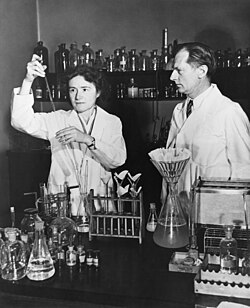
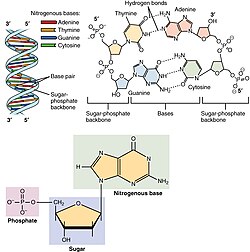
The mid-20th century brought transformative discoveries regarding genetic information. In the 1950s, James D. Watson, Francis Crick, Rosalind Franklin, and Maurice Wilkins solved the structure of DNA. Later, George Beadle and Edward Tatum demonstrated that one gene produces one enzyme, while more recent research by Andrew Z. Fire and Craig C. Mello uncovered the role of RNA interference (RNAi) in silencing gene expression.
The Building Blocks of Life: Biomolecules
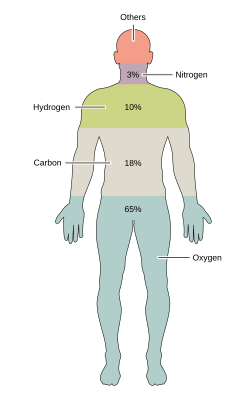
Life depends on the interaction of small molecules and ions—both inorganic (such as water and metal ions) and organic (such as amino acids)—and large biological macromolecules.
Carbohydrates
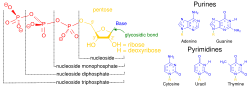
The simplest carbohydrates are monosaccharides, which typically consist of carbon, hydrogen, and oxygen in a 1:2:1 ratio. Examples include glucose, fructose (common in fruits), and deoxyribose (a component of DNA). These molecules can exist in either an open-chain (acyclic) form or a cyclic ring form.
Lipids, Proteins, and Nucleic Acids
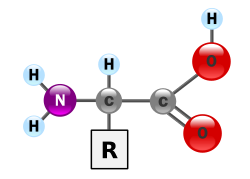
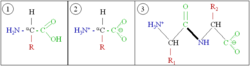
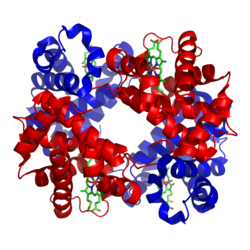
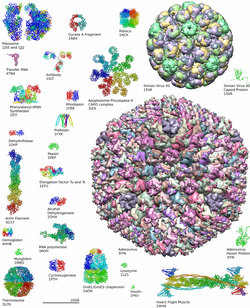
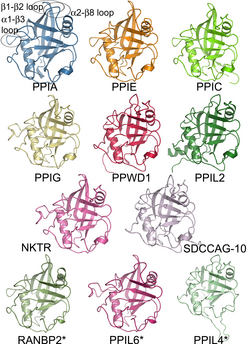
Lipids serve as essential structural components and energy stores. Proteins, synthesized from amino acids, perform a vast array of cellular functions and are defined by their complex folding structures. Nucleic acids, including DNA and RNA, are responsible for the storage and transfer of genetic information.
![DNA structure (1D65)[24]](/images/ca/30/ca30bfe6551aed97ddcb0c0baa3e05164dde61cff344d119f30351ea551ab87b.gif)
![Structures of some common lipids. At the top are cholesterol and oleic acid.[44] The middle structure is a triglyceride composed of oleoyl, stearoyl, and palmitoyl chains attached to a glycerol backbone. At the bottom is the common phospholipid, phosphatidylcholine.[45]](/images/dc/9c/dc9c0faaa7c13aaf145aaad29180204b7eb77054bb4379d76b271dd099f675d1.webp)
Energy Production and Metabolism
Metabolism is the set of chemical reactions used by cells to harness energy. A primary example is the degradation of glucose to produce ATP (adenosine triphosphate), the universal energy currency of the cell.
Aerobic Respiration
In cells with sufficient oxygen, pyruvate is converted to acetyl-CoA, releasing carbon dioxide and generating NADH. This acetyl-CoA enters the citric acid cycle, producing ATP, NADH, and reduced quinones. These molecules then feed into the respiratory chain—an electron transport system located in the inner mitochondrial membrane of eukaryotes.
This process reduces oxygen to water and creates a proton gradient that drives ATP synthase. While anaerobic glycolysis provides limited energy, full aerobic oxidation yields a total of 32 ATP molecules per glucose molecule. This high energy efficiency is believed to be the reason complex life emerged only after Earth's atmosphere became oxygen-rich.
| Macromolecule | Basic Building Block | Primary Functions |
|---|---|---|
| Carbohydrates | Monosaccharides | Energy source, structural support |
| Proteins | Amino Acids | Catalysis (enzymes), structure, transport |
| Lipids | Fatty acids/Glycerol | Energy storage, cell membranes |
| Nucleic Acids | Nucleotides | Genetic information storage and transfer |
Frequently Asked Questions
What is the difference between biochemistry and molecular biology?
Biochemistry focuses on the chemical processes and molecules (like proteins and lipids) that allow biological processes to occur, while molecular biology specifically studies the molecular mechanisms of biological phenomena, often focusing on the interaction between DNA, RNA, and protein synthesis.
Why is oxygen necessary for high energy production?
Oxygen acts as the final electron acceptor in the respiratory chain. This allows for the complete oxidation of glucose, which generates significantly more ATP (32 molecules) compared to anaerobic processes.
What are the three main fields of biochemistry?
Biochemistry is divided into structural biology, enzymology, and metabolism.
What is a monosaccharide?
A monosaccharide is the simplest type of carbohydrate, consisting of carbon, hydrogen, and oxygen (usually in a 1:2:1 ratio). Examples include glucose and fructose.
Who discovered the structure of DNA?
The structure of DNA was solved in the 1950s through the instrumental work of James D. Watson, Francis Crick, Rosalind Franklin, and Maurice Wilkins.