Glycosides: Chemistry, Classification, and Biological Roles
In the diverse world of biochemistry, glycosides serve as essential molecules that bridge the gap between sugars and other functional groups. A glycoside is defined as a molecule where a sugar is bound to another group via a glycosidic bond. These compounds are ubiquitous in nature, playing critical roles in how plants store energy, defend themselves from predators, and how animals eliminate toxins from their systems.
Many plants utilize glycosides as a storage mechanism for chemicals in an inactive form. When the plant needs these chemicals, enzyme hydrolysis breaks the glycosidic bond, releasing the sugar and activating the compound. This natural mechanism is so effective that many plant-derived glycosides have been adapted for use in human medicine.
Key Facts
- Structure: Composed of a sugar part (glycone) and a non-sugar part (aglycone or genin).
- Bonding: Can be linked via O-, N-, S-, or C-glycosidic bonds.
- Biological Use: Used by plants for chemical defense and by humans/animals for toxin elimination.
- First Discovery: Amygdalin was the first glycoside identified, discovered in 1830.
- Medical Value: Found in everything from heart medications (cardiac glycosides) to natural sweeteners (steviol glycosides).
The Chemical Structure of Glycosides
Formally, a glycoside occurs when a sugar group is bonded through its anomeric carbon to another group. Depending on the atom involved in the linkage, they are categorized as O-glycosides, glycosylamines (N-linkage), thioglycosides (S-linkage), or C-glycosyl compounds (C-linkage). While some authors exclude polysaccharides from this definition, most require the sugar to be bonded to a non-sugar molecule.
The sugar component is referred to as the glycone, which may be a monosaccharide (single sugar), disaccharide (two sugars), or oligosaccharide (several sugars). The non-sugar component is known as the aglycone or genin.
Synthesis and Hydrolysis
The separation of the glycone and aglycone can be achieved through hydrolysis using acids or alkalis. In nature, this is managed by enzymes: glycoside hydrolases break these bonds, while glycosyltransferases create them. In laboratory settings, chemists use methods like Fischer glycosidation (using strong acid catalysts) or the Koenigs-Knorr reaction (using metal salts) to synthesize these bonds.
Classification of Glycosides
Glycosides are typically classified by their sugar group, the type of bond, or the nature of the aglycone.
By Glycone (Sugar Type)
The name of the glycoside often reflects its sugar. For example, a glycoside with glucose is a glucoside, while one with fructose is a fructoside. In human biology, toxic substances are often bonded to glucuronic acid to create glucuronides, which increases water solubility for easier excretion from the body.
By Glycosidic Bond
Glycosides are classified as α-glycosides or β-glycosides based on whether the bond is "above" or "below" the plane of the cyclic sugar molecule. This distinction is vital because specific enzymes are selective; for instance, α-amylase only hydrolyzes α-linkages, while emulsin only affects β-linkages.
By Aglycone (Non-Sugar Type)
This is the most useful classification for pharmacology and biochemistry. The following table summarizes the primary types of aglycones and their characteristics.
| Type | Example/Source | Primary Effect/Use |
|---|---|---|
| Alcoholic | Salicin (Salix genus) | Analgesic, anti-inflammatory |
| Anthraquinone | Senna, Rhubarb, Aloe | Laxative effect |
| Cyanogenic | Amygdalin (Bitter almond) | Chemical defense (releases HCN) |
| Flavonoid | Rutin, Hesperidin | Antioxidant, reduces capillary fragility |
| Saponins | Liquorice, Ginseng | Expectorant, vaccine adjuvants |
| Steroid (Cardiac) | Digitalis, Scilla | Heart disease and arrhythmia treatment |
| Steviol | Stevia rebaudiana | Natural high-intensity sweetener |
Specialized Glycoside Groups
Cyanogenic Glycosides
These compounds contain a cyanohydrin group and are stored in plant vacuoles. When the plant is damaged, enzymes in the cytoplasm remove the sugar, causing the structure to collapse and release toxic hydrogen cyanide. This serves as a potent deterrent against herbivores. Interestingly, some butterflies, such as Dryas iulia, incorporate these compounds into their own bodies for protection.
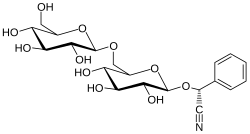
While amygdalin and its derivative laetrile have been promoted as alternative cancer treatments, they are ineffective and dangerous.
Saponins and Steroids
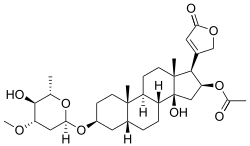
Saponins are known for producing a permanent froth when shaken with water and can cause the hemolysis (rupture) of red blood cells. They are used in biotechnology as vaccine adjuvants to stimulate immune responses. Steroid glycosides, specifically cardiac glycosides, feature a steroid nucleus and are used to treat congestive heart failure and arrhythmia.
Other Notable Examples
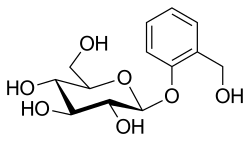
Salicin, found in willow trees, is converted by the body into salicylic acid, a compound closely related to aspirin.
Frequently Asked Questions
What is the difference between a glycone and an aglycone?
The glycone is the sugar portion of the glycoside molecule, while the aglycone (or genin) is the non-sugar functional group to which the sugar is attached.
How do cyanogenic glycosides protect plants?
They are stored in an inactive state in vacuoles. When a predator attacks the plant, enzymes release the sugar, triggering the release of toxic hydrogen cyanide gas to deter the herbivore.
What are cardiac glycosides used for?
Cardiac glycosides, found in plants like Digitalis, are used in medicine to treat heart conditions such as arrhythmia and congestive heart failure.
Why does the body create glucuronides?
The body bonds toxic substances to glucuronic acid to increase their water solubility, which allows them to be more easily excreted from the system.
What is the role of saponins in modern medicine?
Beyond their anti-inflammatory effects, saponins are used as adjuvants in vaccines to stimulate the production of cytotoxic T-lymphocytes and Th1 immune responses.