Oleander: The Beautiful and Dangerous Beauty of Nerium oleander
Known for its striking blooms and resilient nature, Nerium oleander is a plant of profound contradictions. While it serves as a centerpiece in ornamental gardening across the globe, it carries a potent chemical defense that makes it one of the most well-known toxic plants in existence. From the ancient Mediterranean to the modern highways of California, this evergreen shrub has left an indelible mark on both landscape design and human history.
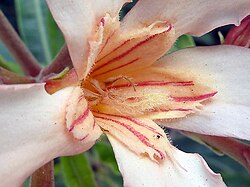
Key Facts
- Scientific Name: Nerium oleander
- Growth Habit: Evergreen shrub growing 2–6 meters (7–20 feet) tall.
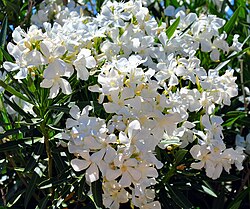
- Flower Colors: White, pink, red, yellow, peach, and salmon.
- Toxicity: Contains dangerous cardiac glycosides.
- Conservation Status: Least Concern (IUCN 3.1).
- Common Uses: Ornamental landscaping and roadside beautification.
Botanical Characteristics
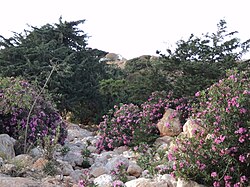
The oleander is a hardy species characterized by erect stems that splay outward as the plant matures. Young stems often feature a glaucous bloom (a waxy, whitish coating), while older stems develop a distinctive grayish bark. The foliage is equally striking, consisting of thick, leathery, dark-green leaves arranged in pairs or whorls of three. These lanceolate (spear-shaped) leaves can reach lengths of up to 21 centimeters.
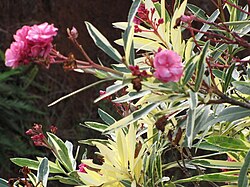
The plant's reproductive structures are highly ornamental. Flowers grow in dense clusters at the ends of branches, featuring a deeply 5-lobed fringed corolla (the petals of a flower) surrounding a central tube. While many varieties are sweet-scented, others are not. Once the flowers fade, the plant produces long, narrow follicles—a type of dry fruit that splits open to release numerous downy seeds.
Global Distribution and Cultivation
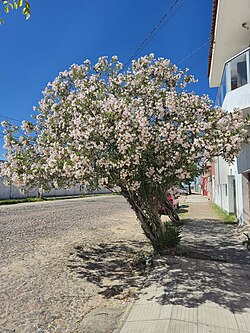
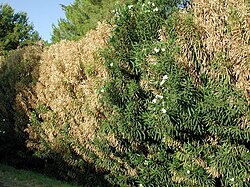
Oleander is highly adaptable to various climates. In the United States, it thrives along the East Coast as far north as Virginia Beach, and it is a staple of the landscape in California and Texas. In California alone, an estimated 25 million oleander shrubs line highways and median strips. Its durability makes it an ideal choice for post-disaster replanting; for instance, Galveston, Texas, planted oleanders extensively following the 1900 hurricane, earning the nickname "Oleander City."
Ornamental Varieties
With over 400 named cultivars, gardeners can choose from a vast array of colors and forms. Beyond the standard white, red, and pink, breeders have introduced yellow, peach, and salmon hues. Some cultivars, such as 'Hawaii' or 'Turner's Carnival,' feature brilliant striped patterns. For those with limited space, dwarf varieties like 'Little Red' or 'Petite Pink' offer a more compact silhouette, reaching only about 8 feet at maturity.
Toxicity and Safety Precautions
The beauty of the oleander is matched by its chemical potency. The plant contains cardiac glycosides, which are compounds that affect the heart muscle. While some animals like birds and rodents appear relatively insensitive to these toxins, humans and many mammals are highly susceptible to glycoside intoxication.

Grazing animals, including sheep, horses, and cattle, are at significant risk. In fact, as little as 100 grams of the plant can be fatal to an adult horse. Because the plant clippings can taste sweet, horses may inadvertently consume them, leading to severe symptoms such as abnormal heartbeats and diarrhea. This danger is even reflected in the plant's Sanskrit name, aśvamāra, which translates to "horse-killing."
Cultural and Artistic Legacy
Throughout history, the oleander has appeared in various cultural contexts. Some scholars suggest it may be the "Rose of Jericho" mentioned in ancient apocryphal writings. In the world of fine art, the plant has been a subject for masters such as Gustav Klimt and Sir Lawrence Alma-Tadema.
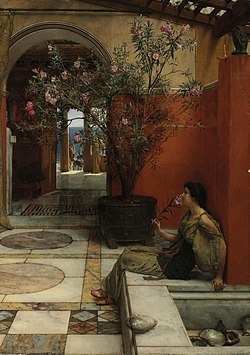
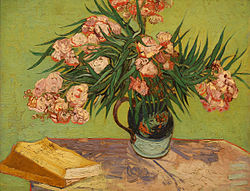
The plant's dramatic nature has also permeated modern literature and film, most notably in Janet Fitch's novel White Oleander, which explores themes of family and poisoning.
Summary of Oleander Profile
| Feature | Description |
|---|---|
| Height | 2 to 6 meters |
| Leaf Type | Leathery, lanceolate, dark green |
| Flower Form | Clusters with 5-lobed corolla |
| Primary Toxin | Cardiac glycosides |
| Common Habitat | Mediterranean, US Sunbelt, tropical regions |
Frequently Asked Questions
Is the oleander plant poisonous to pets?
Yes, oleander is highly toxic to many mammals, including dogs. The cardiac glycosides present in the plant can cause serious heart issues and other symptoms of intoxication.
What are the symptoms of oleander poisoning in horses?
In horses, poisoning often manifests as severe diarrhea and an abnormal heartbeat. Because the plant can taste sweet, horses may consume clippings accidentally.
How large can an oleander shrub grow?
Standard oleanders typically grow between 2 and 6 meters (7 to 20 feet) tall, though dwarf cultivars are available for smaller spaces.
What colors of oleander flowers are available?
While white, pink, and red are the most common, there are also yellow, peach, salmon, and multi-colored striped varieties.
Why is Galveston known as the "Oleander City"?
Following the devastating hurricane of 1900, oleanders were planted prolifically on Galveston Island due to their durability, leading to the city's famous nickname and an annual spring festival.