Digitalis: The Fascinating Balance of Beauty and Toxicity in Foxgloves
Known for their striking spires of bell-shaped flowers, Digitalis, commonly referred to as foxgloves, are more than just ornamental garden favorites. This genus of plants represents a complex intersection of botany, ecology, and life-saving medicine. While they grace landscapes with vivid colors, they also contain potent chemical compounds that can either regulate a failing heart or prove fatal if mishandled.
Key Facts
- Common Name: Foxglove.
- Native Range: Europe, Western Asia, and northwestern Africa.
- Primary Species: Digitalis purpurea (Common foxglove).
- Medical Application: Source of cardiac glycosides like digoxin used to treat heart failure and atrial fibrillation.
- Toxicity: Highly toxic to humans and mammals; can cause "digitalism" (poisoning).
- Botanical Family: Plantaginaceae.
Understanding the Digitalis Genus
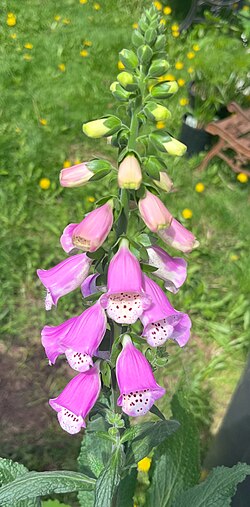
Digitalis is a genus comprising approximately 20 species of herbaceous perennials, shrubs, and biennials. These plants are characterized by their tubular flowers produced on tall spikes. The colors vary significantly by species, ranging from deep purples and pinks to pure white and yellow.
The name Digitalis is derived from the Latin word digitus, meaning "finger." This refers to the shape of the flower, which resembles a finger or a thimble (the German name Fingerhut literally translates to "finger hat").
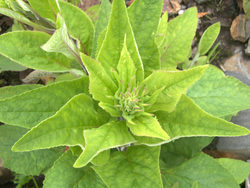
In their early stages of growth, many species form a low-growing cluster of leaves known as a juvenile rosette before sending up their iconic flowering stalks.
Botanical Classification and Taxonomy
The taxonomy of Digitalis has evolved as scientific methods have improved. Originally placed in the figwort family (Scrophulariaceae), phylogenetic research—the study of evolutionary relationships—led taxonomists to move the genus to Veronicaceae in 2001, and eventually to the expanded family Plantaginaceae.
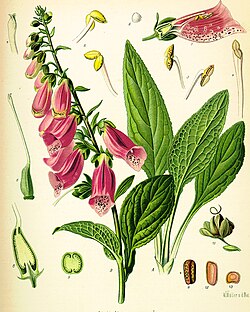
The type species for the genus is Digitalis purpurea, published by Carl Linnaeus in 1753. While D. purpurea is the most famous, other garden-worthy species include D. ferruginea, D. grandiflora, D. lutea, and D. parviflora.
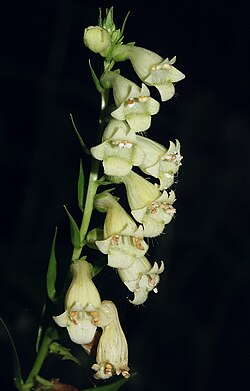
Some species, such as Digitalis lutea, are distinguished by their yellow blooms, diverging from the more common purple and pink hues.
Species and Distribution
As of 2017, Plants of the World Online recognizes 27 species and several hybrids. These plants are native to Europe, Western Asia, and northwestern Africa, though they have been introduced globally as ornamentals.
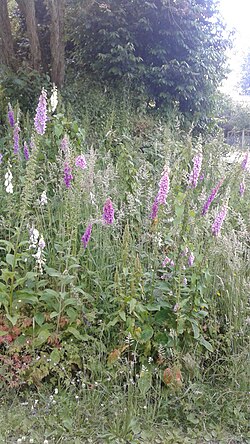
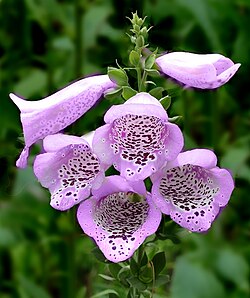
The common foxglove (D. purpurea) is particularly prized for its vivid purple tints, pinks, and whites, often featuring intricate spots inside the blooms.
| Feature | Details |
|---|---|
| Scientific Name | Digitalis |
| Common Name | Foxglove |
| Flower Shape | Tubular/Bell-shaped |
| Native Regions | Europe, NW Africa, Western Asia |
| Key Chemical | Cardiac glycosides (e.g., Digoxin) |
| Family | Plantaginaceae |
Ecology and Natural Interactions
The unique structure of the foxglove flower is an evolutionary adaptation to attract specific pollinators. Long-tongued bees, such as the common carder bee, are particularly drawn to the bright colors. The bee lands on the lower lip of the bloom and climbs up the tube, facilitating the transfer of pollen between plants.
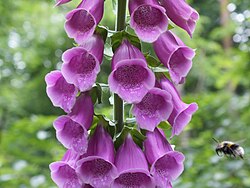
The plant also serves as a food source for various insects. The larvae of the foxglove pug moth consume the flowers, while other Lepidoptera, such as the lesser yellow underwing, feed on the leaves.
Medicinal Uses and Pharmacology
Digitalis is a primary example of a plant that transitioned from traditional herbalism to modern pharmacology. While early herbalists like Nicholas Culpeper suggested uses for wounds or epilepsy—claims that lack empirical evidence—modern medicine utilizes the plant's cardiac glycosides.
The use of foxglove extract to treat heart conditions was first detailed by William Withering in 1785, marking a milestone in modern therapeutics. Today, the drug digoxin, typically obtained from D. lanata, is used as a positive inotrope to increase cardiac contractility and as an antiarrhythmic agent to control heart rate in patients with atrial fibrillation or congestive heart failure.

Mechanism of Action
Digitalis works by inhibiting the sodium-potassium ATPase enzyme. This inhibition increases the concentration of sodium ions inside the cell, which in turn reverses the potential of the Na/Ca exchanger. Instead of pumping calcium out, the exchanger begins pumping calcium into the cell.
This increase in cytoplasmic calcium improves the force of cardiac contractions, thereby increasing the stroke volume and overall cardiac output. Additionally, Digitalis has a vagal effect on the parasympathetic nervous system, which helps slow the ventricular rate during atrial fibrillation.
Molecular Probes
Beyond medicine, a steroid found in the plant called digoxigenin (DIG) is used in laboratory research. It serves as a molecular probe to detect mRNA in situ and label DNA, RNA, and oligonucleotides, allowing scientists to reveal hybridized transcripts using specific antibodies.
Toxicity and Danger
The same compounds that make Digitalis medicinal also make it deadly. Due to their high toxicity, foxgloves are sometimes called "dead man's bells" or "witch's gloves." Toxins can be absorbed through ingestion or even through the skin.
Overdose leads to a condition known as digitalism. Symptoms include:
- Gastrointestinal: Nausea, vomiting, diarrhea, and loss of appetite.
- Cardiac: Tachycardia (fast heart rate) or bradycardia (slow heart rate), which can lead to syncope (fainting) or heart block.
- Neurological: Fatigue, delirium, and xanthopsia (a condition where vision becomes jaundiced or yellow).
Severe toxicity is treated with anti-digoxin antibody fragments. It is important to note that drying the plant does not reduce its toxicity, and it remains dangerous to livestock, poultry, dogs, and cats.
Digitalis in Popular Culture
The visual effects of digitalis poisoning have led to intriguing art history theories. Some speculators suggest that Vincent van Gogh's "Yellow Period" may have been influenced by digitalis-induced xanthopsia, as the drug was used to treat epilepsy at the time. However, this remains a theory; many historians argue that van Gogh simply preferred the color yellow, and there is no concrete evidence that he was prescribed the medication.
Frequently Asked Questions
Why is the plant called "foxglove"?
While the scientific name refers to "fingers," the common name "foxglove" has roots in Old English. Some historical suggestions linked it to "folks' glove" (referring to fairies) or "foxes-glew" (fairy music), though these are not linguistically supported by the Old English form foxes glofa.
Is Digitalis still used in modern medicine?
Yes, though its use is declining in favor of newer drugs. Digoxin is still prescribed for symptomatic chronic heart failure and for controlling the ventricular response rate in patients with atrial fibrillation.
What is the difference between digoxin and digitoxin?
Both are cardiac glycosides, but they differ chemically. Digoxin has an additional hydroxyl group, resulting in a half-life of about one day and a dependence on kidney function for clearance. Digitoxin has a longer half-life of about seven days and is not affected by kidney function.
Can you get poisoned just by touching foxgloves?
Yes, the toxins in Digitalis plants can be absorbed through the skin, although ingestion is the most common route of severe poisoning.
What is xanthopsia?
Xanthopsia is a neurological side effect of digitalis toxicity that causes the patient to see the world with a yellow tint or see blurred outlines and "halos" around objects.