Metabolism: The Chemical Engine of Life
At its core, metabolism (from the Greek metabolē, meaning "change") is the sum of all life-sustaining chemical reactions occurring within a living organism. These complex, enzyme-catalyzed processes are what allow organisms to grow, reproduce, maintain their physical structures, and respond dynamically to their environments.
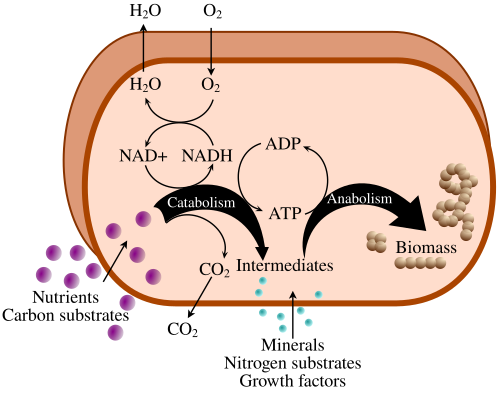
Metabolism serves three primary functions: converting energy from food into a usable form for cellular work, transforming nutrients into the building blocks of macromolecules (biopolymers), and excreting metabolic waste. While the term often refers to the broad scope of chemical reactions—including digestion and cellular transport—scientists specifically use the term intermediary metabolism to describe the reactions occurring within the cells themselves.
Key Facts
- Metabolism consists of two opposing but complementary processes: catabolism and anabolism.
- Catabolism breaks down complex molecules to release energy.
- Anabolism uses energy to build complex molecules (biosynthesis).
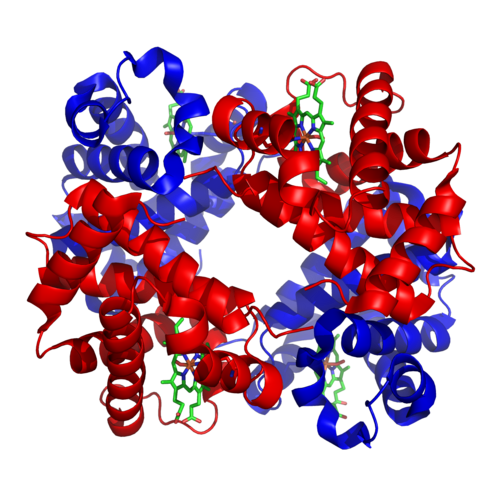
- Enzymes act as biological catalysts to drive these reactions efficiently.
- ATP (Adenosine Triphosphate) serves as the primary energy currency for the cell.
The Two Pillars of Metabolism: Catabolism and Anabolism
Metabolic reactions are categorized based on whether they break down or build up molecules. This balance is essential for maintaining homeostasis within an organism.
Catabolism: Energy Release
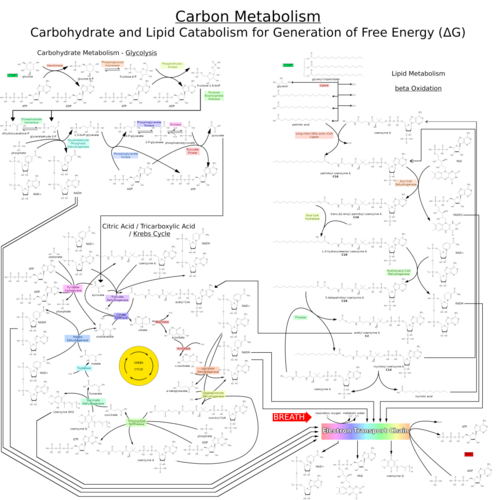
Catabolic pathways involve the breakdown of complex compounds into simpler ones. A classic example is cellular respiration, where glucose is broken down into pyruvate to release energy. Because these reactions typically release energy, they power other cellular functions.
![A simplified outline of the catabolism of proteins, carbohydrates and fats[43][44]](/images/af/22/af22d916ff524cfe87390616316c48a6b5bbb1c5b260105647b9da13437bab64.webp)
Anabolism: Energy Consumption
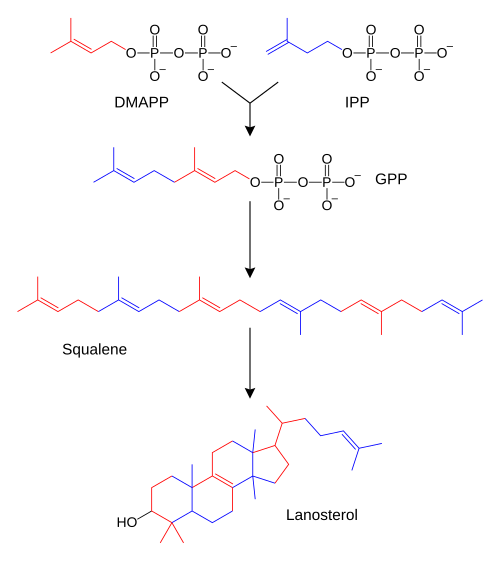
Anabolic pathways, or biosynthesis, are the opposite of catabolism. They consume energy to construct complex macromolecules such as proteins, lipids, nucleic acids, and carbohydrates. These processes are vital for growth and the repair of tissues.
Essential Biochemicals and Biopolymers
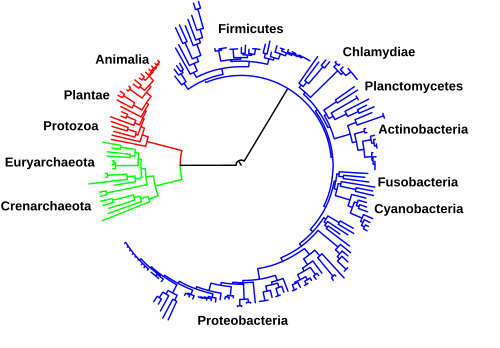
Metabolism revolves around the management of specific molecules that serve as either fuel or structural components. These are often organized as monomers (single units) that link together to form polymers.
| Molecule Type | Monomer Form | Polymer Form | Examples |
|---|---|---|---|
| Amino acids | Amino acids | Proteins (Polypeptides) | Fibrous and globular proteins |
| Carbohydrates | Monosaccharides | Polysaccharides | Starch, glycogen, cellulose |
| Nucleic acids | Nucleotides | Polynucleotides | DNA and RNA |
Carbohydrates and Energy
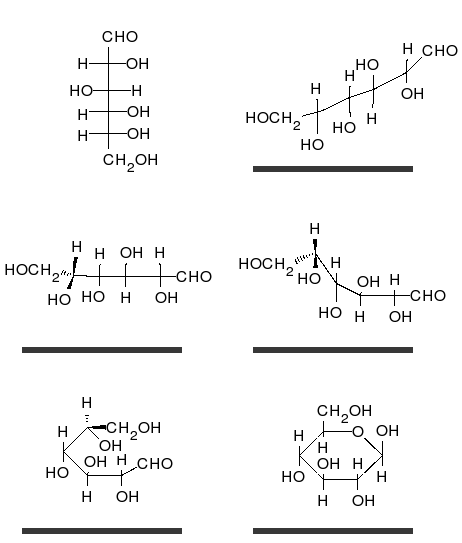
Carbohydrates are a primary energy source. Glucose, for instance, can exist in both straight-chain and ring forms, making it versatile for various metabolic pathways.
The Role of ATP
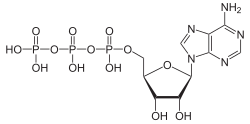
Adenosine triphosphate (ATP) is the central intermediate in energy metabolism. It captures chemical energy obtained from the breakdown of food molecules and releases it to fuel other cellular processes.
Energy Sources and Transformations
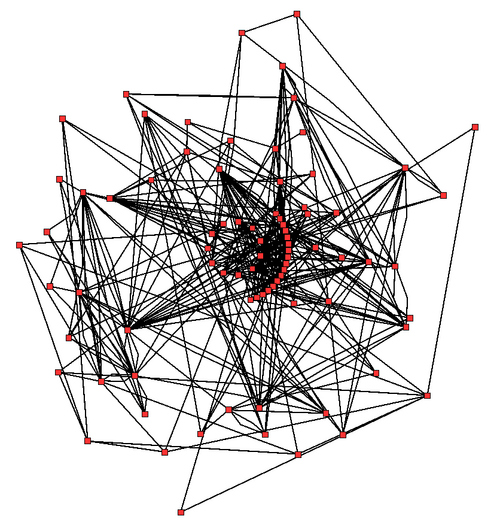
Organisms are classified by how they acquire energy and carbon. Some rely on sunlight (phototrophs), while others use chemical molecules (chemotrophs). Depending on their electron donor, they may be organotrophs (organic compounds) or lithotrophs (inorganic compounds). Similarly, organisms that fix their own carbon from inorganic sources are autotrophs, while those requiring organic carbon are heterotrophs.
Oxidative Phosphorylation and ATP Synthase
One of the most efficient ways cells generate ATP is through oxidative phosphorylation. This process utilizes a specialized enzyme called ATP synthase, which acts like a molecular motor to synthesize ATP from ADP and phosphate.
Photosynthesis
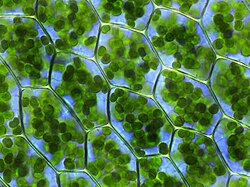
In plants, metabolism includes photosynthesis, where chloroplasts capture light energy to convert inorganic carbon into organic sugars.
Regulation and Systemic Control
Metabolism is not a random series of reactions but a highly regulated network. Hormones play a critical role in this coordination. For example, insulin regulates glucose uptake by triggering protein cascades that move glucose transporters to the cell membrane and stimulate glycogen synthesis and glycolysis.
![Effect of insulin on glucose uptake and metabolism. Insulin binds to its receptor (1), which in turn starts many protein activation cascades (2). These include: translocation of Glut-4 transporter to the plasma membrane and influx of glucose (3), glycogen synthesis (4), glycolysis (5) and fatty acid synthesis (6).[118]](/images/88/bd/88bdfef3d3ec459c423639fa2821674bfbddedbb34f62d7b863f3b4b326335ac.webp)
Frequently Asked Questions
What is the difference between catabolism and anabolism?
Catabolism is the process of breaking down complex molecules into simpler ones to release energy, whereas anabolism is the process of using energy to build complex molecules from simpler ones.
What is the role of ATP in metabolism?
ATP (Adenosine Triphosphate) acts as the primary energy currency of the cell, storing energy released during catabolism and providing it to power anabolic reactions and other cellular work.
How do autotrophs differ from heterotrophs?
Autotrophs can produce their own organic carbon from inorganic sources (like CO2), while heterotrophs must obtain organic carbon by consuming other organisms.
What are biopolymers?
Biopolymers are large molecules made of repeating monomer units. Examples include proteins (made of amino acids), nucleic acids (made of nucleotides), and polysaccharides (made of monosaccharides).
How does insulin affect metabolism?
Insulin promotes the uptake of glucose from the blood into cells, stimulates the synthesis of glycogen for storage, and encourages glycolysis and fatty acid synthesis.