Photoelectric Effect: The Quantum Leap in Light and Matter
The photoelectric effect is a physical phenomenon where electrons are emitted from a material when it is exposed to electromagnetic radiation, such as ultraviolet light. These emitted electrons are known as photoelectrons. While it may seem like a simple interaction, this effect fundamentally challenged the scientific community's understanding of light and paved the way for the birth of quantum mechanics.
Today, the study of photoemission is essential in condensed matter physics, solid-state physics, and quantum chemistry. By analyzing how electrons leave a surface, scientists can draw critical inferences about the properties of atoms, molecules, and solids. Beyond the laboratory, this effect is the operational basis for various light-detection devices and precision timing electronics.
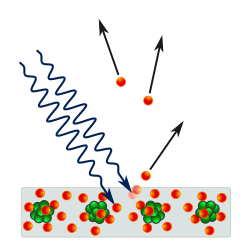
Key Facts
- Definition: The emission of electrons from a material caused by the absorption of light quanta.
- Threshold Frequency: Electrons are only ejected if the light exceeds a specific frequency, regardless of intensity.
- Quantum Nature: The effect proves that light behaves as discrete packets of energy called photons.
- Nobel Recognition: Albert Einstein (1921) and Robert Millikan (1923) both received Nobel Prizes for their work on this phenomenon.
- Modern Timing: Recent research shows photoemission is not instantaneous, occurring over timescales of 20 to 100 attoseconds.
The Conflict with Classical Physics
In the late 19th century, classical electromagnetism viewed light as a continuous wave. According to this theory, light waves should transfer energy to electrons gradually. Scientists predicted that increasing the intensity of light would increase the kinetic energy of the emitted electrons, and that even dim light would eventually trigger emission if given enough time for energy to accumulate.
However, experimental results contradicted these predictions. Observations showed that if the light frequency was below a certain threshold, no electrons were emitted, no matter how intense the light was or how long the material was exposed. This suggested that energy was not being accumulated over time, but was delivered in single, powerful bursts.
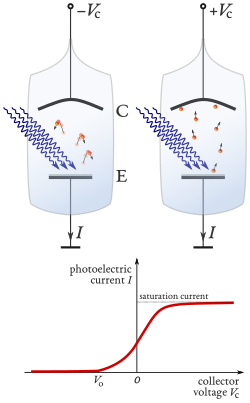
Einstein's Quantum Hypothesis
To resolve this contradiction, Albert Einstein proposed in 1905 that light is not a continuous wave but consists of discrete energy packets. These packets were later named photons by Gilbert N. Lewis. Einstein theorized that the energy of each photon is proportional to the light's frequency, multiplied by a value now known as the Planck constant.
Under this model, a single photon must have enough energy to overcome the binding forces of the electron in one interaction. If the photon's frequency is above the threshold, it can eject an electron immediately. If it is below the threshold, the photon lacks the necessary energy to dislodge the electron, and increasing the number of photons (intensity) does not help because the individual packets are still too weak.
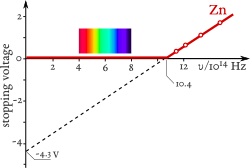
Experimental Evolution and Validation
Early Observations
The journey toward this discovery began with Johann Elster and Hans Geitel, who developed the first practical photoelectric cells. They discovered that different metals had different capacities for discharging negative electricity, noting that the most electropositive metals (such as rubidium and potassium) exhibited the strongest effect.
Later, Wilhelm Hallwachs and Philipp Lenard conducted detailed investigations. Lenard observed that ultraviolet radiation could trigger a current in an evacuated glass tube, a current that ceased the moment the radiation was stopped. This provided the first clear evidence of photoelectric emission.
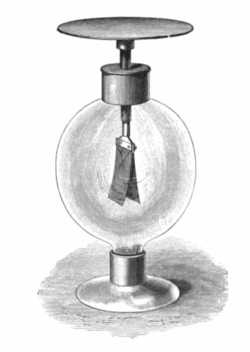
The Role of Millikan and Planck
Max Planck had previously suggested that energy in electromagnetic waves is released in packets while studying black-body radiation. Robert Millikan later performed highly accurate measurements of the Planck constant, which provided the empirical support needed to validate Einstein's model, despite Millikan's initial skepticism regarding the corpuscular theory of light.
Modern Applications and Research
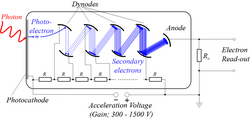
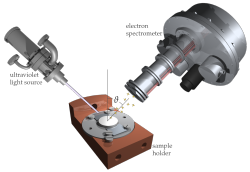
The photoelectric effect is not merely a theoretical milestone; it is the foundation for numerous technologies. Photomultipliers use this effect to detect extremely weak light signals, while image sensors in cameras convert light into electrical signals. In scientific research, Angle-resolved photoemission spectroscopy (ARPES) allows researchers to measure the energy and momentum of electrons to map the electronic structure of materials.
The Attosecond Frontier
In the 21st century, research has shifted toward the timing of the emission process. While long thought to be instantaneous, recent experiments using attosecond pulses (one quintillionth of a second) have revealed a finite delay. Studies on tungsten, for example, indicate that liberating an electron takes between 45 and 100 attoseconds, involving complex multielectron correlations.
![Plot of photon energies calculated for a given element (atomic number Z) at which the cross section value for the process on the right becomes larger than the cross section for the process on the left. For calcium (Z=20), Compton scattering starts to dominate at =0.08 MeV and ceases at 12 MeV.[72]](/images/65/1e/651e2d4e1f11c591f9d12406ab77479349295ded0035a7ece8aa63c7ea3c21e5.webp)
Summary of Photoelectric Properties
| Feature | Classical Prediction | Quantum Observation |
|---|---|---|
| Effect of Intensity | Increases kinetic energy of electrons | Increases number of electrons emitted |
| Effect of Frequency | No specific threshold required | Emission only above threshold frequency |
| Time Delay | Delay expected for dim light | Near-instantaneous (attosecond scale) |
| Light Nature | Continuous wave | Discrete packets (photons) |
Frequently Asked Questions
What is the difference between the photoelectric effect and the photovoltaic effect?
The photoelectric effect involves the total emission of electrons from a material's surface into a vacuum or gas. The photovoltaic effect is a related phenomenon where light creates voltage or electric current within a material (like a solar cell) without the electrons necessarily leaving the material.
Why does the frequency of light matter more than the intensity?
Because light consists of photons, the energy of an individual electron's ejection depends on the energy of a single photon. Frequency determines the energy per photon; intensity only determines the number of photons. If a single photon doesn't have enough energy to dislodge an electron, adding more low-energy photons will not trigger emission.
Which metals are most susceptible to the photoelectric effect?
Electropositive metals, such as rubidium, potassium, sodium, and lithium, exhibit the strongest photoelectric effects. In contrast, metals like copper, platinum, and iron show effects that are too small to be measured with ordinary light.
Is the emission of electrons truly instantaneous?
No. While it happens incredibly fast, recent research using attosecond spectroscopy has shown that it takes a finite amount of time—typically between 20 and 100 attoseconds—for an electron to be liberated from a material.