Phonetics: The Science of Speech Sounds and Articulation
Phonetics is a specialized branch of linguistics focused on the physical properties of speech sounds. Unlike other linguistic studies that look at the abstract rules of language, phonetics examines how sounds are physically produced (articulation), how they travel through the air (sound wave properties), and how they are received by the listener (perception).
To understand phonetics, it is essential to distinguish between a phone and a phoneme. A phone is the smallest individual unit of sound—the actual physical sound produced. In contrast, a phoneme is an abstract, language-specific category. Phonemes are the smallest units of sound that can change the meaning of a word within a specific language.
Key Facts
- Phonetics is divided into three main sub-disciplines: articulatory, acoustic, and auditory.
- The physical unit of study in phonetics is the phone.
- Phonetics applies not only to spoken languages but also to manual-visual modalities like sign languages.
- Voicing requires a specific pressure differential across the glottis, estimated at 1–2 cm H2O.
- Modern phonetics evolved significantly around 1800 CE with the advent of audio and visual recording technology.
The Three Pillars of Phonetics
The field is traditionally categorized by the stage of the communication process being analyzed:
- Articulatory Phonetics: The study of how the vocal organs (tongue, lips, larynx) produce sounds.
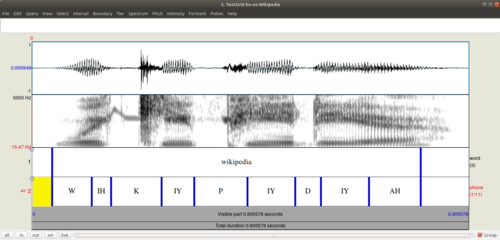
- Acoustic Phonetics: The study of the physical properties of the sound waves themselves.
- Auditory Phonetics: The study of how the ear and brain perceive and process these sounds.
Communicative Modalities
While we often associate phonetics with speaking, it encompasses any method of language production and perception, known as the communicative modality.
Oral-Aural Modality
Languages like English use an oral-aural modality, where speech is produced orally via the mouth and perceived aurally via the ears.
Manual-Visual Modality
Sign languages, such as American Sign Language (ASL) and Australian Sign Language (Auslan), utilize a manual-visual modality. Here, signs are produced manually with the hands and perceived visually with the eyes.
Tactile Modality
For deafblind speakers, some sign languages include a manual-manual dialect. In this tactile signing modality, signs are both produced and perceived using the hands.
The Mechanics of Speech Production
Speech production is a complex process that moves from mental planning to physical execution. This sequence generally involves lemma selection, the retrieval of phonological word forms, articulatory specification, and finally, the muscle commands that result in articulation.
The Role of the Larynx
The larynx (voice box) is critical for voicing. For the vocal folds to vibrate and produce sound, air must flow across them. This requires a pressure difference across the glottis (the opening between the vocal folds) of approximately 1–2 cm H2O (98.0665–196.133 pascals).
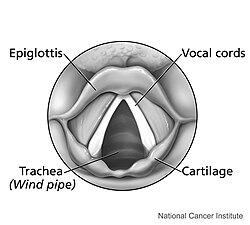
This pressure is maintained by the respiratory muscles. While supraglottal pressure (above the glottis) is typically equal to atmospheric pressure, it can increase when consonants create constrictions in the airflow.
Historical Evolution
Early phonetic insights were documented by Pāṇini and other Indic grammarians. However, sustained modern interest only resurfaced around 1800 CE, with the term "phonetics" appearing in its current sense by 1841. The development of medical science and recording devices allowed researchers to analyze data with unprecedented detail.
A notable milestone was the creation of "visible speech" by Alexander Melville Bell. This phonetic alphabet, based on articulatory positions, became a vital tool for the oral education of deaf children.
Summary of Phonetic Concepts
| Feature | Phone | Phoneme |
|---|---|---|
| Nature | Physical sound unit | Abstract category |
| Scope | Universal physical property | Language-specific |
| Function | The actual sound produced | Smallest unit affecting meaning |
Frequently Asked Questions
What is the difference between phonetics and phonology?
Phonetics studies the physical properties of sounds (phones), including how they are made and heard. Phonology studies how those sounds are organized into systems (phonemes) within a specific language to convey meaning.
Does phonetics apply to sign languages?
Yes. Phonetics addresses the physical production and perception of sign languages, including manual-visual signs and tactile signing used by deafblind individuals.
What is required for voicing to occur in the larynx?
Voicing requires the vocal folds to be positioned correctly and a pressure differential of 1–2 cm H2O to exist across the glottis, which allows the folds to vibrate as air flows across them.
What are the three main branches of phonetics?
The three branches are articulatory phonetics (production), acoustic phonetics (physical properties of sound waves), and auditory phonetics (perception).
Who developed "visible speech"?
Alexander Melville Bell developed visible speech, an influential phonetic alphabet based on the positions of the articulators, which was used extensively in the education of deaf children.