Philosophia Botanica and the Foundations of Modern Taxonomy
In the mid-18th century, the scientific world faced a crisis of communication. As colonial exploration brought thousands of new plant species to Europe, botanists struggled with a chaotic naming system. Enter Carl Linnaeus (1707–1778), a Swedish naturalist and physician whose work transformed the way we categorize life on Earth. His seminal work, Philosophia Botanica (1751), served as the first comprehensive textbook of descriptive systematic botany and botanical Latin, providing the theoretical bedrock for modern biological classification.
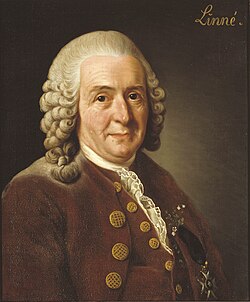
Key Facts
- Philosophia Botanica (1751) established the first formal rules for botanical terminology and nomenclature.
- Linnaeus introduced the nomen triviale (trivial name), which evolved into the modern specific epithet.
- The work separated the designatory function (the name) from the diagnostic function (the description) of plant identification.
- Species Plantarum (1753) is the official starting point for scientific plant names.
- Linnaeus's system was based on Aristotelian logic, utilizing a method of logical division to organize nature.
The Evolution of Binomial Nomenclature
Before Linnaeus, plants were identified using polynomials—long, descriptive Latin phrases known as nomina specifica. While accurate, these names were unwieldy; every time a new species was discovered, existing diagnostic phrases often had to be adjusted to maintain distinction.
Linnaeus solved this by introducing the binomial system. He associated a generic name with a single additional word, the nomen triviale. While Linnaeus initially viewed this as a matter of convenience rather than a replacement for the full diagnostic description, the scientific community eventually adopted the two-word format as the standard. Today, this consists of the generic name (representing relationship and resemblance) and the specific epithet (representing distinctness).
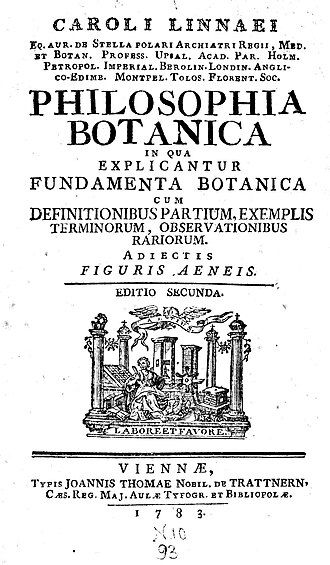
The Structure of Philosophia Botanica
Written as a series of stark, uncompromising principles called aphorismen, Philosophia Botanica was an elaboration of Linnaeus's earlier works, Fundamenta Botanica (1736) and Critica Botanica (1737). It functioned as a "grammar and syntax" for botany, establishing a standardized vocabulary.
For example, in principle §79, Linnaeus clearly defines the anatomy of a plant: the root (radix), the leafy shoot (herba), and the organs of reproduction (fructificatio). He further breaks down the leafy shoot into the stem, leaves, accessory parts (such as spines and tendrils), and hibernating organs like bulbs and buds.
Historical Context and Major Works
Linnaeus's journey toward Philosophia Botanica was marked by intense study and international collaboration. During his time in the Netherlands (1735–1738), serving as physician to George Clifford, he had access to vast collections of tropical plants. This period sparked a flurry of foundational publications, including Hortus Cliffortianus.
This theoretical work culminated in the 1753 publication of Species Plantarum. This monumental task involved describing approximately 5,900 species and established the species, rather than the genus, as the fundamental taxonomic unit. Linnaeus defined a species as structures in nature that do not owe their shape to growth conditions or occasional features.
| Work | Year | Primary Contribution |
|---|---|---|
| Systema Naturæ | 1735 | Early hierarchical classification of animals, plants, and minerals. |
| Fundamenta Botanica | 1736 | Introduced 365 aphorisms on botanical foundations. |
| Critica Botanica | 1737 | Expanded nomenclatural rules; spread Linnaean ideas across Europe. |
| Philosophia Botanica | 1751 | First textbook of systematic botany and botanical Latin. |
| Species Plantarum | 1753 | Starting point for scientific plant nomenclature. |
Historical Assessment and Legacy
Linnaeus's approach was deeply rooted in scholasticism and Aristotelian logic. He utilized a dispositio theoretica (theoretical arrangement) based on definitions to divide genera into species. While some historians, such as Alan Morton, argue that Linnaeus was limited by an "idealist-essentialist" worldview and blind to advances in plant anatomy, his practical contributions are undisputed.
By creating a stable, verifiable, and international Latin nomenclature, Linnaeus provided a universal language for biology. His ability to separate the label of a plant from its description allowed science to scale alongside the discovery of the natural world.
Frequently Asked Questions
What is binomial nomenclature?
It is the formal system of naming species using two parts: a generic name (the genus) and a specific epithet. This system replaces long descriptive phrases with a concise, two-word identifier.
Why is Species Plantarum significant?
Published in 1753, it is recognized as the official starting point for the scientific naming of plants, codifying morphological terminology and applying binomials to the plant kingdom globally.
What was the purpose of the nomen triviale?
The nomen triviale was introduced by Linnaeus as a "trivial name" for convenience. It was intended to be a short label linked to a longer diagnostic description, though it eventually became the primary species name.
How did Linnaeus define a species?
Linnaeus defined species as all structures in nature that do not owe their shape to the conditions of the growth place or other occasional features.
What is the difference between a designatory and diagnostic function?
The designatory function is the act of providing a simple label (the name) for an organism, while the diagnostic function is the detailed description that distinguishes that organism from all others.