Philipp Scheidemann: The Architect of the German Republic
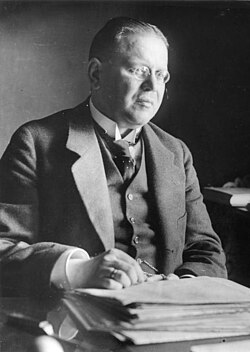
Philipp Scheidemann was a pivotal figure in early 20th-century German politics, serving as a cornerstone of the Social Democratic Party of Germany (SPD) and a primary catalyst for the transition from monarchy to republic. He is most famously remembered for the bold act of proclaiming the German Republic from the balcony of the Reichstag building during the turmoil of the 1918 revolution.
From his humble beginnings as a typesetter to his tenure as the Reich Minister President, Scheidemann's life mirrored the volatility of Germany's journey through World War I, the fragile democracy of the Weimar Republic, and the eventual rise of National Socialism.
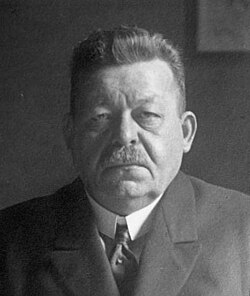
Key Facts
- Historic Act: Proclaimed the German Republic on November 9, 1918.
- Highest Office: Served as Reich Minister President from February to June 1919.
- Party Leadership: Co-led the SPD alongside Friedrich Ebert from 1917 to 1919.
- Local Governance: Served as the Mayor of Kassel from 1920 to 1925.
- Exile: Forced to flee Germany in 1933 to escape Nazi persecution.
Early Life and Professional Roots
Born on July 26, 1865, in Kassel, Philipp Heinrich Scheidemann grew up in a working-class environment. Following the death of his father in 1879, the family faced significant poverty, prompting Scheidemann to enter an apprenticeship as a typesetter and letterpress printer. This professional background in the printing trade deeply influenced his later career in political journalism.
Scheidemann joined the SPD in 1883, a period when the party was banned under the Anti-Socialist Laws—legislation designed by Otto von Bismarck to suppress social democratic movements. His intellectual curiosity led him to the University of Marburg, where the philosopher Hermann Cohen left a lasting impression on his worldview.
By 1895, he transitioned fully into journalism, editing several social democratic newspapers across Giessen, Nuremberg, and Offenbach, before returning to his hometown of Kassel to work for the Casseler Volksblatt.
Rise to National Prominence
Scheidemann entered the Reichstag (the imperial parliament) in 1903 representing the Düsseldorf 3 constituency. His ascent within the SPD was rapid; by 1913, he became the chairman of the SPD parliamentary group. He broke traditional barriers in 1912 by becoming the first Social Democrat elected as a vice president of the Reichstag, though he initially refused to take office to avoid the customary "going to court" visit to the emperor, a practice the SPD viewed with skepticism.
The Impact of World War I
The First World War created deep fractures within the SPD. While some members opposed war funding, Scheidemann advocated for a negotiated peace, known as the "Scheidemann Plan." This tension led to a party split in 1917, with the anti-war wing forming the Independent Social Democratic Party (USPD), while Scheidemann remained with the Majority SPD (MSPD), eventually becoming party chairman alongside Friedrich Ebert.
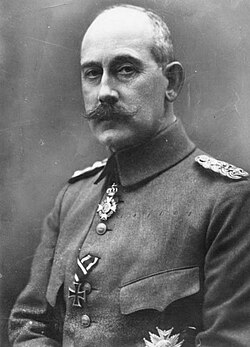
As the war neared its end, Scheidemann worked with other parties to push for a parliamentary government where ministers were responsible to the Reichstag rather than the emperor. Despite initial hesitation to join a cabinet led by Prince Maximilian von Baden, the SPD eventually entered the imperial government for the first time in October 1918.
Proclaiming the Republic and Leading the Nation
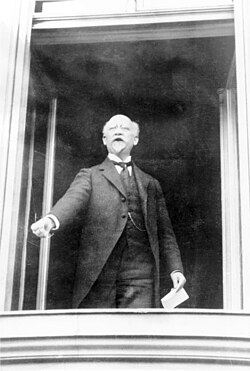
On November 9, 1918, as the German Empire collapsed, Scheidemann stepped onto the balcony of the Reichstag and declared: "The old and rotten, the monarchy, has collapsed. Long live the new! Long live the German Republic!"
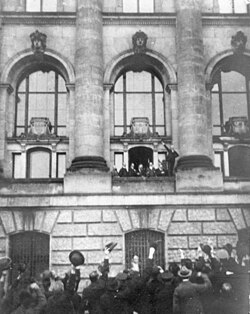
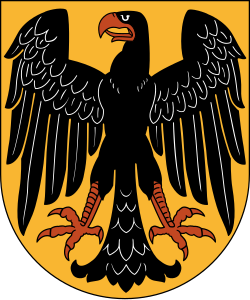
Following this proclamation, he served on the Council of the People's Deputies, a provisional government formed during the revolution. In February 1919, he was elected Reich Minister President (the equivalent of the Reich Chancellor) by the National Assembly in Weimar. His primary mission was to oversee the creation of a new constitution for the republic.
However, his tenure was short-lived. Scheidemann resigned in June 1919 due to cabinet disagreements over the terms of the Treaty of Versailles, the peace treaty that officially ended World War I and imposed heavy penalties on Germany.
Later Political Career and the Mayoralty of Kassel
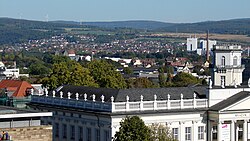
After leaving the national premiership, Scheidemann remained a member of the Reichstag until 1933. He returned to his roots in 1920, serving as the Mayor of Kassel until 1925. His time in local government was fraught with conflict; bourgeois opponents questioned his qualifications as a craftsman's son, and he eventually stepped down following a motion of no confidence and mediation by the district president.
Throughout the 1920s, he remained a fierce defender of the Republic, urging the SPD to prioritize the safeguarding of democratic institutions against threats from both the far right and far left.
Exile and Final Years
The rise of Adolf Hitler and the Nazi Party in 1933 spelled the end of Scheidemann's life in Germany. Labeled one of the "November criminals"—a derogatory term used by the far right to blame the republic's founders for Germany's defeat in WWI—he fled into exile shortly after the Reichstag fire.
Scheidemann lived in various countries, including Austria, Czechoslovakia, Switzerland, France, and the United States, before settling in Denmark in 1935. He was stripped of his German citizenship in 1933. He spent his final years writing critical analyses of Social Democratic politics, though many of these manuscripts were hidden during the Nazi occupation of Denmark and not published until 2002.
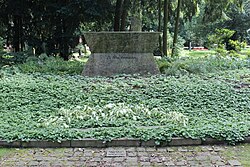
Philipp Scheidemann died in Copenhagen on November 29, 1939. In 1953, his ashes were returned to Kassel, where he is buried as a guest of honor.
| Role | Period | Key Contribution/Context |
|---|---|---|
| SPD Party Chairman | 1917–1919 | Led the MSPD during the end of WWI. |
| Council of the People's Deputies | 1918–1919 | Managed financial policy for the provisional government. |
| Reich Minister President | Feb 1919 – June 1919 | Led the government during the drafting of the constitution. |
| Mayor of Kassel | 1920–1925 | Managed local governance in his hometown. |
| Member of the Reichstag | 1903–1933 | Long-term legislative representative for various districts. |
Frequently Asked Questions
Why is Philipp Scheidemann famous?
He is most famous for proclaiming the establishment of the German Republic from the balcony of the Reichstag on November 9, 1918, effectively ending the German monarchy.
Why did Scheidemann resign as Reich Minister President?
He resigned in June 1919 because his cabinet could not reach a unanimous agreement on whether to accept the terms of the Treaty of Versailles.
What were the "November criminals"?
This was a term used by right-wing nationalists and the Nazi Party to describe the politicians, such as Scheidemann, who were involved in the 1918 revolution and the signing of the armistice, accusing them of betraying Germany.
Where did Scheidemann spend his final years?
After fleeing Nazi Germany in 1933, he lived in several countries before spending his final years in Copenhagen, Denmark, where he died in 1939.
What happened to his writings after his death?
Many of his critical manuscripts were buried by his daughter during the Nazi occupation of Denmark to protect them. They were recovered in 1945 but were not published by the SPD until 2002 because they were critical of the party's official policies.