Understanding Phenology: The Science of Nature's Timing
Have you ever wondered why certain flowers bloom earlier each spring, or why migratory birds seem to arrive at different times than they did decades ago? The answer lies in phenology—the scientific study of periodic biological events and how they are influenced by seasonal changes, climate variations, and habitat factors like elevation.
Phenology tracks the rhythmic "pulse" of the natural world. It includes observing the first emergence of leaves, the flight of butterflies, the arrival of migratory birds, the changing colors of autumn foliage, and even the developmental cycles of honey bee colonies. Because these biological milestones are highly sensitive to temperature, phenological records serve as a vital proxy—a measurable substitute—for reconstructing historical climate data.
![Historical day of year for first bloom index (FBI) for the Tallgrass Prairie National Preserve, Kansas (dots) fitted with a local polynomial regression model (loess in red) and a 2 standard error band (blue). Data from William Monahan.[16]](/images/12/22/1222b55476351a6f7fa7deb0835ed6f2add3d9a063e726dc9290b2cf541d9132.png)
The History and Etymology of Phenology
The term "phenology" was first coined by Charles François Antoine Morren, a botany professor at the University of Liège. The word's origins are rooted in a scientific dialogue involving Adolphe Quetelet, a pioneer in 19th-century observational science. Initially, Morren suggested the term "anthochronological observations" to describe botanical timing, but "phenology" eventually became the standard scientific descriptor.
Long before modern thermometers and satellites, humans were recording these natural rhythms. In Japan and China, the blossoming of cherry and peach trees has been documented in connection with festivals since as early as the eighth century. In Europe, viticultural (grape-growing) records have been used to reconstruct summer temperatures dating back over 500 years.
Early Naturalist Records
Some of the earliest systematic English records come from naturalists Gilbert White and William Markwick. Between 1768 and 1793, they documented over 400 species in Hampshire and Sussex. While their data provided a baseline of earliest and latest dates for various events, it lacked the annual resolution needed to track year-to-year changes.
Modern Phenological Observations
The transition from casual observation to systematic science was led by figures like Robert Marsham in Great Britain. Starting in 1736, the Marsham family maintained consistent records of "phenophases"—specific stages in a biological life cycle—for generations. Their data revealed a clear link between biological timing and temperature, showing that as the climate warmed between 1850 and 1950, events like oak-leafing occurred earlier.
Today, phenology is a global effort involving both professional scientists and citizen science—research conducted by volunteers. Projects like "Nature's Calendar" in the UK allow everyday people to contribute to massive datasets that help scientists track the impacts of global warming.
![Analyzing >250 US cities, all but two experienced fewer freezing days in 2025 than in 1956. In 2025, on average, freezing days began 11 days later and ended 26 days earlier. These shifts impact diseases, drinking water, and agriculture.[17]](/images/1f/ef/1fefd245d08413e8804e340aaa6ae19625b5616f2b83a9c1239d63e986f44e43.webp)
The Impact of Climate Change
Recent research highlights a concerning trend: many species are shifting their schedules. In Britain, the average First Flowering Date (FFD) for 385 plant species advanced by 4.5 days in a single decade compared to previous decades. Some species may now be flowering up to 15 days earlier than in the recent past.
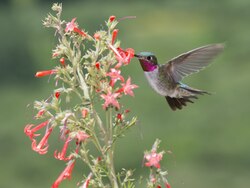
This shift can lead to a phenological mismatch. This occurs when the timing of two interacting species becomes uncoordinated. For example, if a flower blooms too early due to warmth, but a pollinating insect or bird arrives at its usual time, the vital interaction between the two is lost.
Measuring Vegetation and Growth
Beyond manual observations, modern science uses advanced technology to monitor phenology on a massive scale. One such tool is the NDVI (Normalized Difference Vegetation Index), which uses satellite data to measure the "greenness" or health of vegetation. By analyzing these temporal profiles, scientists can see how growing seasons expand or contract due to climatic constraints.
![NDVI temporal profile for a typical patch of coniferous forest over a period of six years. This temporal profile depicts the growing season every year as well as changes in this profile from year to year due to climatic and other constraints. Data and graph are based on the MODIS sensor standard public vegetation index product.[45] Data archived at the ORNL DAAC , courtesy of Dr. Robert Cook.[46]](/images/92/48/924881aa01ba5792dcb85e2dd9f54a8e87b655d4316f63d013487d7bc6aef1aa.jpg)
Key Facts
- Phenology is the study of periodic biological life cycle events and their relationship to climate.
- Biological events like flowering and bird migration are highly sensitive to temperature.
- Phenological records act as a proxy for reconstructing historical temperatures.
- Phenological mismatch occurs when the timing of interacting species (like plants and pollinators) falls out of sync.
- Modern monitoring utilizes both citizen science and satellite technology like NDVI.
Summary of Phenological Data Types
| Method | Primary Focus | Key Advantage |
|---|---|---|
| Historical Records | Harvest dates, ancient festivals | Provides data centuries before instruments existed. |
| Systematic Recording | Bud burst, insect emergence | High temporal resolution of long-term trends. |
| Citizen Science | First flowering, bird arrivals | Large-scale data collection across wide geographies. |
| Remote Sensing (NDVI) | Vegetation greenness/growth | Global coverage and objective measurement. |
Frequently Asked Questions
What is a phenophase?
A phenophase is a specific stage in a biological life cycle, such as a plant budding, a flower opening, or an insect emerging from dormancy.
How does phenology help us understand climate change?
Because many biological events are triggered by temperature, changes in the timing of these events (such as earlier spring blooms) provide direct evidence of warming trends and help scientists reconstruct past climates.
What is a phenological mismatch?
A phenological mismatch happens when the timing of two interdependent species—such as a flowering plant and its pollinator—becomes uncoordinated due to changing environmental conditions, potentially threatening their survival.
Can I participate in phenological research?
Yes! Many organizations run citizen science projects, such as "Nature's Calendar," which allow volunteers to record observations of local plants and animals to assist professional researchers.
Why are grape harvests used to study history?
Grape harvests are highly sensitive to summer temperatures. By looking at historical records of when grapes were harvested, scientists can reconstruct summer growing season temperatures dating back hundreds of years.