Understanding Petals: The Science and Beauty of the Corolla
When we think of flowers, the first things that come to mind are usually the vibrant, fragrant petals. While they are often admired for their beauty, petals are actually highly specialized modified leaves that serve a critical biological purpose: protecting the flower's reproductive organs and attracting the pollinators necessary for survival.
The collection of all petals in a flower is known as the corolla. Together with the outer whorl of modified leaves called sepals (which collectively form the calyx), they make up the perianth—the non-reproductive portion of the flower.
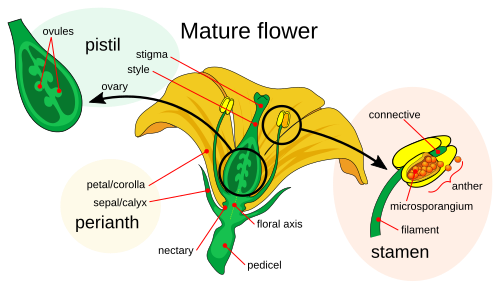
The Structure of the Perianth
In many plants, such as roses (Rosa) or beans (Phaseolus), the sepals and petals are distinct and easy to tell apart. However, in other species like tulips (Tulipa) or aloe, these parts are nearly identical. In such cases, they are collectively called tepals. When these undifferentiated tepals are brightly colored, they are described as "petaloid." This is common in petaloid monocots, also known as lilioid monocots, such as those in the order Liliales.
Types of Corolla Fusion
Botanists classify flowers based on how their petals are joined. A corolla consisting of separate petals without any fusion is called apopetalous. If the petals are entirely free from one another, the plant is described as polypetalous or choripetalous.
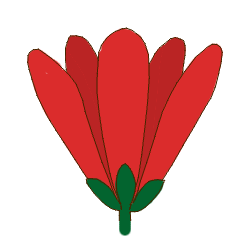
Conversely, if the petals are at least partially fused, the flower is gamopetalous or sympetalous. These fused petals often form a "corolla tube." In cases where tepals are fused, the term used is syntepalous.
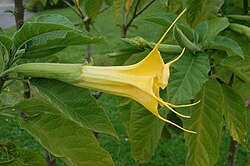
Variations in Shape and Symmetry
Petal characteristics often provide vital clues for plant classification. For instance, eudicots (the largest group of dicots) typically have four or five petals, while monocots generally have three or six, though exceptions exist.
Radial vs. Bilateral Symmetry
The symmetry of the corolla is a primary distinguishing feature in botany:
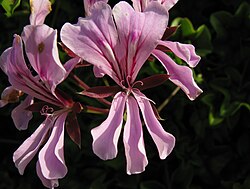
- Actinomorphic: Also known as "regular" or "ray-formed," these flowers are radially symmetrical, meaning all petals are essentially identical in size and shape.
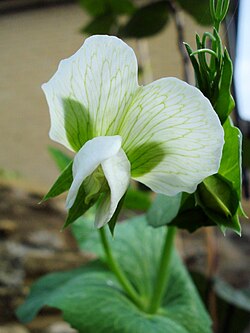
- Zygomorphic: Also known as "irregular" or "pair-formed," these flowers have bilateral symmetry, meaning they are symmetrical in only one plane.
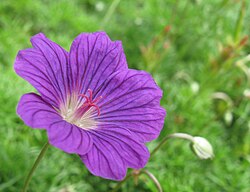
Zygomorphic flowers are common in orchids and members of the pea family, where petals deviate significantly from the radial norm to accommodate specific pollinators.
Specialized Petal Forms
Some plants exhibit unique anatomical adaptations. In the aster family (such as the sunflower, Helianthus annuus), the outer edge of the flower head consists of ray florets, where each floret is an individual flower with one large petal. In contrast, the center disc florets have very reduced petals or none at all.
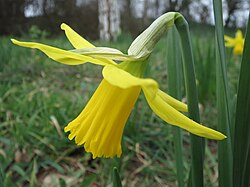
Some species, such as Narcissus, feature a hypanthium—a floral cup formed by the fusion of the lower part of the petals or tepals above the ovary.
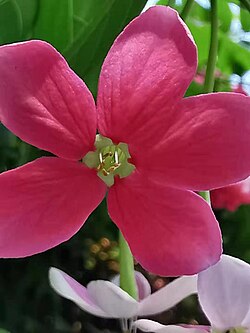
Additionally, a single petal may be divided into two distinct sections: the blade (the broad upper part) and the claw (the narrow lower part), separated by a region called the limb. This structure is particularly evident in the Brassicaceae family, such as Erysimum cheiri.
The Genetics and Evolution of Petals
According to the ABC model of flower development, sepals, petals, stamens, and carpels are essentially modified versions of one another. Scientific evidence suggests that the genetic mechanism to form petals evolved very few times—perhaps only once—rather than evolving repeatedly from stamens.
The Role of Petals in Pollination
Pollination is essential for the sexual reproduction of higher plants. Because pollen cannot move on its own, plants rely on wind or animals to transport it to the stigma of another flower. Petals act as the primary tool for competing for the attention of these pollinators.
Wind Pollination
Plants that rely on the wind, such as grasses, do not need to attract animals. Consequently, their flowers often have small, dull petals, produce no scent, or are apetalous (completely lacking petals). To compensate for the randomness of wind dispersal, these plants produce massive quantities of pollen.
Attracting Insects
Insect-pollinated flowers use a variety of sensory lures:
- Visual Guides: Many flowers feature nectar guides (or pollen/floral guides). These are color patterns, often visible only in ultraviolet light, that lead bees and butterflies to the center of the flower.
- Physical Structure: Petal shapes often provide landing platforms that force insects to brush against the anthers and stigmas. For example, the pōhutukawa (Metrosideros excelsa) uses small petals paired with large, bright red clusters of stamens.
- Scent: Fragrances can be sweet, like the rose, or mimic the smell of rotting meat to attract flies. Scent is especially critical for flowers pollinated at night by moths.
Attracting Birds and Bats
Bird-pollinated plants, such as the kowhai (Sophora species) or the kaka beak (Clianthus puniceus), typically have large, brightly colored petals to remain visible against green foliage. Some, like the tree fuchsia (Fuchsia excorticata), change color from green to red to signal to birds when pollination is no longer needed.
Bat-pollinated flowers, such as the parasitic Dactylanthus taylorii, prioritize scent and reward over color. These flowers are often colorless but produce strong scents and abundant nectar to attract short-tailed bats.
Key Facts
- Corolla: The collective term for all petals in a flower.
- Perianth: The non-reproductive part of the flower, consisting of the calyx (sepals) and corolla (petals).
- Tepals: Terms used when petals and sepals are indistinguishable.
- Symmetry: Flowers are either actinomorphic (radial) or zygomorphic (bilateral).
- Pollination: Petals evolve specifically to attract pollinators via color, UV guides, scent, and shape.
- Apetalous: A term for flowers that have no petals, common in wind-pollinated species.
Pollination Strategy Comparison
| Pollinator | Petal Color/Appearance | Scent | Key Feature |
|---|---|---|---|
| Wind | Dull or absent (apetalous) | Little to none | High pollen volume |
| Insects | Bright; UV nectar guides | Sweet or rotting meat | Landing platforms |
| Birds | Large and vivid | Variable | Color-change signaling |
| Bats | Often colorless | Strong fragrance | Abundant nectar |
Frequently Asked Questions
What is the difference between a corolla and a calyx?
The corolla is the inner whorl of a flower made up of petals, while the calyx is the outer whorl made up of sepals.
What are tepals?
Tepals are the collective name for the perianth segments when the petals and sepals are visually indistinguishable from one another.
What does "zygomorphic" mean in botany?
Zygomorphic refers to flowers that have bilateral symmetry, meaning they can be divided into two equal halves along only one plane.
Why do some flowers have no petals?
Flowers that are wind-pollinated, such as grasses, do not need to attract animal pollinators. Therefore, they often evolve to have very small petals or no petals at all (apetalous) to save energy.
How do nectar guides work?
Nectar guides are patterns on the petals—often invisible to humans but visible in ultraviolet light—that act as visual maps to lead insects toward the flower's nectar and reproductive organs.