Peruvians: A Rich Tapestry of Heritage, Culture, and Identity
Peruvians are the citizens of Peru, a nation defined by millennia of history and a profound blending of global influences. From the ancient Caral civilization to the architectural marvels of the Inca Empire and the subsequent Spanish conquest in the 16th century, the Peruvian identity has been shaped by resilience and synthesis. Today, Peru stands as the fourth most populous country in South America, boasting a vibrant population that bridges the gap between ancestral indigenous traditions and modern global trends.
The demographic landscape of Peru has undergone dramatic shifts. Following the Spanish arrival, the population plummeted from an estimated 5–9 million in the 1520s to roughly 600,000 by 1620, primarily due to infectious diseases. However, the subsequent centuries saw a wide mixing of Native Peruvians with Spanish settlers and Africans, followed by waves of immigration from Italy, Germany, France, and the British Isles, as well as significant arrivals from China and Japan in the late 19th century.

Key Facts
- Population: Approximately 31.2 million (2017 Census), with a diaspora of 5.1 million.
- Primary Ethnicity: 60.2% self-identify as Mestizo (mixed European and Indigenous).
- Main Languages: Peruvian Spanish (82.6%), Quechua (13.9%), and Aymara (1.6%).
- Dominant Religion: Catholicism (76.03%).
- Urbanization: 79.3% of the population lives in urban areas as of 2017.
- Global Presence: The largest expatriate communities are located in the United States, Argentina, Spain, and Chile.
Ethnic Diversity and Ancestry
The Peruvian people are a mosaic of ethnic backgrounds, reflecting a history of migration and integration. The 2017 Census highlights a diverse self-identification among citizens aged 12 and older.
Mestizo and Indigenous Populations
The majority of Peruvians (60.2%) identify as Mestizo. Indigenous groups remain a cornerstone of the national identity, with Quechuas (20%) and Aymaras (2%) maintaining strong presence, particularly in the southern Andes. Over the last four decades, massive internal labor migration has moved many indigenous populations from the highlands to coastal cities.
European and Asian Influence
European descendants make up 5.9% of the population, primarily stemming from Spanish colonial settlers and later immigrants from Italy, Germany, and France. These communities are largely concentrated in Lima and northern cities like Trujillo and Piura.
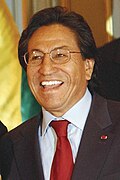
Asian heritage is also significant, with 3-10% of the population identifying as having Chinese or Japanese roots. Peru hosts the largest population of Chinese descendants in Latin America, a result of 19th-century labor contracts that brought over 100,000 Chinese workers to the guano fields and Andean railroads.

Afro-Peruvian Heritage
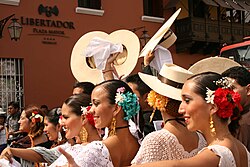
Afro-Peruvians constitute 3.6% of the population. Descendants of people brought from regions such as Angola, Nigeria, and Mozambique, they have profoundly influenced Peruvian music and dance. The Cajon, a percussion instrument, is a testament to this legacy. Slavery was officially abolished in Peru in 1854 by President Ramón Castilla.

Language and Religion
While Peruvian Spanish is the primary language used in media and government, the country is linguistically diverse. Indigenous languages like Quechua and Aymara are widely spoken in the Andes, while Ashaninka is spoken in the rainforest. Literacy rates are high, estimated at 94.2% in 2017, though there remains a gap between urban (96.8%) and rural (83%) areas.
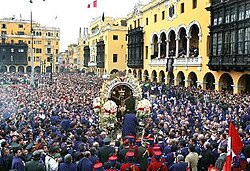
Spirituality is central to Peruvian life, with 76.03% of the population practicing Catholicism. One of the most significant religious events is the procession of the Lord of Miracles (the "Black Christ"). This veneration centers on a 17th-century mural painted by an Angolan slave that miraculously survived several devastating earthquakes in Lima.
Cultural and Artistic Legacy
Peruvian culture is a synthesis of Amerindian (primarily Inca) and Hispanic traditions. This is evident in the nation's architecture, from the massive stone walls of the Sacsayhuaman fort to the adobe city of Chan-Chan, the largest of its kind in the Americas.
In literature, Peru has produced world-renowned figures, including Nobel laureate Mario Vargas Llosa. The early 20th century saw the rise of Indigenismo, a movement focusing on indigenous rights and identity through the works of writers like César Vallejo.
Gastronomy
Peruvian cuisine is globally celebrated for its fusion of Andean, Spanish, Chinese, Italian, African, and Japanese influences. A key flavor profile is provided by aji seco. The country is a biodiversity powerhouse, boasting over 4,000 types of potatoes and quinoa, both of which were introduced to Europe by the Spanish in 1532.
Popular traditional dishes include:
- Ceviche: Fresh raw fish cured in citrus juices.
- Anticuchos: Grilled meat skewers.
- Pachamanca: A traditional earth-oven roast.
- Papa a la Huancaína: Boiled potatoes in a spicy, creamy cheese sauce.

Demographic Summary
| Category | Detail/Percentage |
|---|---|
| Total Population (2017 Census) | 31.2 Million |
| Mestizo | 60.1% |
| Quechua | 22.3% |
| White/European | 5.9% |
| Afro-Peruvian | 3.6% |
| Aymara | 2.4% |
| Catholicism | 76.03% |
| Urban Population | 79.3% |
Frequently Asked Questions
What is the most common ethnic identity in Peru?
The most common identity is Mestizo, with 60.2% of the population identifying as a mix of European and Indigenous ancestry.
Which languages are spoken in Peru besides Spanish?
The most prominent indigenous languages are Quechua (13.9%) and Aymara (1.6%), with Ashaninka spoken in the rainforest regions.
What is the significance of the Lord of Miracles?
The Lord of Miracles is a venerated mural of Jesus Christ painted by an Angolan slave in 1651. It is the center of one of the world's largest religious processions in Lima every October.
How did Asian immigration begin in Peru?
Asian immigration began in 1849 with the arrival of Chinese laborers on the ship Federico Guillermo, intended to replace slave labor in sugar and rice fields and guano extraction.
What makes Peruvian cuisine unique?
Peruvian cuisine is unique due to its extreme biodiversity—such as having over 4,000 potato varieties—and its fusion of Andean, European, and Asian culinary traditions.