Central America: Geography, Culture, and Regional Integration
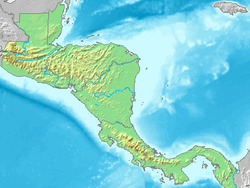
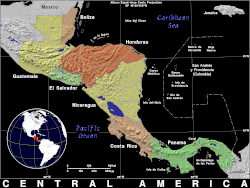
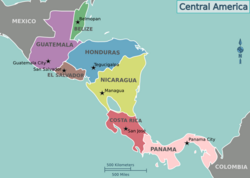
Central America is a vibrant isthmus connecting North and South America, characterized by its diverse landscapes, rich indigenous heritage, and a complex history of political evolution. Spanning an area of 523,780 square kilometers, this region is home to seven distinct nations that share deep cultural ties while maintaining unique national identities.
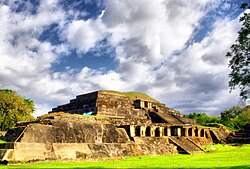
From the volcanic peaks of Guatemala to the tropical rainforests of Costa Rica, the region serves as a critical biological bridge for the planet. Its population, estimated at 52.7 million as of 2023, is a tapestry of ethnic groups including Mestizos, Indigenous peoples, Europeans, Garifuna, Mulattoes, and Africans.
Key Facts
- Total Area: 523,780 km² (202,230 sq mi).
- Population: Approximately 52.7 million (2023).
- Countries: Belize, Costa Rica, El Salvador, Guatemala, Honduras, Nicaragua, and Panama.
- Primary Languages: Spanish and English, alongside Mayan, Miskito, Garifuna, and Kriol.
- Economic Scale: Nominal GDP of $362.62 billion (2023).
- Dominant Religion: Christianity (76.5%), with Catholicism being the largest denomination.
Historical Evolution and Independence
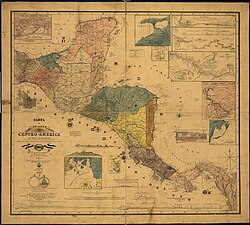
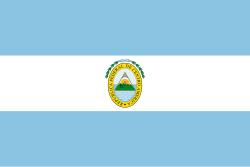
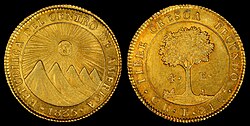
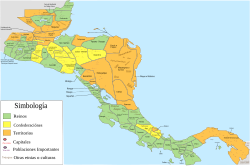
The political landscape of Central America was shaped significantly by the dissolution of the Federal Republic of Central America. The process of independence occurred in waves: Costa Rica, Guatemala, Honduras, and Nicaragua were the first to become independent states in 1838, followed by El Salvador in 1841. Panama achieved independence in 1903, and Belize was the last to gain independence in 1981.
Despite the collapse of the federal union, most of these nations have preserved a strong Central American identity, which continues to influence their diplomatic and economic relations today.
Geography and Natural Wonders
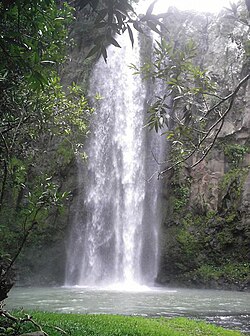
The region's geography is defined by dramatic elevation changes and intense geological activity. The Sierra Madre de Chiapas and the Cordillera de Talamanca are among the primary mountain ranges, with Volcán Tajumulco in Guatemala standing as the highest point at 4,220 meters.
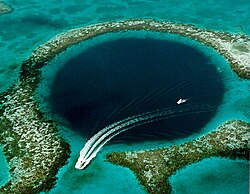
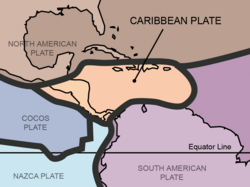
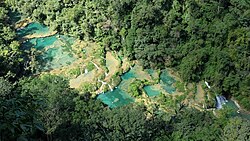
Geologically, the region is an active volcanic arc, influenced by the Caribbean Plate. This activity has created fertile soils and breathtaking landmarks, such as the Great Blue Hole in Belize—a UNESCO World Heritage Site—and the stunning turquoise pools of Semuc Champey in Guatemala.
Biodiversity and Ecosystems
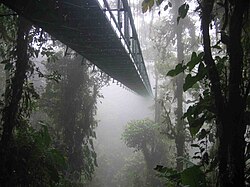
Central America is a global biodiversity hotspot. Its montane and tropical forests support thousands of species of vascular plants and terrestrial vertebrates. Panama and Costa Rica lead the region in species richness, particularly in birds and mammals.
Demographics and Society
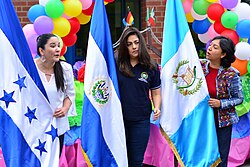
The social fabric of Central America is highly diverse. While Spanish is the most widely spoken language, English is the official language of Belize. Indigenous languages, particularly those of the Mayan family, remain significant in Guatemala.
Ethnically, the region is predominantly Mestizo (mixed European and Indigenous ancestry), though percentages vary by country. For example, Guatemala has a high Amerindian population (42%), while Costa Rica has a larger White population (82.3%).
Urbanization and Health
The region's population is concentrated in several major metropolitan hubs. Guatemala City is the largest, housing approximately 5.7 million people. Life expectancy varies across the isthmus, with Costa Rica reporting the highest average at 80.8 years as of 2023.
Economy and Regional Integration
The economic profile of Central America varies from the high-income services and tourism sectors of Panama and Costa Rica to the agricultural bases of other nations. The region's total nominal GDP reached $362.62 billion in 2023, with a PPP (Purchasing Power Parity) GDP of $738.8 billion.
To foster cooperation, the Sistema de Integración Centroamericana (Central American Integration System, or SICA) works toward regional peace, development, and democracy. This integration effort includes the Central American Parliament and the Secretariat of Central American Economic Integration.
Infrastructure and Transport
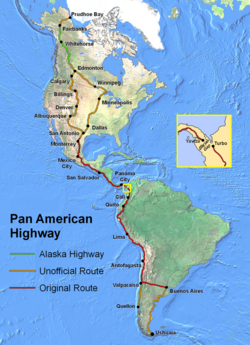
The Pan-American Highway serves as the primary terrestrial artery, slicing through the region to connect the various capitals and trade hubs. This is complemented by a network of strategic ports and airports that facilitate international trade.
Regional Summary Table
| Country | Capital | Official Language | Highest Point | HDI (2017) |
|---|---|---|---|---|
| Belize | Belmopan | English | Doyle's Delight (1,124m) | 0.708 |
| Costa Rica | San José | Spanish | Cerro Chirripó (3,820m) | 0.794 |
| El Salvador | San Salvador | Spanish | Cerro El Pital (2,730m) | 0.674 |
| Guatemala | Guatemala City | Spanish | Volcán Tajumulco (4,220m) | 0.650 |
| Honduras | Tegucigalpa | Spanish | Cerro Las Minas (2,780m) | 0.617 |
| Nicaragua | Managua | Spanish | Mogotón (2,107m) | 0.658 |
| Panama | Panama City | Spanish | Volcán Barú (3,474m) | 0.789 |
Frequently Asked Questions
Which country in Central America has the highest elevation?
Guatemala has the highest point in the region, with Volcán Tajumulco reaching an elevation of 4,220 meters (13,850 ft).
What is the primary religious affiliation in the region?
Christianity is the dominant religion, practiced by 76.5% of the population, with Catholicism (52.3%) and Protestantism (23.2%) being the most prominent branches.
What is SICA?
SICA stands for the Sistema de Integración Centroamericana (Central American Integration System), an organization dedicated to promoting peace, development, liberty, and democracy across the region.
Which Central American country has the highest life expectancy?
As of 2023, Costa Rica has the highest life expectancy in the region, averaging 80.8 years.
What are the most common languages spoken in Central America?
Spanish is the most widespread language, while English is the official language of Belize. Additionally, various indigenous languages such as Mayan and Miskito are spoken.