Spanish People: History, Demographics, and Global Diaspora
The Spanish people, known as españoles, possess a rich and complex identity forged over millennia on the Iberian Peninsula. From the ancient pre-Roman tribes to the expansive reach of the Spanish Empire, the evolution of the Spanish population is a story of migration, conquest, and cultural synthesis. Today, the Spanish identity extends far beyond the borders of Spain, encompassing millions of descendants across the Americas and Europe.
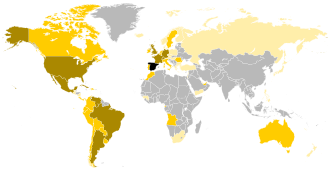
Currently, the population of Spain nationals stands at 42,327,164, within a total national population of 49,570,725. However, the global footprint of Spanish ancestry is vast, with hundreds of millions of people in the Americas claiming full or partial Spanish descent.
Key Facts
- Total Nationals: Approximately 42.3 million people in Spain.
- Global Reach: Significant populations of Spanish ancestry in Mexico, the United States, Colombia, and Venezuela.
- Genetic Roots: Primarily derived from pre-Roman inhabitants of the Iberian Peninsula.
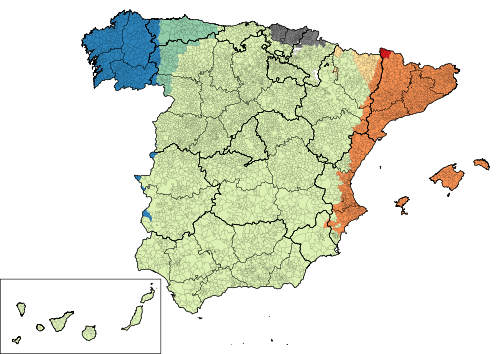
- Language: Spanish is the official language, though several regional languages like Catalan, Basque, and Galician are spoken.
- Religion: Predominantly Catholic Christianity, with a minority of irreligious individuals.
Historical Origins and Ancestry
The genetic pool of the Spanish people is largely rooted in the pre-Roman inhabitants of the Iberian Peninsula. This foundation was later layered with influences from various migrating groups and conquering empires.
Ancient and Pre-Roman Peoples
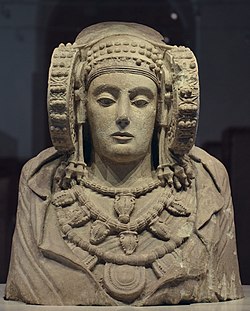
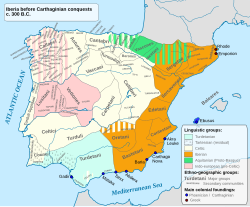
Before the arrival of Rome, the peninsula was home to the Iberians and Celtiberians, as well as the Gallaeci, Lusitanians, Cantabrians, and Vascones. Other early influences included the Greeks and Punics (Phoenicians and Carthaginians), and in the Canary Islands, the Guanches.
Roman and Post-Roman Influence
The Roman conquest integrated the region into a vast empire, creating a Hispano-Roman culture. Following the fall of Rome, other groups settled in the region, including the Suebi, Vandals, and Visigoths.


The Middle Ages and Islamic Influence
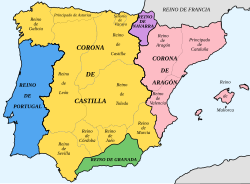
The arrival of the Moors (Arabs and Berbers) from Al-Andalus introduced profound cultural and linguistic changes. Later, the process of the Reconquista saw the gradual reclaiming of territory. Between 1512 and 1524, Ferdinand II of Aragon and Charles V completed the conquest of the Iberian part of Navarre. In the late 16th century, Charles V defeated a general insurrection of Muslims in the mountains of Granada, leading to the expulsion of up to 80,000 people from the region.
Nationalities and Regional Identities
Spain is characterized by a diverse array of regional identities. These are not merely administrative divisions but often represent distinct cultural and linguistic heritages.
- Castilian, Andalusian, and Valencian
- Catalan, Galician, and Basque
- Aragonese, Asturian, and Leonese
- Canary Islanders, Balearic, Cantabrian, and Extremaduran
The linguistic landscape reflects this diversity. While Spanish is the official language, others such as Catalan/Valencian, Basque, Galician, Aranese, and Astur-Leonese are spoken in their respective regions.
Colonialism and the Global Diaspora
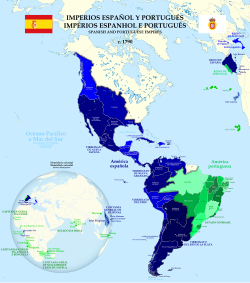
The era of Spanish colonialism expanded the Spanish presence globally, particularly in the Americas. This created a massive diaspora and a new demographic category of people with Spanish ancestry, often blending with indigenous and African populations.
Spanish Ancestry in the Americas
The impact of Spanish migration is most evident in Latin America and the United States. In Mexico, for example, over 120 million people are estimated to have Spanish ancestry, with a significant portion identifying as White or Mestizo (a mixture of European and Indigenous ancestry).
| Country | Estimated Population with Spanish Ancestry | Percentage of Country Population | Primary Identification |
|---|---|---|---|
| Mexico | 120,000,000 | >90% | White / Mestizo |
| United States | 50,000,000 | 16% | Hispanic / White / Mestizo |
| Colombia | 39,000,000 | 86% | Mestizo, White, Mulatto |
| Venezuela | 25,079,923 | 90% | Spanish Venezuelan |
| Cuba | 10,050,849 | 89% | White, Mulatto, Mestizo |
| Puerto Rico | 3,064,862 | 80.5% | White |
Modern Migration and Repatriation
Migration patterns continued into the 20th century. Following the Spanish Civil War, approximately 500,000 Republican refugees fled to France. Later, between 1961 and 1974, roughly 100,000 Spaniards emigrated annually to Western Europe as guest workers.
In a significant move toward historical reconciliation, Spain has formally apologized to expelled Jews. Since 2015, the state has allowed Sephardic Jewish descendants to reclaim Spanish citizenship, with over 132,000 people doing so by 2019.


Frequently Asked Questions
What is the total population of Spanish nationals?
There are 42,327,164 Spanish nationals living in Spain, out of a total population of 49,570,725.
Which countries have the largest populations of Spanish nationals abroad?
Argentina has the largest population of Spanish nationals abroad (404,111), followed by France (350,136) and the United States (192,766).
What are the primary genetic origins of the Spanish people?
The genetic pool largely derives from the pre-Roman inhabitants of the Iberian Peninsula, later influenced by Romans, Visigoths, and Moors.
What regional languages are spoken in Spain besides Spanish?
Key regional languages include Catalan, Basque, Galician, Aranese, Aragonese, and Asturian.
Who are the Sephardic Jews in the context of Spanish citizenship?
They are descendants of Jews who were expelled from Spain; since 2015, the Spanish government has offered them the opportunity to reclaim their citizenship.