Pere Marquette Railway: A Legacy of Michigan Railroading
The story of the Pere Marquette is a central chapter in the industrial development of Michigan. Formed at the turn of the 20th century, this railroad system became a vital artery for transporting goods and passengers across the Great Lakes region, eventually evolving through a series of mergers into the modern rail networks we recognize today.
The Formation and Early Years
The Pere Marquette was incorporated on November 1, 1899, to facilitate a planned merger of three established Michigan-based railroad companies. When operations officially began on January 1, 1900, the company absorbed the following entities:
- Flint & Pere Marquette Railroad (F&PM)
- Detroit, Grand Rapids & Western Railroad (DGR&W)
- Chicago & West Michigan Railway (C&WM)
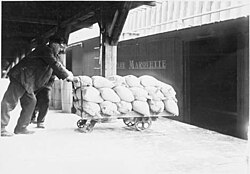
Initially, the company utilized shop facilities inherited from the Flint and Pere Marquette in Saginaw, Michigan. However, by 1905, the city of Grand Rapids was selected as the primary hub for repairing rolling stock (any vehicle that moves on a railway, such as carriages or wagons). These facilities became known as the Wyoming Shops, located in the Wyoming neighborhood. The accompanying Wyoming Yard served as one of the system's most critical freight classification yards.
Infrastructure Evolution
The Wyoming Shops underwent significant renovation and expansion in 1923 after the Saginaw facilities were downgraded. As the industry shifted, these shops were converted to service diesel engines in 1946. The site's massive roundhouse—a circular building used for servicing locomotives—was gradually demolished during the 1970s and completely removed by CSX by 1984.
Corporate Transitions and Mergers
On March 12, 1917, the company was reincorporated as the Pere Marquette Railway. The 1920s brought a period of financial transition when the railroad came under the control of Cleveland financiers Oris and Mantis Van Sweringen. The brothers envisioned a massive rail empire, controlling the Pere Marquette alongside the New York, Chicago & St. Louis Railroad (Nickel Plate), the Erie Railroad, and the Chesapeake & Ohio Railway (C&O).
Despite these ambitions, the Interstate Commerce Commission (ICC) did not approve the proposed four-way merger. Consequently, the Van Sweringens sold their interest in the Pere Marquette to the C&O in 1929. While it continued to operate as a separate entity for nearly two decades, the Pere Marquette was fully merged into the C&O on June 6, 1947. Decades later, the C&O was absorbed into CSX Transportation.
Key Facts
- Founded: Incorporated November 1, 1899; operations began January 1, 1900.
- Primary Hub: The Wyoming Shops in Grand Rapids, Michigan.
- Major Merger: Fully integrated into the Chesapeake & Ohio Railway on June 6, 1947.
- Modern Successor: CSX Transportation.
- Cultural Legacy: PM 1225 served as the model for the locomotive in The Polar Express.
The Legacy of the Berkshire Locomotives
The Pere Marquette is perhaps best remembered today through its surviving steam locomotives, specifically the 2-8-4 "Berkshire" type. Two notable examples remain:
| Locomotive | Type | Current Status/Location | Notable Fact |
|---|---|---|---|
| PM 1223 | 2-8-4 Berkshire | Chinook Pier, Grand Haven, MI | Oldest surviving 2-8-4 in America |
| PM 1225 | 2-8-4 Berkshire | Steam Railroading Institute, Owosso, MI | Operational; featured in The Polar Express |
PM 1225 holds a special place in popular culture. It was the inspiration for Chris Van Allsburg's book The Polar Express, which the author based on seeing the locomotive as a child on the Michigan State University campus. The 2004 film adaptation used motion-capture models of PM 1225 and included actual audio recordings of the engine in operation.
Frequently Asked Questions
Which companies formed the Pere Marquette?
The Pere Marquette was formed by the merger of the Flint & Pere Marquette Railroad, the Detroit, Grand Rapids & Western Railroad, and the Chicago & West Michigan Railway.
What happened to the Wyoming Shops?
The Wyoming Shops in Grand Rapids served as the primary repair facility for rolling stock. They were expanded in 1923, converted for diesel engines in 1946, and the roundhouse was eventually demolished by CSX by 1984.
How is the Pere Marquette name used today?
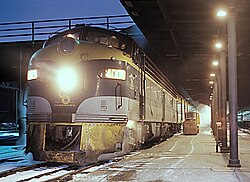
In 1984, Amtrak named its passenger train service between Chicago and Grand Rapids, Michigan, the Pere Marquette.
Where can I see a Pere Marquette locomotive today?
You can see PM 1223 on display at Chinook Pier in Grand Haven, Michigan, or visit the operational PM 1225 at the Steam Railroading Institute in Owosso, Michigan.
Who were the Van Sweringen brothers?
Oris and Mantis Van Sweringen were Cleveland financiers who controlled the Pere Marquette, the Nickel Plate, the Erie Railroad, and the Chesapeake & Ohio Railway during the 1920s.