Chesapeake and Ohio Railway: A History of American Rail Expansion
The story of the Chesapeake and Ohio Railway (C&O) is a narrative of resilience, industrial ambition, and the strategic movement of natural resources. From its humble beginnings as a local Virginia line to its integration into one of North America's largest transportation networks, the C&O played a pivotal role in linking the Atlantic coast with the American interior.
The 19th Century: Foundations and Recovery
The origins of the C&O date back to 1836 with the establishment of the Louisa Railroad in Louisa County, Virginia. By 1850, the line had expanded east to Richmond and west to Charlottesville, prompting a name change to the Virginia Central Railroad. To overcome the geographic challenge of the first mountain barrier to the west, the Commonwealth of Virginia financed the Blue Ridge Railroad.
The American Civil War brought devastation to the line. By 1865, the Virginia Central was nearly bankrupt, with only five miles of operational track remaining. Recovery required external capital, which was provided by Collis Huntington. With Huntington's funding, the line was completed through present-day West Virginia, incorporating the Covington and Ohio Railroad properties to fulfill the mission of connecting the Atlantic Ocean with the "Western Waters" of the Ohio River.
Despite these ambitions, construction halted at the Ohio River, leaving packet boats as the primary connection to the West. The company faced further hardship during the financial panic and Depression of 1873, leading to receivership in 1878. Upon reorganization, the company was officially renamed The Chesapeake and Ohio Railway Company.
The 1880s marked a turning point as the development of coal resources drove growth. The C&O completed the Peninsula Extension from Richmond to Newport News, providing access to the East's largest ice-free port at Hampton Roads. This established a lucrative business model: transporting coal to Newport News for shipment to the Northeast. In 1888, the C&O further expanded by building the Cincinnati Division, connecting with the "Big Four" and other Midwestern railroads.
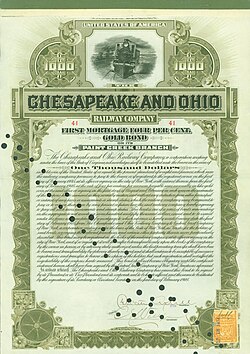
The 20th Century: Industrial Peak and Integration
Between 1900 and 1920, the C&O finalized its network of lines tapping into the rich bituminous coal (a dense, high-energy form of coal) fields of Kentucky and West Virginia. A significant strategic move occurred in 1910 when the C&O absorbed the Chicago, Cincinnati and Louisville Railroad, granting the company a direct route from Cincinnati to the major railroad hub of Chicago.
Infrastructure and Maintenance
To support its growing operations, the C&O invested heavily in maintenance facilities:
- Richmond: Initial terminal and repair shops began here in 1860.
- Huntington: Primary back shops were established on 100 acres in 1872 and modernized between 1916 and 1921.
- Clifton Forge, Virginia: A massive 1,200-acre site including a classification yard was established in 1890.
- Russell, Kentucky: The Raceland Car Shops, a primary freight car repair and erecting facility, were built in 1929.
Corporate Evolution and Legacy
By the early 1960s, the C&O moved its headquarters to Cleveland, Ohio. In 1972, under Cyrus Eaton, the railway became part of the Chessie System, alongside the Baltimore and Ohio and Western Maryland Railway. This entity eventually merged with the Family Lines System (comprising the Seaboard Coast Line and Louisville and Nashville) to form CSX Transportation (CSXT) in the 1980s.
Passenger services under the C&O brand ended in 1971 with the creation of Amtrak. Today, Amtrak's tri-weekly Cardinal train still traverses the scenic New River Gorge in West Virginia. As part of CSXT, a Fortune 500 Class I railroad, the former C&O rails continue to move intermodal freight and bituminous coal between Hampton Roads and the Great Lakes.
Key Facts
- Founded: Traces origins to the Louisa Railroad (1836).
- Key Figure: Collis Huntington provided the capital for post-Civil War reconstruction.
- Strategic Port: Newport News served as the primary ice-free port for coal exports.
- Network Size: By the end of 1970, the C&O operated 5,067 miles of road on 10,219 miles of track.
- Modern Successor: Now part of CSX Transportation (CSXT).
| Era/Date | Entity/Event | Significance |
|---|---|---|
| 1836 | Louisa Railroad | Original foundation in Virginia. |
| 1850 | Virginia Central Railroad | Expansion to Richmond and Charlottesville. |
| 1878 | Chesapeake and Ohio Railway Co. | Reorganization after the Depression of 1873. |
| 1910 | Absorption of CC&L Railroad | Direct access to the Chicago hub. |
| 1972 | Chessie System | Merger with B&O and Western Maryland. |
| 1980s | CSX Transportation | Final integration into a Class I railroad. |
Frequently Asked Questions
How did the American Civil War affect the C&O?
The railway, then known as the Virginia Central, was a target for Federal armies. By 1865, it was nearly destroyed, with only five miles of track remaining in operation and almost no capital for rebuilding.
What role did coal play in the railway's success?
The development of bituminous coal fields in West Virginia and Kentucky in the 1880s provided a stable economic base. Transporting this coal to the ice-free port of Newport News became a staple of the C&O's business.
Who was Collis Huntington?
Collis Huntington was the financier who provided the necessary capital to rebuild the line after the Civil War and extend it through West Virginia to reach the Ohio River.
Does the C&O still operate passenger trains?
The C&O's own passenger services ended in 1971. However, Amtrak now operates the Cardinal train, which follows the historic C&O route through the New River Gorge.
What is the current status of the C&O lines?
The lines are now part of CSX Transportation (CSXT), a Fortune 500 company and one of the Class I railroads in North America, continuing to move freight and coal.