Peninsular War: The Struggle Against Napoleon in Iberia
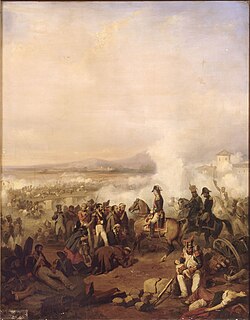
The Peninsular War (1808–1814) was a brutal and protracted conflict fought on the Iberian Peninsula. It pitted the nations of Spain and Portugal, supported by the United Kingdom, against the invading forces of the First French Empire. For Spain, this conflict is deeply intertwined with the Spanish War of Independence, representing a national struggle to expel foreign occupiers.
This war was a critical theater of the broader Napoleonic Wars, overlapping with the War of the Fifth Coalition and the War of the Sixth Coalition. It is often remembered for its mixture of conventional army battles and the rise of irregular warfare.
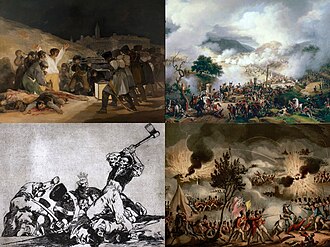
Key Facts
- Duration: May 2, 1808, to April 17, 1814.
- Primary Belligerents: Spain, Portugal, and the UK vs. France and its allies (including Italy and the Confederation of the Rhine).
- Outcome: Coalition victory; restoration of the Spanish Bourbon monarchy.
- Human Cost: Over 1,000,000 military and civilian deaths.
- Strategic Result: France was forced out of Iberia, and Spain regained Santo Domingo, though revolts subsequently broke out in Spanish America.
The Path to Conflict (1807–1808)
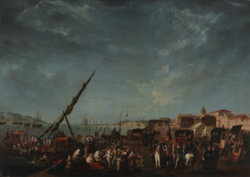
The conflict began with French pressure on Portugal. In November 1807, the Portuguese court was forced to transfer to Brazil to escape French advances.
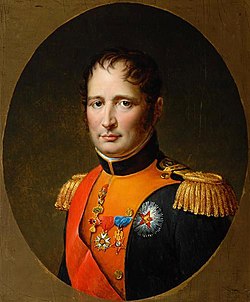
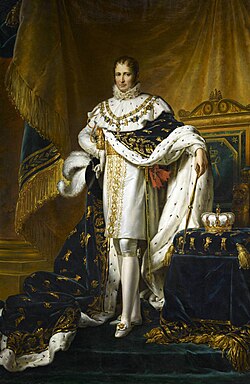
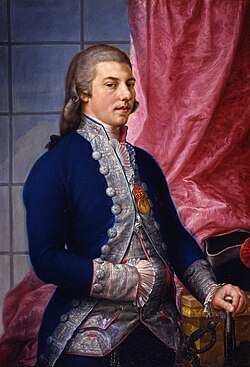
By early 1808, the situation in Spain deteriorated. Napoleon declared himself no longer bound by the Treaty of Fontainebleau and appointed Joachim Murat as commander of French troops in Spain. This led to a coup d'état and the eventual installation of Napoleon's brother, Joseph Bonaparte, as King of Spain.
Iberia in Revolt
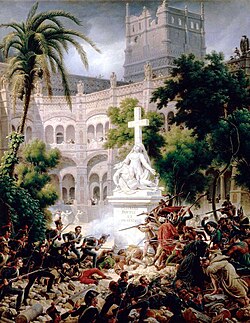
The French occupation sparked immediate and violent resistance. The events of May 3, 1808, where French soldiers executed Spanish civilians, became a symbol of the struggle and were immortalized in the art of Francisco Goya.
Military Campaigns and Strategies
British Intervention and the Corunna Campaign
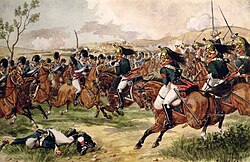
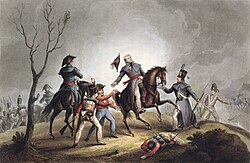
The United Kingdom intervened to support the Iberian nations. In late 1808, Sir John Moore led British forces into Spain to assist the Spanish armies. While the campaign faced significant challenges, it established the British presence in the region.
The Rise of Guerrilla Warfare
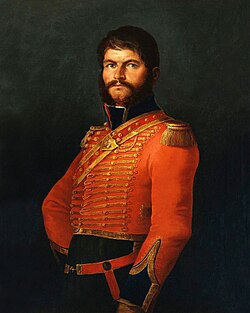
One of the most defining features of the war was the emergence of guerrillas (irregular fighters). These local bands harassed French supply lines and communication, forcing Napoleon to deploy massive numbers of troops just to maintain order. By 1811, while the French had over 350,000 soldiers in the Armée de l'Espagne, more than 200,000 were tied down protecting supply lines rather than fighting in major battles.
The Leadership of Wellington
Arthur Wellesley, later known as the Duke of Wellington, took command of the British army in April 1809. He worked closely with Portuguese regiments trained by General Beresford to push French forces out of Portugal.
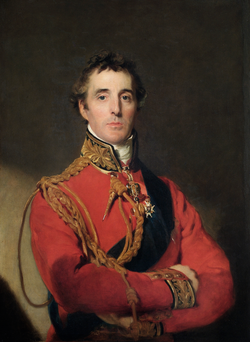
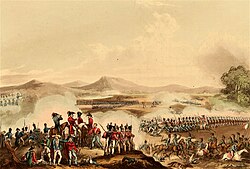
Wellington's strategic brilliance peaked at the Battle of Salamanca on July 22, 1812. He defeated Marshal Marmont's army of 40,000 men in approximately 40 minutes, a victory that allowed the Allies to capture Madrid on August 14, 1812.
The Final Push and French Collapse (1813–1814)
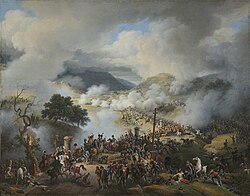
By 1813, Wellington led a massive allied force of 121,000 troops across northern Spain. By outflanking the French and seizing Burgos, he forced Joseph Bonaparte into retreat.
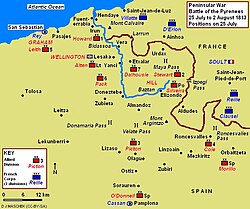
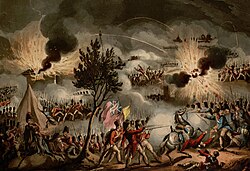
The Allied forces eventually crossed into Southern France. In April 1814, Wellington attacked Marshal Soult at the Battle of Toulouse. Although Spanish attacks were repulsed, the assault by Beresford's forces compelled the French to fall back, and Wellington entered the city on April 12.
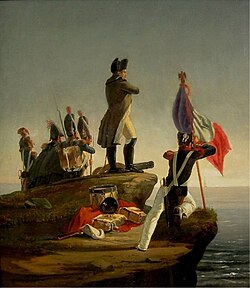
The war effectively ended with the capture of Paris and the abdication of Napoleon. The Peace of Paris was formally signed on May 30, 1814.
War Summary Table
| Category | Details |
|---|---|
| Dates | May 1808 – April 1814 |
| Primary Locations | Spain, Portugal, Southern France |
| Key Allied Leaders | Duke of Wellington, Sir John Moore, General Beresford |
| Key French Leaders | Napoleon I, Joseph Bonaparte, Marshal Soult, Marshal Marmont |
| Major Battles | Salamanca, Toulouse, Bailén, Vimeiro |
| Casualties | 1,000,000+ (Military and Civilian) |
Frequently Asked Questions
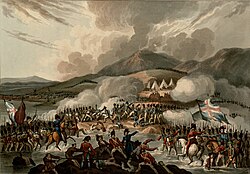
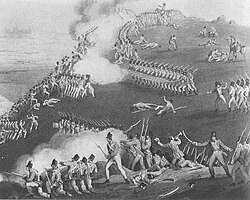
What was the significance of the Battle of Bailén?
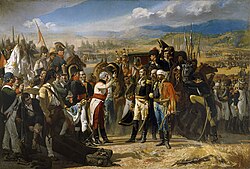
The Spanish triumph at Bailén was historically significant as it marked the first major land defeat of the French Empire, shattering the myth of Napoleonic invincibility.
How did guerrilla warfare affect the French army?
Guerrilla warfare created a "Spanish Ulcer" for Napoleon. It forced the French to divert hundreds of thousands of troops away from the front lines to protect supply routes and garrisons, severely weakening their overall offensive capability.
Who was the primary British commander during the later stages of the war?
Arthur Wellesley, the 1st Duke of Wellington, was the primary commander. He is credited with transforming the Anglo-Portuguese army into a potent offensive force that eventually drove the French out of Iberia and into France.
What were the political consequences for Spain after the war?
The war resulted in the restoration of the Spanish Bourbon monarchy and the recovery of Santo Domingo. However, the instability caused by the conflict triggered independence revolts across Spanish America.
When did the war officially end?
While fighting continued in some areas until April 1814, the conflict was formally concluded with the signing of the Peace of Paris on May 30, 1814.