Pedestrians: History, Infrastructure, and the Evolution of Walkability
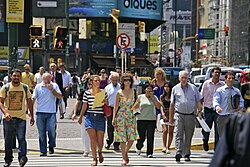
A pedestrian is defined as any person traveling on foot—whether walking or running—as well as those using wheelchairs or other mobility aids. While often viewed simply as people crossing the street, the role of the pedestrian is central to human history and modern urban design. From the earliest human migrations to the contemporary push for sustainable cities, the act of walking remains a fundamental mode of transport.
In modern infrastructure, pedestrians typically utilize designated paths. Depending on the region, these are known as sidewalks (North American English), pavements (British English), or footpaths (Australian, Indian, and New Zealand English). Beyond these thoroughfares, pedestrians use rural paths, urban shortcuts, and specialized trails.
Key Facts
- Global Impact: Approximately 300,000 people are killed annually by road vehicles.
- Etymology: Derived from the Latin pedester ("going on foot"), first appearing in English in the 18th century.
- Urban Trends: "Copenhagenisation" refers to urban design principles that prioritize pedestrian and cycle traffic over cars.
- Health: Regular walking reduces obesity and lowers vehicle emissions by replacing short car trips.
- Infrastructure: In the US, 20% to 30% of newer developments lack footpaths.
The Evolution of the Pedestrian
Etymology and Early Meaning
The word pedestrian is composed of the morphemes ped- (foot) and -ian (characteristic of). Interestingly, in its early English usage during the 18th century, a "pedestrian" was not just anyone walking, but a professional walker—someone who held records for speed or endurance. It was only with the widespread adoption of the automobile that the term shifted to describe anyone not riding or driving a vehicle. Additionally, the word has historically been used as an adjective to describe something plain or dull.
A History of Human Movement
Walking was the primary means of global migration. Roughly 60,000 years ago, early humans walked from Africa, traversing the coast of India to reach Australia, crossing Asia to enter the Americas, and moving from Central Asia into Europe.
During the 18th and 19th centuries, pedestrianism became a popular spectator sport. A notable figure was Captain Robert Barclay Allardice, who in 1809 walked one mile every hour for 1,000 consecutive hours, drawing 10,000 spectators. Later, Ada Anderson expanded this feat by walking a half-mile every quarter-hour for 1,000 hours.
While professional walking as a sport declined in the 20th century—though racewalking remains an Olympic event—major walking feats continue. Dave Kunst became the first person to walk around the world between 1970 and 1974. Today, such journeys are often linked to charitable fundraising.
Pedestrian Infrastructure and Networks
Outdoor Networks
Pedestrian paths vary by environment and purpose. In mountainous or forested areas, these are often called trails. Paths shared with horses and bicycles are known as bridleways. In some modern urban planning, such as in certain suburbs of Peterborough, England, the pedestrian and cycle networks are designed to be entirely separate from roads.
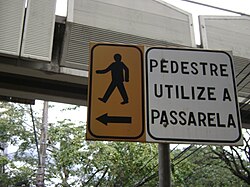
Specialized infrastructure includes footbridges (bridges solely for pedestrians) and pedestrian-only shopping streets. In the United Kingdom, pedestrians generally have the legal right to use most public roads (excluding motorways and specific tunnels like the Blackwall Tunnel), though the Highway Code suggests walking against the flow of traffic on roads without footpaths for safety.
Indoor Networks
Indoor pedestrian networks are critical in complex facilities such as airports, hospitals, museums, and shopping centers. Due to the difficulty of navigation in these spaces, digital mapping tools like OpenStreetMap are increasingly used to compute the shortest paths between destinations.
Walkability and Urban Design
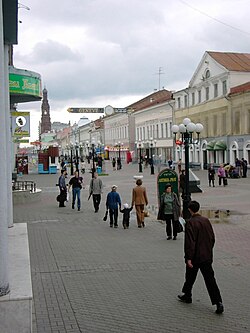
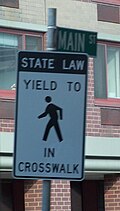
Walkability refers to how friendly an area is to walking. Because walking is a sustainable and healthy transport mode, many cities are pursuing pedestrianisation—the process of removing or restricting motor vehicles from city streets to improve safety and the environment.
In the United States, car ownership is high, though New York City is a major exception; over half of all households there do not own a car, with the figure exceeding 75% in Manhattan. In Western Europe, cities often prioritize dedicated walking routes in conjunction with public transport. A prime example is Copenhagen's Strøget, the world's longest pedestrian shopping area, developed under the influence of architect Jan Gehl.
Safety, Health, and the Environment
Pedestrian Safety
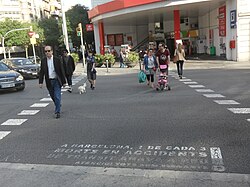
Pedestrians are highly vulnerable to road traffic. The World Health Organization emphasizes that road crashes are predictable and preventable, yet urban planning often neglects walking. Historically, auto lobbying groups in the early 20th century shifted blame onto pedestrians, introducing the concept of jaywalking to criminalize certain pedestrian behaviors.

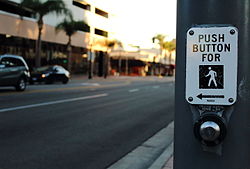
The rise of SUVs has further decreased safety for those on foot. Efforts to mitigate these risks include the use of safety stencils and improved crossing signals.
Environmental and Health Benefits
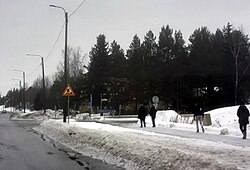
Walking reduces the risk of obesity and related medical issues. Environmentally, replacing short car trips with walking reduces climate-changing emissions. Internal combustion engines are most polluting during the "cold start" phase (the first few minutes of operation), making walking a far cleaner choice for short distances.
| Term | Regional/Contextual Usage | Description |
|---|---|---|
| Sidewalk | North America | Designated footpath alongside a road. |
| Pavement | United Kingdom | Designated footpath alongside a road. |
| Footpath | Australia, India, NZ | Designated path for walking. |
| Trail | Global / Rural | Path in parks or natural environments. |
| Bridleway | Global / Rural | Path shared by pedestrians, horses, and bikes. |
Frequently Asked Questions
What is the difference between a sidewalk and a pavement?
They refer to the same thing: a designated path for pedestrians alongside a road. "Sidewalk" is the term used in North American English, while "pavement" is used in British English.
What is "Copenhagenisation"?
Copenhagenisation is an urban design principle, championed by architect Jan Gehl, that prioritizes pedestrians and cyclists over motor vehicles to create more livable, sustainable cities.
How does walking help the environment more than short car trips?
Walking produces zero emissions. In contrast, cars are most inefficient and highly polluting during the first few minutes of operation (the cold start), making them particularly harmful for very short journeys.
What is jaywalking?
Jaywalking is a legal concept introduced in the early 20th century, partly through auto lobbying, that criminalizes pedestrians for crossing streets outside of designated areas.
Who was the first person to walk around the world?
Dave Kunst was the first person to walk around the world, starting from Waseca, Minnesota, on June 20, 1970, and completing his journey on October 5, 1974.