Paul Dirac: The Architect of Quantum Electrodynamics
Paul Adrien Maurice Dirac was a titan of 20th-century theoretical physics, whose mathematical precision and intuitive leaps helped define the modern understanding of the subatomic world. As one of the primary founders of quantum mechanics—the study of matter and energy at the most fundamental scale—Dirac provided the essential bridge between quantum theory and Albert Einstein's special relativity.
His career was marked by a relentless pursuit of mathematical beauty and a capacity for profound simplification. From his early days at the University of Bristol to his tenure as the Lucasian Professor of Mathematics at the University of Cambridge, Dirac's work laid the groundwork for quantum electrodynamics (QED), a theory describing how light and matter interact, and quantum field theory.
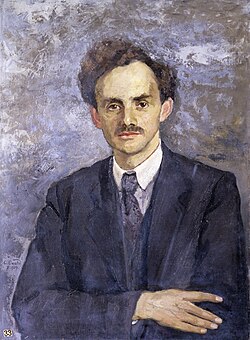
Key Facts
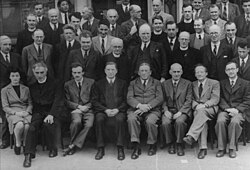
- Nobel Prize: Shared the 1933 Nobel Prize in Physics with Erwin Schrödinger.
- Major Contribution: Formulated the Dirac equation, which predicted the existence of antimatter.
- Academic Legacy: Held the prestigious Lucasian Professorship at Cambridge (1932–1969).
- Pioneering Work: Wrote the first-ever doctoral thesis on quantum mechanics in 1926.
- Late Career: Served as a professor of physics at Florida State University from 1970 until his death in 1984.
Academic Journey and Early Career
Dirac's educational path was diverse, beginning with a Bachelor of Science in Electrical Engineering from the University of Bristol in 1921, followed by a Bachelor of Arts in Mathematics in 1923. He later moved to St John's College, Cambridge, where he earned his PhD in Physics in 1926. His doctoral thesis was a landmark event, being the first academic work dedicated specifically to the emerging field of quantum mechanics.
The Cambridge Years
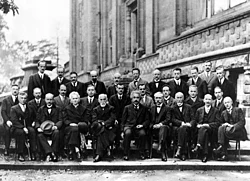
At Cambridge, Dirac became a central figure in the development of atomic theory. His ability to synthesize complex ideas led to his appointment as the Lucasian Professor of Mathematics in 1932, a position previously held by Isaac Newton. During this era, he collaborated and interacted with the greatest minds of the age, including Albert Einstein and Richard Feynman.
Scientific Contributions and Breakthroughs
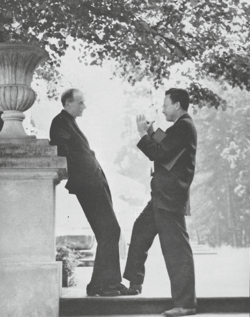
Dirac's research spanned a vast array of topics, from the behavior of electrons to the nature of gravity and cosmology. His work is characterized by the introduction of powerful mathematical operators and statistics that remain standard in physics today.
The Dirac Equation and Antimatter
Perhaps his most famous achievement is the Dirac equation. By combining quantum mechanics with special relativity, Dirac described the electron in a way that required the existence of a "positive energy" counterpart to the electron. This theoretical prediction led to the discovery of the positron, the first known particle of antimatter.
Fermi–Dirac Statistics
Dirac co-developed Fermi–Dirac statistics, which describe the distribution of particles (known as fermions) that obey the Pauli exclusion principle. This framework is critical for understanding the behavior of electrons in solids and the structure of white dwarf stars.
Quantum Electrodynamics and Field Theory
Dirac coined the term quantum electrodynamics and established the foundations for quantum field theory. He also explored the concept of magnetic monopoles—hypothetical particles that act as a single magnetic pole (either north or south)—and contributed to the early conceptualization of gravitational waves.
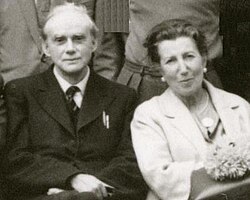
Later Life and Legacy
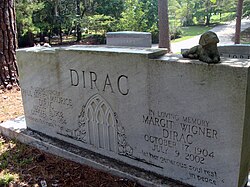
In 1970, Dirac transitioned to the United States to join the faculty of Florida State University. Even in his later years, he remained active in research, publishing a summary of Einstein's general theory of relativity in 1975. He passed away on October 20, 1984, at the age of 82.
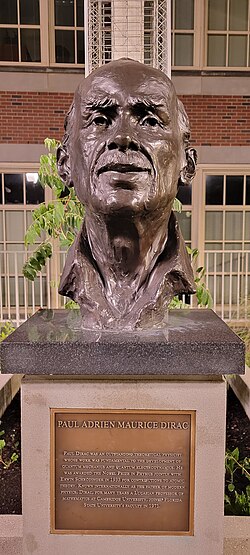
Mentorship and Influence
Dirac influenced a generation of physicists. His students and notable associates included figures such as Freeman Dyson, Fred Hoyle, and Victor Weisskopf. His legacy is preserved not only in textbooks but also through commemorative markers in Westminster Abbey and the Dirac Science Library at Florida State University.
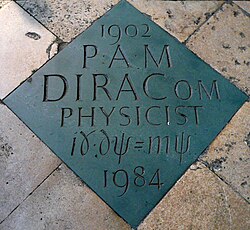
| Category | Details |
|---|---|
| Born/Died | August 8, 1902 – October 20, 1984 |
| Primary Fields | Theoretical Physics, Quantum Mechanics |
| Key Theories | Dirac Equation, Fermi-Dirac Statistics, QED |
| Major Awards | Nobel Prize (1933), Copley Medal (1952), Max Planck Medal (1952) |
| Key Institutions | University of Cambridge, Florida State University |
Frequently Asked Questions
What is the Dirac equation?
The Dirac equation is a relativistic wave equation that describes spin-1/2 particles, such as electrons. It is historically significant because it successfully merged quantum mechanics with special relativity and predicted the existence of antimatter.
What are Fermi–Dirac statistics?
These are the statistical laws that govern particles called fermions. Unlike bosons, fermions cannot occupy the same quantum state simultaneously, a property that is fundamental to the stability of matter.
Why is Paul Dirac considered a founder of quantum electrodynamics?
Dirac not only coined the term but also developed the mathematical framework that allows physicists to calculate the interactions between electrons and photons, forming the basis for one of the most accurately tested theories in science.
Where did Paul Dirac spend the end of his career?
Dirac spent the final phase of his professional life as a professor of physics at Florida State University from 1970 until 1984.
What other awards did Dirac receive besides the Nobel Prize?
Dirac was highly decorated, receiving the Royal Medal (1939), the Copley Medal (1952), the Max Planck Medal (1952), and the J. Robert Oppenheimer Memorial Prize (1969).