Parštatar and the Early Kings of Mitanni
The history of the Mitanni kingdom, a powerful state in the Ancient Near East, is often shrouded in mystery due to the scarcity of internal records. Much of what we know about its early rulers comes from the archives of neighboring civilizations. Among these figures is Parštatar (also known as Barattarna or Parattarna), a pivotal leader associated with the rise and peak of the Mitannian Empire.
Key Facts
- Identity: Parštatar is regarded by some scholars as the first known King of Mitanni.
- Chronology: Estimated reign dates vary, with some citing c. 1510–1490 BC (middle chronology).
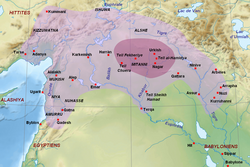
- Territorial Reach: Under his influence, the kingdom likely extended to Arrapha in the east, Terqa in the south, and Kizzuwatna in the west.
- Diplomacy: He established vassal relationships with leaders like Idrimi of Alalakh and Pilliya of Kizzuwatna.
- Egyptian Contact: He may have been the king encountered by Pharaoh Thutmosis I at the Euphrates River around 1493 BC.
The Reign and Expansion of Barattarna
Because Mitannian sources are rare, historians rely on external records to reconstruct the reign of Barattarna. A primary source is the biography of Idrimi of Alalakh. According to these texts, Barattarna conquered the region of Alalakh (the capital of Aleppo) and installed Idrimi as a vassal king. This treaty also established Pilliya, the ruler of Kizzuwatna, as a vassal to the Mitanni state.
During this era, the kingdom reached its greatest territorial extent, projecting power across a vast area of the Near East. This expansion placed Mitanni in direct contact with the great powers of the age, including the Hittites and the Egyptians.
International Relations and the Egyptian Encounter
The geopolitical significance of Barattarna's reign is highlighted by his potential interaction with Egypt. It is suggested that he was the Mitannian monarch who met the Egyptian Pharaoh Thutmosis I during a military campaign near the Euphrates River around 1493 BC. This encounter underscores the strategic importance of the Euphrates as a boundary and meeting point between these two empires.
The Role of Kizzuwatna
Kizzuwatna played a critical role as a buffer state and vassal. Pilliya, the king of Kizzuwatna, signed a treaty with Idrimi, further cementing the Mitannian sphere of influence. Interestingly, Pilliya also maintained diplomatic ties with the Hittites, specifically entering into a peace agreement with Zidanta II of Hatti, illustrating the complex web of alliances in the Bronze Age.
Chronology and Death
Determining the exact dates of Barattarna's life is challenging. While some chronologies place his reign around 1510–1490 BC, other records from Nuzi mention his death possibly around 1420 BC, according to the short chronology. These discrepancies highlight the difficulty of synchronizing the timelines of different ancient states.
| Category | Details |
|---|---|
| Primary Ruler | Parštatar / Barattarna |
| Estimated Reign | c. 1510–1490 BC (Middle Chronology) |
| Key Vassals | Idrimi (Alalakh), Pilliya (Kizzuwatna) |
| Geographic Limits | Arrapha (East), Terqa (South), Kizzuwatna (West) |
| Successor | Shaushtatar (in some traditions) |
Scholarly Debates on Identity
Modern scholarship continues to debate the identity of these early kings. Some historians, such as Eva von Dassow (2022), argue that "Barattarna" and "Paršatar" were actually two distinct individuals. Von Dassow suggests a more complex sequence of succession:
- Parattarna I (associated with Idrimi of Alalakh)
- Parsatatar
- Saustatar (associated with his son Niqmepa)
- Saitarna
- Parattarna II
This alternative view suggests that the name Barattarna may have been used by two different kings over time, and that the ruler of the Kingdom of Ḫana at Terqa, known as Qis-Addu, reigned concurrently with Saustatar, Saitarna, and Parattarna II.
Frequently Asked Questions
Who was Parštatar?
Parštatar, also referred to as Barattarna, is considered by many historians to be the first known king of the Mitanni kingdom, ruling during its period of greatest territorial expansion.
How do historians know about the Mitanni kings?
Because internal Mitannian records are rare, historians deduce information from external sources, such as the biography of Idrimi of Alalakh and the records of ancient Egypt and Hatti.
What was the extent of the Mitanni kingdom under Barattarna?
The kingdom likely stretched from Arrapha in the east to Terqa in the south and Kizzuwatna in the west.
Did the Mitanni have contact with ancient Egypt?
Yes, it is believed that Barattarna may have met Pharaoh Thutmosis I at the Euphrates River around 1493 BC during an Egyptian campaign.
Is there a consensus on the number of kings named Barattarna?
No. While some treat him as a single figure, other scholars, like Eva von Dassow, propose that there were two separate kings named Parattarna (Parattarna I and Parattarna II) and that Paršatar was a different person entirely.