Paris Codex: Rituals, Astronomy, and Maya Calendrics
The Paris Codex is a rare and invaluable remnant of Maya intellectual life, serving as a ritual manual and astronomical guide. This ancient document provides a window into how the Maya perceived time, spirituality, and the natural world, blending complex mathematical cycles with divine patronage.
Key Facts
- Focuses primarily on ritual practices and astronomical observations.
- Details a cycle of thirteen kʼatuns (20-year periods).
- Includes a Maya "zodiac" featuring animals like the scorpion and peccary.
- Contains sections dedicated to Chaac, the god of rain.
- Tracks the tzolkʼin (260-day cycle) over a 52-year Calendar Round.
The Structure of Ritual and Time
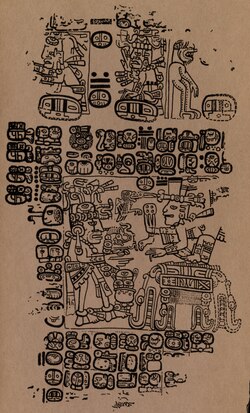
One side of the codex is meticulously organized to track a cycle of thirteen kʼatuns. Each page typically follows a consistent visual arrangement: a standing figure is positioned on the left, while a seated figure occupies the right. These figures represent the ruling deities of each 20-year cycle.
To mark these periods, the pages feature the ajaw day glyph paired with a numerical coefficient. These markers identify the final day of a calendrical cycle. Despite the document's poor state of preservation, scholars have used these kʼatun-endings to reconstruct missing date glyphs. Furthermore, the seated figures are accompanied by sidereal glyphs—symbols relating to the stars—which confirm their roles as the deities governing each kʼatun.
Agricultural Prognostication and the Solar Year
The reverse side of the codex is more diverse in its subject matter. A significant portion is dedicated to Chaac, the Maya god of rain. This section focuses on the practical and spiritual aspects of survival, offering methods for the prognostication of rainfall and the prediction of maize crop yields, alongside insights into spiritual forces.
The codex also bridges the gap between different Maya time-keeping systems. Two pages illustrate the intersection of the 260-day tzolkʼin cycle and the beginning of the solar year. This mapping spans a period of 52 years, a duration known as the Calendar Round.
The Maya Zodiac and Fatalism
Among the most intriguing elements of the Paris Codex is the Maya "zodiac." Spread across two pages and concluding with a series of thirteen animals—including a peccary and a scorpion—these figures represent astronomical signs along the ecliptic (the apparent path of the sun across the celestial sphere).
Modern analysis of this zodiac cycle suggests a deeper psychological narrative. Some researchers conclude that the end of the cycle reflects a "psychological predilection to Mayan fatalism," proposing that the collapse of the Mayan Classic Period may have been influenced by a self-fulfilling prophecy.
| Section | Primary Focus | Key Elements |
|---|---|---|
| Kʼatun Cycle | Ritual & Patronage | 13 kʼatuns, ajaw glyphs, sidereal glyphs |
| Agricultural Section | Rain & Crops | Chaac (Rain God), maize yield predictions |
| Calendrical Mapping | Solar & Ritual Time | Tzolkʼin cycle, 52-year Calendar Round |
| Zodiac | Astronomy | 13 animals, ecliptic signs, fatalism |
Frequently Asked Questions
What is a kʼatun in the Paris Codex?
A kʼatun is a Maya calendrical cycle lasting 20 years. The codex tracks a sequence of thirteen such cycles, each associated with a specific ruling deity.
Who is Chaac and why is he in the codex?
Chaac is the Maya god of rain. He is featured in a section of the codex dedicated to predicting rainfall and maize crop yields, which were critical for Maya survival.
What animals appear in the Maya zodiac?
The zodiac section depicts thirteen animals, specifically mentioning the scorpion and the peccary as representations of astronomical signs along the ecliptic.
What is the significance of the 52-year cycle mentioned?
The 52-year period is known as the Calendar Round. The codex illustrates how the 260-day tzolkʼin cycle aligns with the start of the solar year over this duration.
Do the pages contain any non-Maya writing?
Yes, some pages of the codex contain annotations written with Latin characters.