Grolier Codex: The History and Scientific Authentication of a Maya Treasure
The Grolier Codex (also known as the MCM) represents one of the most debated and fascinating artifacts in the study of ancient Mesoamerica. As a pre-Columbian manuscript, it offers a rare glimpse into the astronomical and ritual knowledge of the Maya civilization. Its journey from a remote cave in Chiapas to the vaults of the National Library of Mexico is a saga of mystery, skepticism, and eventual scientific triumph.
The Discovery and Provenance
The manuscript first entered the public consciousness through Josué Saenz, a Mexican collector. Saenz claimed the codex was recovered in the 1960s from a dry cave in the highlands of Chiapas, near Tortuguero. According to the account, the codex was found inside a wooden box alongside several other items: a mosaic turquoise mask, a knife handle, a wooden box, a child's sandal, a piece of rope, and blank pages of amate (traditional pre-Columbian fig-bark paper).
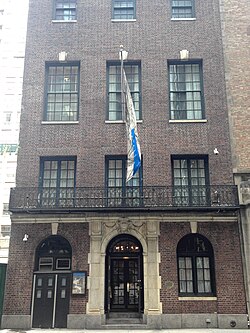
The circumstances of the acquisition were unusual. In 1965, Saenz was flown via a light plane to a remote airstrip in the Sierra Madre foothills. Upon arrival, he was shown the codex and other looted Maya artifacts. Although an antiquities expert initially labeled the items as fakes, Saenz purchased the codex. He later permitted scholar Michael Coe to exhibit the work at the Grolier Club in New York, which gave the manuscript its common name.
The legal status of the codex shifted in 1976 when the Attorney General of Mexico invoked the United States-Mexico Artifacts Treaty of 1970. This led to the seizure of the manuscript and its return to Mexico. Saenz subsequently donated the codex to the Mexican government. After spending years in the Museo Nacional de Antropología, it is now preserved in the vault of the National Library.
The Debate Over Authenticity
For decades, the Grolier Codex was the subject of intense academic scrutiny. Because it would be the only pre-Columbian codex discovered in the 20th century (aside from small fragments), many scholars were skeptical. J. Eric S. Thompson, a prominent English Mayanist, cast doubt on its authenticity in 1975, despite never having seen the physical manuscript.
Proponents of the codex, including Michael Coe, Stephen D. Houston, Mary Miller, and Karl Taube, argued that the content was consistent with an authentic prehispanic calendar. They noted that the information had not been copied from any known existing codices, suggesting it was an original work. In 2015, these scholars concluded that the complexity of the work indicated it could only have been produced by a Maya priest.
Scientific Analysis and Verification
The debate was eventually settled not by stylistic analysis, but by rigorous scientific testing conducted by the Instituto de Física de la Universidad Nacional Autónoma de México and the National Institute of Anthropology and History (INAH).
Material Composition
Analysis revealed that the amate paper is three-ply, which allowed for its screen-fold format. To create a smooth writing surface, the paper was prepared on both sides with a thin layer of gypsum (calcium sulfate), measuring between 0.2 mm and 0.3 mm.
Pigment Analysis
Scientists identified several authentic pre-Columbian pigments that were found to be contemporaneous with the paper:
- Maya Blue: A unique pigment fashioned from indigo dye and palygorskite.
- Red: Produced from hematite.
- Black: Created using lamp black.
- Brown: Prepared with cochineal.
Dating and Environmental Evidence
Radiocarbon testing provided a timeline for the manuscript's creation. An initial 1972 test suggested a date between 1035 and 1431, while a 2012 test narrowed this to 1050–1284. The consensus from INAH studies places the manuscript in the 11th or 12th century.
Further evidence of authenticity came from the physical degradation of the book. Studies showed the codex had endured three periods of high moisture. Additionally, the edges of the pages showed evidence of being chewed by tiny arthropods—damage that had previously been mistaken by skeptics as scissor cuts.
Key Facts
- Origin: Found in a cave in Chiapas, Mexico.
- Date: Consensus dates the manuscript to the 11th or 12th century.
- Material: Three-ply amate (fig-bark) paper coated with gypsum.
- Key Pigment: Contains Maya blue, made from palygorskite and indigo.
- Current Location: Vault of the National Library, Mexico.
- Significance: The only full pre-Columbian codex discovered in the 20th century.
| Feature | Scientific Finding | Significance |
|---|---|---|
| Radiocarbon Date | 11th or 12th Century | Confirms pre-Columbian origin |
| Paper Type | Three-ply amate with gypsum | Consistent with ancient Maya techniques |
| Pigments | Hematite, Indigo, Cochineal, Lamp Black | Contemporaneous with the paper |
| Physical Damage | Arthropod chewing and moisture exposure | Refutes claims of modern forgery (scissor cuts) |
Frequently Asked Questions
Why was the Grolier Codex initially thought to be a fake?
Because it was the only major pre-Columbian codex found in the 20th century and was discovered via looters rather than a controlled archaeological excavation, many scholars were naturally skeptical of its provenance.
What is Maya blue?
Maya blue is a highly durable pigment created from a combination of indigo dye and a specific clay mineral called palygorskite.
How was the age of the codex proven?
The age was proven through multiple radiocarbon tests and chemical analysis of the pigments and paper, which confirmed they date back to the 11th or 12th century.
Where is the Grolier Codex located today?
The codex is currently held in the vault of the National Library in Mexico, following its return from the United States and donation by Josué Saenz.
What is amate paper?
Amate is a traditional pre-Columbian paper made from the inner bark of fig trees.