Last Glacial Maximum: Earth's Most Recent Peak Ice Age
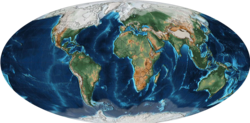
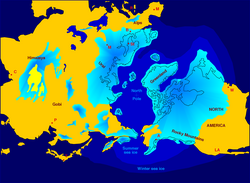
The Last Glacial Maximum (LGM), also known as the Last Glacial Coldest Period, represents the most recent peak of the Last Glacial Period. During this era, Earth's ice sheets reached their greatest extent, fundamentally altering the planet's geography, climate, and biological distribution. Occurring roughly between 26,000 and 20,000 years ago, the LGM saw massive ice sheets blanket large portions of Northern North America, Northern Europe, and Asia.
This period was characterized by a dramatic shift in the global environment, leading to a significant expansion of deserts and a substantial drop in global sea levels as water was locked away in terrestrial ice.
Timeline and Dating of the LGM
Determining the exact start and end dates of the LGM is a complex task, as researchers often use different criteria and datasets. Many scientists rely on terrestrial cosmogenic nuclides (isotopes produced by cosmic rays in rocks) and radiocarbon dating to track the movement of ice sheet margins.
- Southern Hemisphere: Ice sheet growth began around 33,000 years ago, reaching maximum coverage between 26,500 and 20,000 years ago.
- Strait of Magellan: Local glacier fluctuations suggest a peak surface area between 25,200 and 23,100 years ago.
- European Perspective: Archaeologist Jennifer French dates the onset to 27,500 years ago, with the peak at 26,000 years ago and deglaciation starting between 20,000 and 19,000 years ago.
- British Context: In Britain, this period is referred to as the Dimlington Stadial, spanning from 31,000 to 16,000 years ago.
Following the peak, a process of deglaciation triggered an abrupt rise in sea levels. For instance, the West Antarctica ice sheet declined between 15,000 and 14,000 years ago, coinciding with another sharp sea-level increase around 14,500 years ago.
Glacial Climate and Environmental Impact
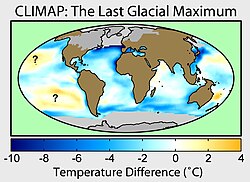
The climate during the LGM was starkly different from the modern era. Around 21,000 years ago, the average global temperature was approximately 6 °C (11 °F) colder than today's averages. To put this in perspective, the average global temperature for the 2013–2017 period was 15 °C (59 °F).
The physical transformation of the Earth's surface was profound. According to the United States Geological Survey (USGS), permanent summer ice covered about 8% of the Earth's total surface and 25% of all land area. In contrast, as of 2012, year-round ice covers only 3.1% of the surface and 10.7% of land area.
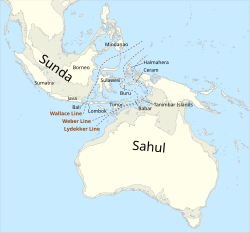
One of the most striking results of this cooling was the drop in sea levels. Because so much water was trapped in ice sheets—some of which were three to four kilometers thick—sea levels were approximately 125 meters (410 ft) lower than they are today.
Global Ecological Effects
The LGM influenced biodiversity and vegetation across every continent. In Europe, the cold stadial climate actually supported a peak in megafaunal abundance (large animal populations) between 27,000 and 21,000 years ago.
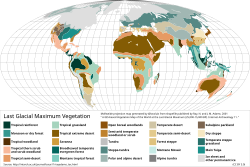
The shift in climate also created specific refugia—isolated areas where species could survive the harsh glacial conditions—which became critical for the eventual repopulation of the planet during the warming phase.

Summary of LGM vs. Modern Era
| Metric | Last Glacial Maximum (~21k years ago) | Modern Era (approx. 2012-2017) |
|---|---|---|
| Average Global Temp | ~9 °C (6 °C colder than today) | 15 °C |
| Sea Level | ~125 meters lower | Baseline (0m) |
| Global Ice Surface Cover | ~8% | ~3.1% |
| Land Area Ice Cover | ~25% | ~10.7% |
Key Facts
- Peak Timing: Occurred between 26,000 and 20,000 years ago.
- Temperature Drop: Global temperatures were roughly 6 °C colder than present levels.
- Sea Level Change: Oceans were approximately 125 meters lower due to massive ice accumulation.
- Ice Extent: Permanent summer ice covered a quarter of the Earth's land area.
- Regional Names: Known in Britain as the Dimlington Stadial.
Frequently Asked Questions
When exactly did the Last Glacial Maximum occur?
While dates vary by researcher, it is generally placed between 26,000 and 20,000 years ago, though some evidence suggests ice growth in the southern hemisphere began as early as 33,000 years ago.
How much lower were the sea levels during the LGM?
Sea levels were approximately 125 meters (410 ft) lower than they are today because a vast amount of Earth's water was frozen in continental ice sheets.
What is the Dimlington Stadial?
The Dimlington Stadial is the term used in Britain to describe the LGM, typically dated between 31,000 and 16,000 years ago.
How did the LGM affect animal populations in Europe?
Contrary to what might be expected, the cold stadial climate of the LGM led to a peak in the abundance of megafauna in Europe between 27,000 and 21,000 years ago.
What methods do scientists use to date the LGM?
Researchers primarily use radiocarbon dating and the study of terrestrial cosmogenic nuclides to determine when ice sheets advanced and retreated.