Paraty: Brazil's Colonial Gem of Culture and Biodiversity
Nestled on the southern coast of Rio de Janeiro state, Paraty is a captivating municipality where history, nature, and art converge. Located 258 kilometers from the state capital, this coastal town is renowned for its remarkably preserved colonial architecture and its stunning natural surroundings, ranging from tropical forests to the turquoise waters of the Bay of Ilha Grande.
The name Paraty originates from the Old Tupi word parati'y, meaning "river of the paratis." While parati can refer to a variety of cassava, linguists note that the name specifically derives from a species of fish in the mullet family (Mugilidae). Today, the inhabitants of this unique region are known as Paratienses.
Key Facts
- UNESCO Status: Listed as a Mixed World Heritage Site in 2019 for its culture and biodiversity.
- Geography: Average elevation of 5 meters above sea level, bordered by mountains reaching 1,300 meters.
- Conservation: Over 80% of the territory is protected by conservation units.
- Economy: Historically driven by gold, cachaça, and coffee; currently a major tourism hub.
- Climate: Tropical monsoon climate with warm sea temperatures (21.8 to 26.3 °C).
Geography and Environmental Protection
Paraty is the southernmost and westernmost city in the state of Rio de Janeiro. Its landscape is a dramatic contrast of low-lying coastal plains and towering tropical mountains. Because of its ecological importance, the majority of the municipality is under environmental protection. Key conservation areas include the Serra da Bocaina National Park, the Tamoios Ecological Station, and the Juatinga Ecological Reserve.
The region also maintains deep social roots, hosting both an indigenous village and an Afro-Brazilian quilombo (a settlement founded by escaped slaves).
A Journey Through History
The Gold Trail (Caminho do Ouro)
Founded in 1597 and formally established as a town in 1667, Paraty rose to prominence following the discovery of gold in Minas Gerais in 1696. It became a vital export port, leading to the creation of the Caminho do Ouro (Gold Trail). This 1,200-kilometer road, paved with large stones in steep sections, connected Paraty to Diamantina via Ouro Preto and Tiradentes.
The trail was used to transport gold to the coast and bring supplies, miners, and enslaved Africans into the interior. However, pirate attacks in the Bay of Angra dos Reis and the eventual depletion of gold in the late 18th century led to the trail's decline.
The Legacy of Cachaça
Long before the gold rush, Paraty was a center for sugarcane production. Unlike other regions that focused on sugar, Paraty specialized in cachaça—a spirit distilled from sugarcane juice. The humid climate provided a superior mash, making Paraty's cachaça highly sought after in Brazil and Europe. By 1820, the region operated over 150 stills. This tradition continues today, with "cachaça of Paraty" receiving a Protected Indication of Provenance in 2007.
Economic Evolution
After the gold era, the city saw a brief revival in the early 19th century as a port for the coffee trade. It remained largely isolated for centuries until the 1970s, when a paved road connected Rio de Janeiro to Santos. This accessibility transformed the quiet fishing and farming village into a world-class tourism destination.
Architecture and Landmarks
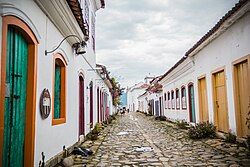
Paraty is a living museum, with much of its architecture remaining unchanged for over 250 years. The town is characterized by its colonial-style houses and historic religious sites.
Historic Churches
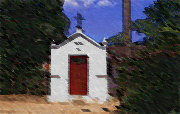
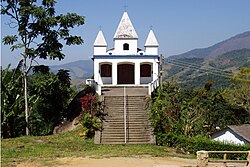
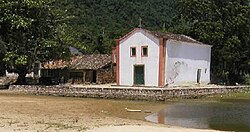
- Capela de Santa Rita (1722): The oldest church in town, originally serving freed slaves and freemen.
- Church of Nossa Senhora do Rosário e São Benedito (1725): A rustic church built and used by African slaves.
- Chapel of Nossa Senhora das Dores (1800): Historically frequented by the social elite.
- Igreja Matriz Nossa Senhora dos Remédios (Completed 1873): The largest church in Paraty, occupying an entire city block.
Other Notable Sites
Beyond the center, the Capela da Generosa (1901) stands as a monument to a local legend, while the Church of Nossa Senhora da Penha is uniquely perched atop a massive boulder. For military history, visitors can explore Forte Defensor (1703) and the remains of Forte Patitiba, which now serves as the public library.
Unique Local Phenomena and Culture
The Flooded Streets
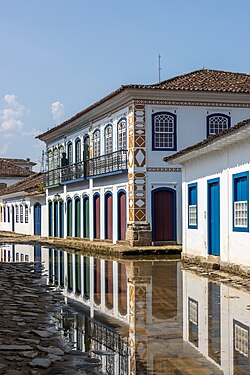
One of Paraty's most striking features is the monthly flooding of its historic center. During a full moon and high tide, seawater enters through openings in the seawalls, covering the cobblestones in 6 to 10 inches of water. This natural occurrence is said to help clean the streets, and local merchants often provide small bridges for pedestrians.
Arts and Festivals
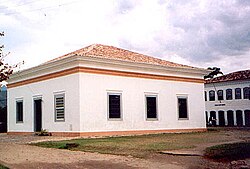
Paraty is a vibrant cultural hub, most famous for FLIP (Festa Literaria Internacional de Paraty), a prestigious international literary festival. Music lovers gather every May for the Paraty Bourbon Jazz Festival. The Casa da Cultura Paraty, housed in a 1754 building, preserves local history and displays the intricate sawdust and flower petal "carpets" created for the Corpus Christi festival.
The town's timeless beauty has also attracted filmmakers, serving as a set for the movie Gabriela, Cravo e Canela and the honeymoon location (Isle Esme) in The Twilight Saga: Breaking Dawn.
Summary of Paraty
| Category | Details |
|---|---|
| Total Area | 924.295 km² |
| Population (2025 est.) | 47,668 |
| UNESCO Status | Mixed Culture and Biodiversity (2019) |
| Climate | Tropical Monsoon |
| Key Industries | Tourism, Cachaça, Fishing, Agriculture |
Frequently Asked Questions
Why do the streets of Paraty flood?
The streets flood once a month during the full moon when high tides push seawater through specific openings in the seawalls. This process is brief and is traditionally believed to help clean the cobblestone streets.
What is the Gold Trail (Caminho do Ouro)?
The Gold Trail was a 1,200-kilometer road used in the colonial era to transport gold from the mines of Minas Gerais to the port of Paraty for export to Portugal.
What makes Paraty's cachaça special?
Due to the region's humid climate, which produces a better mash, Paraty became a center for high-quality cachaça production. It holds a Protected Indication of Provenance as of 2007.
How can I travel to Paraty?
Paraty is accessible by road via BR-101 from Rio de Janeiro or São Paulo. Visitors can also arrive by sea via sailboat or cruise ship from Angra dos Reis or Ilha Grande, or by chartered aircraft to the local airport.
Which UNESCO criteria does Paraty meet?
Paraty is a Mixed World Heritage Site, meaning it meets both cultural and natural criteria (specifically criteria v and x), recognizing its historic urban landscape and its immense biodiversity.