2014 FIFA World Cup Final: Germany's Triumph Over Argentina
The 2014 FIFA World Cup reached its dramatic conclusion on July 13, 2014, at the legendary Maracanã Stadium in Rio de Janeiro, Brazil. This 20th edition of the global tournament for national football teams culminated in a high-stakes clash between two footballing giants: Germany and Argentina.
Under fair weather conditions with a temperature of 23°C (73°F) and 65% humidity, a massive crowd of 74,738 spectators gathered to witness who would claim the ultimate prize in sports. The match was officiated by Italian referee Nicola Rizzoli.
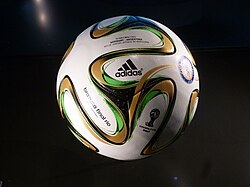
Key Facts
- Winner: Germany (1–0 after extra time)
- Winning Goal: Scored by Mario Götze in the 113th minute
- Venue: Maracanã Stadium, Rio de Janeiro, Brazil
- Attendance: 74,738
- Man of the Match: Mario Götze
- Date: July 13, 2014
The Road to the Final
Both teams entered the final after grueling campaigns. Germany had displayed dominant form, most notably in a historic semi-final victory where they defeated the host nation, Brazil, with a stunning 7–1 scoreline. Argentina, led by captain Lionel Messi, had fought through a tough bracket, including a penalty shootout victory against the Netherlands in the semi-finals.
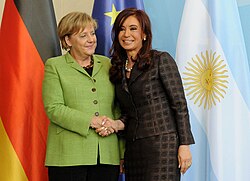
The event attracted global political attention. German Chancellor Angela Merkel attended the match in person. However, Argentine President Cristina Fernández de Kirchner was absent, citing her grandson's birthday and a case of pharyngo-laryngitis (inflammation of the pharynx and larynx).
Match Analysis: A Battle of Attrition
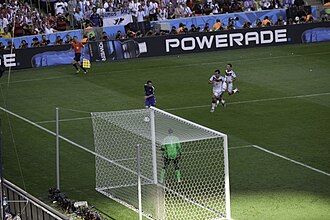
The match began as a tactical struggle. Germany faced an early challenge when Christoph Kramer had to be substituted in the 32nd minute. Throughout the first and second halves, both teams created opportunities, but neither could find the breakthrough.
Argentina's Lionel Messi remained a constant threat, frequently driving into the penalty area to create chances for his teammates. Similarly, Germany's Miroslav Klose, a legendary striker, attempted several shots at goal as the match progressed toward a stalemate.
The Decisive Moment
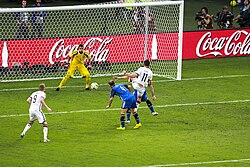
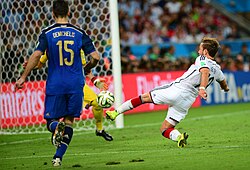
As the game moved into extra time (the additional 30 minutes played to break a tie in knockout matches), the tension peaked. In the 113th minute, substitute Mario Götze struck the winning goal, securing a 1–0 victory for Germany.
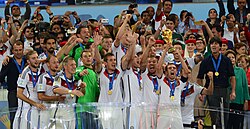
Following the final whistle, German captain Philipp Lahm lifted the World Cup trophy, marking a historic achievement for the German national team.
Match Summary
| Detail | Germany | Argentina |
|---|---|---|
| Final Score | 1 | 0 |
| Goal Scorers | Mario Götze (113') | None |
| Manager | Joachim Löw | Alejandro Sabella |
| Captain | Philipp Lahm | Lionel Messi |
| Man of the Match | Mario Götze | N/A |
Frequently Asked Questions
Who scored the winning goal in the 2014 World Cup Final?
Mario Götze scored the match-winning goal for Germany in the 113th minute during extra time.
Where was the 2014 World Cup Final played?
The match took place at the Maracanã Stadium in Rio de Janeiro, Brazil.
Who was the Man of the Match?
Mario Götze was named the Man of the Match for his decisive goal that secured the championship for Germany.
How many people attended the final match?
The official attendance for the final between Germany and Argentina was 74,738.
Who was the referee for the match?
The final was officiated by Nicola Rizzoli from Italy.