Paper Money History: From Ancient China to Modern Fiat Currency
The evolution of money has transitioned from intrinsic value—where a coin was worth the metal it was made of—to fiat money, which is currency established as legal tender by government decree regardless of its physical material. This transition spanned over a millennium, moving from the innovative courts of imperial China to the complex global financial systems of the 21st century.
The Origins of Paper Currency in China
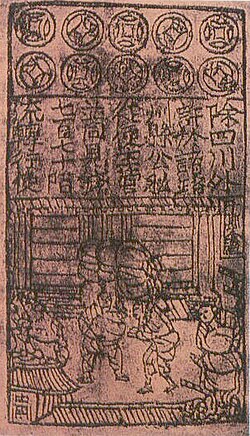
China was the pioneer of paper money, beginning as early as the 7th century CE. By the 10th century, the Song dynasty issued jiaozi, the world's first official paper money. While these notes were theoretically valued against gold, silver, or silk, they were rarely convertible in practice.
The system faced early challenges with inflation. Notes were intended to be replaced every three years for a 3% service charge, but the government printed more notes than it retired. Despite attempts to stabilize the value by requiring taxes to be paid in this currency, the notes eventually lost public favor.
The subsequent Yuan dynasty, founded by Kublai Khan, made paper currency the primary circulating medium through the issuance of Jiaochao. This system was so effective that the explorer Marco Polo noted in his travels that these pieces of paper were treated with the same authority as pure gold or silver throughout the Great Kaan's dominions.
The European Transition to Paper
Europe's path to paper money was more fragmented. As early as 960, records from Prague indicate that small pieces of cloth with set exchange rates against silver were used for trade. Later, around 1150, the Knights Templar created a primitive banking system for pilgrims, issuing documents that could be redeemed for funds upon arrival in the Holy Land.
The first regular paper money in the West appeared in 1661 via the Bank of Stockholm in Sweden. Although this private venture initially failed, the Swedish parliament eventually took control. By 1745, Sweden moved to inconvertible currency, though rapid depreciation forced a return to the silver standard by 1776. Another early example of fiat money appeared in 1683 with the Bank of Amsterdam.
Innovation in New France: Playing Card Money
In 17th-century New France (modern-day Canada), the economy relied heavily on beaver pelts and French coins. However, a severe shortage of coinage in 1685, exacerbated by a failed military expedition against the Iroquois, led Intendant of Finance Jacques de Meulles to create an unconventional solution.
De Meulles confiscated all playing cards in the colony, cut them into pieces, assigned denominations, and signed them to pay soldiers. Because of the desperate need for a medium of exchange, merchants and the public accepted these cards at face value. Over time, this ad hoc system became a permanent fixture, especially as French financial aid dwindled during European wars.
By 1757, the government ceased all coin payments. This led to an application of Gresham's Law—the economic principle that "bad money drives out good"—as citizens hoarded gold and silver and spent the depreciating paper cards. Following the British conquest in 1760, the card money became nearly worthless.
The Rise of Global Fiat Systems (18th–19th Centuries)
During the 18th and 19th centuries, many nations transitioned to official paper currencies. In the American Colonies, provincial governments issued "bills of credit," which were fiat notes that could be used to pay taxes. While some regions experienced dramatic inflation, others remained stable.
The 19th century saw a widespread shift toward national paper currencies, often cycling between "hard money" (specie) and inflationary paper. Notable examples of this volatility include the "Continental" bills of the early U.S., the South Sea Bubble bank notes, and the greenbacks issued by the U.S. Federal Government during the American Civil War.
| Country | Year of Adoption |
|---|---|
| United Kingdom | 1821 |
| Germany | 1871 |
| Sweden | 1873 |
| United States (de facto) | 1873 |
| France, Belgium, Italy, Switzerland | 1874 |
| Netherlands | 1875 |
| Austria-Hungary | 1892 |
| Japan | 1897 |
| Russia | 1898 |
| United States (de jure) | 1900 |
The 20th Century and the End of the Gold Standard
After World War I, the immense costs of war and reconstruction forced many governments to suspend the redemption of notes for specie (precious metals). In some cases, printing excessive cash to pay debts led to hyperinflation, most notably in the Weimar Republic.
From 1944 to 1971, the Bretton Woods agreement established a system where 35 U.S. dollars were fixed to one troy ounce of gold, and other currencies were pegged to the dollar. This ended with the "Nixon shock" in 1971, when President Richard Nixon unilaterally canceled the direct convertibility of the U.S. dollar to gold. This ushered in the current era of global national fiat currencies with variable exchange rates.
The Decline of Precious Metal Coinage
As the cost of producing coins began to exceed their face value, governments phased out precious metals. The U.S. Coinage Act of 1965 removed silver from dimes and quarters. More recently, the Canadian penny was removed in 2012, and in February 2025, U.S. President Donald Trump instructed Treasury Secretary Scott Bessent to halt penny production for similar cost reasons.
Key Facts
- First Paper Money: The Song dynasty's jiaozi (10th century CE) was the first official paper currency.
- First Predominant Use: The Yuan dynasty was the first to use paper currency as the primary circulating medium.
- Playing Card Money: New France used signed playing cards as currency starting in 1685 due to coin shortages.
- The Nixon Shock: The 1971 decision to end the U.S. dollar's convertibility to gold ended the Bretton Woods system.
- Gresham's Law: The principle that "bad money drives out good," observed in New France when gold was hoarded and paper spent.
Frequently Asked Questions
What is fiat money?
Fiat money is a currency that has no intrinsic value and is not backed by a physical commodity like gold or silver; instead, its value is derived from government decree and public trust.
Why did New France use playing cards as money?
Due to a severe shortage of French coins and a need to pay soldiers to prevent mutiny, the Intendant of Finance used signed, denominated playing cards as a temporary medium of exchange.
What was the Bretton Woods agreement?
It was a post-WWII system (1944–1971) that pegged the U.S. dollar to gold and other national currencies to the U.S. dollar to maintain exchange rate stability.
Why are pennies being phased out in the U.S. and Canada?
They are being removed because the cost of producing the coins has become higher than the actual face value of the currency.
What happened to the jiaozi in the Song dynasty?
Although they were the first paper notes, they suffered from inflation because the government printed more notes than were retired, eventually leading the public to disfavor them.