Pantanal: The World's Largest Tropical Wetland
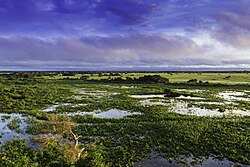
The Pantanal is a breathtaking natural region that holds the title of the world's largest tropical wetland and the largest area of flooded grasslands on Earth. Spanning an estimated 140,000 to 195,000 square kilometers, this vast ecosystem is primarily located within the Brazilian state of Mato Grosso do Sul, though it extends into Mato Grosso and reaches into portions of Bolivia and Paraguay.
The name "Pantanal" is derived from the Portuguese pântano and Spanish pantano, meaning swamp or marsh, combined with the suffix -al, which denotes an abundance or collection. This aptly describes a landscape where roughly 80% of the floodplains are submerged during the rainy season, creating a biological sanctuary for a staggering array of aquatic and terrestrial species.
Key Facts
- Global Status: The world's largest tropical wetland and flooded grassland.
- Geography: Spans Brazil, Bolivia, and Paraguay.
- Biodiversity: Home to the highest concentration of crocodilians (yacare caimans) in the world.
- Climate: Tropical wet and dry with an average annual temperature of 24°C.
- Conservation: Includes UNESCO World Heritage sites and Ramsar Wetlands of International Importance.
Geography and Geological Formation
The Pantanal is essentially a gently sloped basin that acts as an enormous internal river delta. It was formed by a large, concave, pre-Andean depression of the Earth's crust related to the Andean orogeny (the process of mountain building) during the Tertiary period. This depression collects runoff from the surrounding Planalto highlands, which is then slowly released through the Paraguay River and its tributaries.
The region is bordered by several distinct ecosystems: the Chiquitano and Arid Chaco dry forests to the west and southwest, the Humid Chaco to the south, and the Cerrado savannas to the north, east, and southeast.
Climate and Hydrodynamics
The region experiences a tropical wet and dry climate. Annual rainfall typically ranges between 1,000 and 1,500 mm, with the heaviest precipitation occurring from November to March. Temperatures are generally warm, averaging 24°C, though they can fluctuate from a chilly -1°C in winter to a scorching 41°C in summer.
The ecosystem is defined by seasonal inundation—the cycle of flooding and drying. During the wet season, water levels in the Paraguay River can rise between two and five meters. Because of the low gradients of the land and dense vegetation, floodwaters move slowly, typically between 2 to 10 cm per second, allowing the land to remain saturated for extended periods.
Flora and Fauna
The Pantanal is a powerhouse of biodiversity. Approximately 2,000 different plant species have been identified, many of which hold medicinal potential.
Animal Diversity
The region supports a massive variety of wildlife, including 463 bird species, 269 fish species, 236 mammal species, and 141 reptile and amphibian species. It is particularly famous for its high density of predators and unique mammals:
- Jaguar: One of the largest and healthiest populations on Earth.
- Yacare Caiman: With an estimated 10 million individuals, this is the world's highest concentration of crocodilians.
- Endangered Species: The hyacinth macaw, giant river otter, maned wolf, giant anteater, and South American tapir.
- Common Wildlife: Capybaras, ocelots, and various species of herons, egrets, and macaws.
Conservation and Environmental Threats
While deforestation rates for native vegetation have remained relatively low (under 17%) due to new regulations, the Pantanal faces several critical threats:
- Agriculture and Ranching: About 99% of the land is privately owned. With 2,500 fazendas (ranches) and up to eight million cattle, erosion and sedimentation are altering the soil.
- Pollution: Gold mining and agro-industry introduce chemicals and pesticides into the water system.
- Infrastructure: Proposed dredging of the Paraguay and Paraná Rivers for shipping could disrupt the natural flooding and drainage cycles.
- Climate Change and Fire: In 2020, unprecedented wildfires destroyed roughly a quarter of the wetland (19,890 square kilometers), killing millions of vertebrates.
Protected Areas
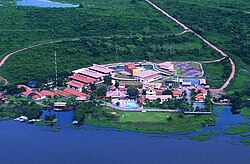
To combat these threats, several protected zones have been established. In Brazil, the Pantanal Matogrossense National Park and the SESC Pantanal Private Natural Heritage Reserve provide critical refuges. The latter is a mix of permanent rivers and seasonally flooded forests dedicated to preservation. Bolivia also protects the region through the Otuquis National Park and the San Matías Integrated Management Natural Area.
| Feature | Details |
|---|---|
| Total Area | 140,000 – 195,000 km² |
| Countries | Brazil, Bolivia, Paraguay |
| Average Temp | 24°C (75°F) |
| Key Species | Jaguar, Yacare Caiman, Hyacinth Macaw |
| UNESCO Status | World Heritage Site (since 2000) |
Frequently Asked Questions
What makes the Pantanal different from other wetlands?
The Pantanal is the world's largest tropical wetland and is characterized by its massive internal river delta structure and extreme seasonal flooding, where up to 80% of the area is submerged annually.
Which animals are most iconic to the Pantanal?
The region is most famous for its jaguars and the yacare caiman. It also hosts the hyacinth macaw and the giant river otter, among many other rare species.
How does the flooding cycle work?
The Pantanal receives runoff from the surrounding highlands. Due to the flat terrain, the water drains very slowly through the Paraguay River, causing the plains to flood during the rainy season (November to March) and dry out during the winter.
What are the primary threats to the ecosystem?
The main threats include cattle ranching, pollution from gold mining and soy-bean pesticides, infrastructure projects like shipping canals, and increasingly severe wildfires linked to climate change.
Is the Pantanal a protected area?
Yes, parts of it are protected through national parks in Brazil and Bolivia, as well as private reserves. It is also recognized as a UNESCO World Heritage site and contains multiple Ramsar Wetlands of International Importance.