Gran Chaco: South America's Vast Dry Forest Frontier
The Gran Chaco is one of the most ecologically significant and threatened regions in South America. Spanning a massive alluvial sedimentary plain, it represents the continent's second-largest forest. This unique ecoregion is shared among Argentina, Bolivia, Paraguay, and Brazil, acting as a critical regulator of water cycles and a massive storehouse for carbon.
From the arid plains of the west to the swampy savannas of the east, the Gran Chaco is a land of extremes, characterized by some of the highest temperatures on the continent and a delicate balance of biodiversity that is currently facing unprecedented pressure from agricultural expansion.
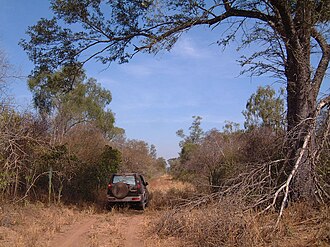
Key Facts
- Total Area: Approximately 1,066,000 km², with the ecoregion covering 786,791 km².
- Biodiversity: Home to over 3,400 plant species, 500 bird species, 150 mammals, and 200+ reptiles and amphibians.
- Conservation Status: Roughly 22% (176,715 km) of the ecoregion is currently protected.
- Primary Threats: Large-scale deforestation driven by cattle ranching, soybean farming, and illegal logging.
- Unique Wildlife: The only place on Earth where the pink fairy armadillo is found.
Geography and Regional Divisions
Located west of the Paraguay River and east of the Andes, the Gran Chaco is primarily a flat landscape with a minimal eastern slope. The region is broadly divided into distinct zones based on rainfall and soil drainage:
Alto Chaco (Upper Chaco)
Also known as the Chaco Seco (Dry Chaco), this western region is characterized by very dry conditions and sparse vegetation. It is a harsh environment where only the most resilient species thrive.
Bajo Chaco (Lower Chaco)
Known as the Chaco Húmedo (Humid Chaco), this eastern area receives higher rainfall. Because the lowland soils drain poorly, it often becomes a swampy plain. The vegetation here is more open, consisting of palm trees, tropical high-grasses, and quebracho trees.
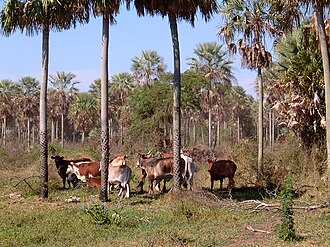
Soil and Climate Challenges
While the central and northern regions possess high soil fertility—specifically sandy alluvial soils rich in phosphorus—farming remains difficult. The region experiences a semi-arid to semi-humid climate with annual rainfall between 600 and 1,300 mm and a grueling six-month dry season. Furthermore, two-thirds of the region lacks fresh groundwater or suffers from high salinity.
Biodiversity and Endemic Species
The Gran Chaco is a sanctuary for a vast array of wildlife, many of which are endemic (species found nowhere else on Earth). The region is particularly noted for its diversity of armadillos, including the nine-banded armadillo and the giant armadillo.
Notable fauna include:
- Mammals: Jaguars, maned wolves, peccaries, and the Chacoan peccary (tauga), which was thought to be extinct until its rediscovery in 1975.
- Birds: The black-legged seriema and the many-colored Chaco finch are among the 409 resident or breeding bird species.
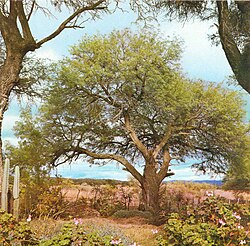
- Flora: The Algarrobo (white carob tree) is a prized shade tree common to the area.
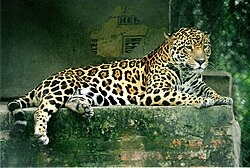
A Turbulent History
Historically, the Chaco was inhabited by nomadic peoples, such as the Guaycuru, who successfully resisted Spanish colonial control for centuries. In the 19th and 20th centuries, the region became a flashpoint for territorial disputes between Argentina, Bolivia, and Paraguay.
The most significant conflict was the Gran Chaco War (1932–1935), fought between Bolivia and Paraguay over suspected oil reserves in the Chaco Boreal. Although the war ended with a treaty in 1938 giving most of the territory to Paraguay, significant oil deposits were not officially announced until 2012.
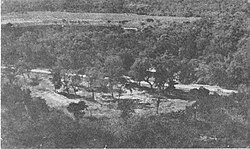
In the 1920s and 30s, Mennonite immigrants from Canada and the USSR settled in the Paraguayan Chaco, establishing some of the region's most prosperous municipalities. To encourage further development, the 1960s saw the construction of major highways, including the Trans-Chaco Highway.
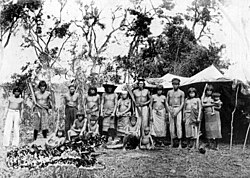
Environmental Crisis and Conservation
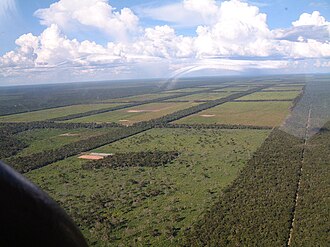
The Gran Chaco is currently one of the world's fastest-vanishing forests. It has become a primary agricultural frontier, where native xerophytic forests (forests adapted to dry conditions) are being cleared at an alarming rate.
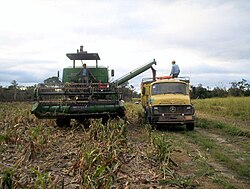
Between 1998 and 2023, Argentina lost approximately seven million hectares of forest, much of it within the Chaco. In Paraguay, deforestation rates reached 220,000 hectares annually by 2008. The primary drivers are the expansion of soy plantations and cattle ranching, which not only destroy biodiversity but also displace indigenous communities.
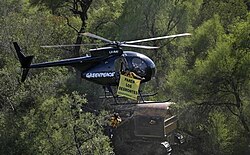
Conservation efforts include the Kaa-Iya del Gran Chaco National Park in Bolivia, which is uniquely administered by indigenous peoples, including the Izoceño Guaraní, Ayoreode, and Chiquitano.
Regional Summary
| Feature | Details |
|---|---|
| Countries | Argentina, Bolivia, Paraguay, Brazil |
| Biome | Tropical and subtropical dry broadleaf forests |
| Key Species | Jaguar, Giant Armadillo, Chacoan Peccary, Algarrobo Tree |
| Climate | Semi-arid to semi-humid (600–1300 mm rain/year) |
| Main Threats | Soy farming, cattle ranching, illegal logging |
| Protected Area | 22% of the ecoregion |
Frequently Asked Questions
What is the difference between Alto Chaco and Bajo Chaco?
The Alto Chaco (Upper Chaco) is the drier, more sparsely vegetated western region. The Bajo Chaco (Lower Chaco) is the eastern region, characterized by higher rainfall and swampy, poorly drained soils that support savannas and palm trees.
Why is the Gran Chaco experiencing such high deforestation rates?
The region is being converted into agricultural land, primarily for large-scale soybean farming and cattle ranching, which are driven by global commodity demand.
What is the Chacoan peccary?
The Chacoan peccary, locally known as the tauga, is the largest of the three peccary species in the region. It was believed to be extinct until it was rediscovered by scientist Ralph Wetzel in 1975.
Who are the indigenous peoples of the Gran Chaco?
The region is home to numerous indigenous groups, including the Guaycuru, Guaraní, Wichí, Toba (Qom), and Ayoreo, among many others across Argentina, Bolivia, and Paraguay.
Was there actually oil in the Gran Chaco?
While the Gran Chaco War was fought over the belief that the region held vast oil reserves, no oil was found until 2012, when discoveries were announced near the Pirity river in Paraguay.