Panama Canal Zone Seal: History and Symbolism
The seal of the Panama Canal Zone served as a powerful visual representation of one of the most ambitious engineering feats in human history. Designed to symbolize the connection of two great oceans, the seal encapsulated the geopolitical and humanitarian goals of the era, reflecting the vision of those who sought to reshape global trade and navigation.
The Origins and Design Process
The creation of the seal began in 1905, led by George Whitefield Davis, the governor of the Panama Canal Zone, and Gaillard Hunt, a former official of the United States Department of State. Davis envisioned a design that captured the essence of the canal's construction, describing the project as an effort to "join the seas for the benefit of mankind."
This sentiment eventually evolved into the official motto of the territory: "The land divided; the world united."
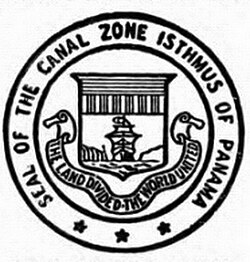
To bring this vision to life, Tiffany and Company submitted several design proposals to the Isthmian Canal Commission (the body responsible for the canal's construction) and the U.S. Department of State. Based on the recommendations of Gaillard Hunt, a slightly modified version of one of these designs was officially adopted in 1906.
Official Recognition and Visual Elements
In 1915, President Woodrow Wilson issued an executive order granting the Governor of the Panama Canal a distinctive flag featuring the seal for official use. This order provided the first formal written description of the seal's imagery.
The seal featured a shield with the following elements:
- The Base: A 15th-century Spanish galleon under full sail, navigating between two high banks. This section was rendered in purpure (purple), with a yellow sky representing the glow of sunset.
- The Chief: The top section of the shield displayed the colors of the arms of the United States.
- The Motto: The phrase "The land divided; the world united!" was positioned beneath the shield.
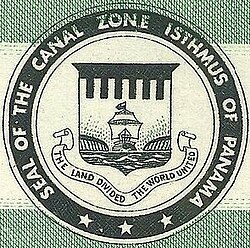
While the core imagery remained, the seal underwent further modifications in 1956 to refine its appearance.
The End of an Era
The Panama Canal Zone was a specialized administrative territory that existed until the late 20th century. On October 1, 1979, the Zone ceased to exist, rendering both the official seal and the governor's flag obsolete.
Key Facts
- Designers: George Whitefield Davis and Gaillard Hunt.
- Production: Initial designs were submitted by Tiffany and Company.
- Adoption Date: 1906.
- Official Motto: "The land divided; the world united."
- Key Imagery: A 15th-century Spanish galleon and U.S. heraldic colors.
- Obsolescence: October 1, 1979.
| Feature | Details |
|---|---|
| Proposed By | George Whitefield Davis (1905) |
| Design Firm | Tiffany and Company |
| Primary Symbol | 15th-century Spanish galleon |
| Colors | Purpure (purple) and yellow (sunset) |
| Legal Status | Obsolete since October 1, 1979 |
Frequently Asked Questions
Who designed the Panama Canal Zone seal?
The seal was designed by George Whitefield Davis, the governor of the Panama Canal Zone, and Gaillard Hunt, a former U.S. Department of State official, with design submissions provided by Tiffany and Company.
What is the meaning of the motto "The land divided; the world united"?
The motto reflects the physical act of cutting through the isthmus (dividing the land) to create a waterway that would connect the Atlantic and Pacific Oceans, thereby uniting the world's maritime routes.
What imagery was depicted on the seal's shield?
The shield depicted a 15th-century Spanish galleon sailing between two high banks against a yellow sunset sky, with the colors of the United States arms located in the chief (top) section.
When did the seal become obsolete?
The seal became obsolete on October 1, 1979, the date the Panama Canal Zone ceased to exist.
Which U.S. President officially described the seal in an executive order?
President Woodrow Wilson issued the executive order in 1915 that provided the first officially published description of the seal and established a flag for the Governor of the Panama Canal.