paleoethnobotanyarchaeobotanyancient plant remainsarchaeological flotationplant domestication

Paleoethnobotany: Reconstructing Ancient Human-Plant Interactions

Paleoethnobotany: Reconstructing Ancient Human-Plant Interactions How did ancient civilizations feed themselves? What did the landscapes they inhabited actually look like? To answer these...

Paleoethnobotany: Reconstructing Ancient Human-Plant Interactions

How did ancient civilizations feed themselves? What did the landscapes they inhabited actually look like? To answer these questions, scientists turn to paleoethnobotany (also known as archaeobotany), the specialized study of ancient plant remains recovered from archaeological sites. By analyzing these botanical fragments, researchers can reconstruct past diets, understand the origins of agriculture, and trace the co-evolution of humans and their environments.

While the terms are often used interchangeably, there is a subtle distinction in their usage. In North America, "paleoethnobotany" is more common, a term that acknowledges how ethnographic studies—the study of living cultures—inform our understanding of ancient plant use. In Europe, "archaeobotany" is the preferred term, emphasizing the discipline's integration within the broader field of archaeology.
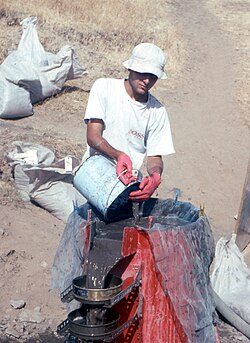
Flotation machine in use at Hallan Çemi, southeast Turkey, c. 1990. Note the two sieves catching charred seeds and charcoal, and the bags of archaeological sediment waiting for flotation.
: Flotation machine in use at Hallan Çemi, southeast Turkey, c. 1990. Note the two sieves catching charred seeds and charcoal, and the bags of archaeological sediment waiting for flotation.

Key Facts

  • Paleoethnobotany is a subfield of environmental archaeology.
  • The study is divided into Old World (Eurasia and Africa) and New World (the Americas) research.
  • Key evidence includes macrofossils (visible seeds/grains) and microbotanicals (pollen, phytoliths, and starches).
  • Flotation is a vital recovery method used to separate plant remains from sediment.
  • Research helps identify the origins of plant domestication and ancient agricultural regimes.

The Evolution of the Discipline

The study of ancient plants began somewhat by chance in the 19th century. Early botanists like C. Kunth and O. Heer identified desiccated and waterlogged plant material in Egyptian tombs and Swiss lakeside villages. However, these early efforts were largely limited to simple identification and creating lists of plant species.

The field underwent a major transformation during the 1950s and 1960s. Two landmark developments proved the scientific value of plant remains: the Star Carr excavations in the UK, which provided a detailed paleoenvironmental reconstruction, and discoveries in the Near East that offered the first evidence of plant domestication. These breakthroughs established paleoethnobotany as a critical tool for understanding the archaeological record.
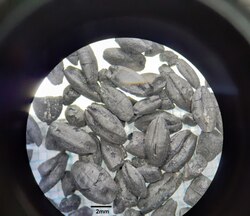
Charred barley grains viewed through a low-powered microscope.
: Charred barley grains viewed through a low-powered microscope.

The 1970s brought a technological revolution with the implementation of flotation. This method allowed archaeologists to systematically recover plant macrofossils from almost any site, leading to a massive influx of data. As the field grew, so did the complexity of the analysis, moving from simple lists to sophisticated quantitative studies using computational technology.
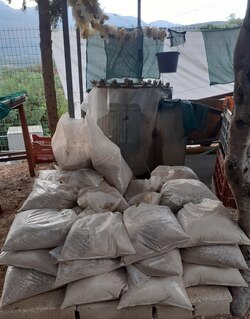
Sediment samples waiting to be processed by water flotation.
: Sediment samples waiting to be processed by water flotation.
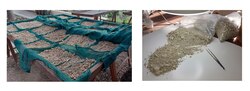
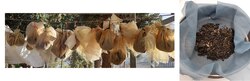
Left to right: Flots drying after water flotation processing; a dried flot ready to be analysed under the microscope.
: Left to right: Flots drying after water flotation processing; a dried flot ready to be analysed under the microscope.
Left to right: Heavy residues drying after water flotation processing; a dried heavy residue being sorted with the naked eye.
: Left to right: Heavy residues drying after water flotation processing; a dried heavy residue being sorted with the naked eye. : Flotation machine in use at Hallan Çemi, southeast Turkey, c. 1990. Note the two sieves catching charred seeds and charcoal, and the bags of archaeological sediment waiting for flotation.

Macrobotanical vs. Microbotanical Remains

Paleoethnobotanists categorize plant remains into two primary groups based on their size and the methods required to study them.

Macrobotanical Remains

Macrobotanicals are plant parts large enough to be seen with the naked eye or a low-powered microscope. These include seeds, grains, fruits, and wood. They are often preserved through carbonization (charring by fire) or mineralization (where minerals replace organic matter). Common examples include charred barley, wheat, and olive stones.
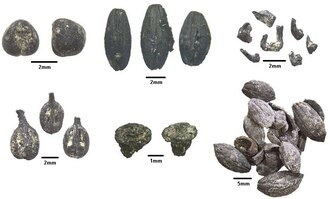
Charred Plant Remains. Clockwise from top left: bitter vetch (Vicia ervilia); barley (Hordeum sp.); glume wheat (Triticum sp.) glumebases and spikelet; olive stones (Olea europaea); grape pedicels (Vitis vinifera sp.); and grape pips (Vitis vinifera sp.).
: Charred Plant Remains. Clockwise from top left: bitter vetch (Vicia ervilia); barley (Hordeum sp.); glume wheat (Triticum sp.) glumebases and spikelet; olive stones (Olea europaea); grape pedicels (Vitis vinifera sp.); and grape pips (Vitis vinifera sp.).
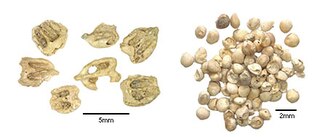
Mineralized Plant Remains. Left to right: grape endosperms (Vitis vinifera sp.); and fig seeds (Ficus cf. carica).
: Mineralized Plant Remains. Left to right: grape endosperms (Vitis vinifera sp.); and fig seeds (Ficus cf. carica).
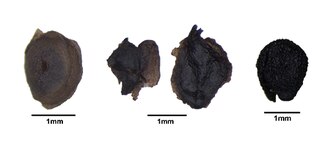
Waterlogged Plant Remains. From left to right: bog pond weed (Potamogeton poligonifolius); birch (Betula sp.); and common scurvygrass (Cochlearia officinalis).
: Waterlogged Plant Remains. From left to right: bog pond weed (Potamogeton poligonifolius); birch (Betula sp.); and common scurvygrass (Cochlearia officinalis).

Microbotanical Remains

Microbotanicals require high-powered microscopy to identify. This category includes:

  • Pollen grains: Used to reconstruct ancient environments and climates.
  • Phytoliths: Microscopic silica structures formed within plant tissues.
  • Starches: Microscopic grains found in residues or dental calculus.
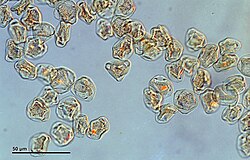
Pollen grains viewed through a high-powered microscope.
: Pollen grains viewed through a high-powered microscope.
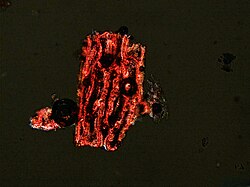
This image is part of reference collection work for archaeological dental calculus - i.e. looking at plants, animals and fungi from the inside to better understand them when finding them in archaeological samples. This image shows a piece of cranberry. This image was altered with AI to improve the quality and the colours
: This image is part of reference collection work for archaeological dental calculus - i.e. looking at plants, animals and fungi from the inside to better understand them when finding them in archaeological samples. This image shows a piece of cranberry. This image was altered with AI to improve the quality and the colours

Research Applications and Results

The data recovered through paleoethnobotany provides a window into the complex economic and social structures of the past. By analyzing these remains, researchers can determine:

  • Subsistence and Diet: What people ate, including the production of bread, pastries, and beverages.
  • Agricultural Practices: The use of irrigation, manuring, and specific sowing techniques.
  • Economic Structures: How plants were produced, stored, and traded.
  • Resource Use: The extraction of oils and dyes, the use of wood for fuel, and even the use of plants as building materials.
  • Cultural Significance: The symbolic or ritual use of specific plant species.
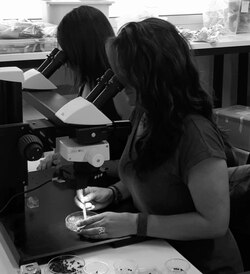
Archaeobotanist and student analysing plant remains under the microscope.
: Archaeobotanist and student analysing plant remains under the microscope.
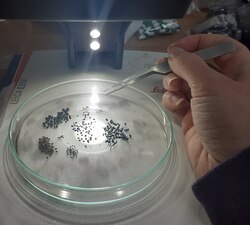
Charred plant remains being grouped by taxa type and quantified under the microscope.
: Charred plant remains being grouped by taxa type and quantified under the microscope.

Summary of Plant Preservation Modes

Common Modes of Plant Preservation in Archaeology
Preservation Mode Description Common Examples
Carbonized Charred by fire, preventing decay. Grains, seeds, wood.
Waterlogged Preserved in anaerobic (oxygen-free) wet environments. Wood, seeds, aquatic plants.
Mineralized Organic matter replaced by minerals. Seeds, fruit remains.
Desiccated Dried out in extremely arid conditions. Plant tissues in desert environments.

Frequently Asked Questions

What is the difference between the Old World and New World in paleoethnobotany?

The distinction is geographical and biological. The Old World refers to Eurasia and Africa, where plants like olives are native. The New World refers to the Americas, where plants like maize originated.

How do archaeologists find tiny plant remains in dirt?

Archaeologists use a process called flotation. They place sediment in water; the lighter plant remains float to the surface while the heavier soil sinks, allowing the plant material to be collected and studied.

Can plant remains tell us about ancient social roles?

Yes. Through the study of post-processual archaeology, researchers use plant data to explore complex social topics, such as food-related gender roles in ancient societies.

What are phytoliths?

Phytoliths are microscopic silica structures that form within plant cells. Because they are inorganic, they are incredibly durable and can provide evidence of plant presence even when the organic plant matter has decayed.

Why is carbonization important for archaeologists?

Carbonization occurs when plant material is charred by fire. This process turns the organic material into carbon, which is much more resistant to biological decay, making it easier for archaeologists to find and identify thousands of years later.

References

  1. Pearsall, D.M. (2015). Paleoethnobotany: a handbook of procedures (Third ed.). Walnut Creek, California: Left Coast Press. ISBN 978-1-61132-298-9. OCLC 888401422.
  2. Marston, J.M.; d'Alpoim Guedes, J.; Warinner, C. (2014). "Paleoethnobotanical Method and Theory in the Twenty-First Century". In Marston, J.M.; d'Alpoim Guedes, J.; Warinner, C. (eds.). Method and theory in paleoethnobotany. Boulder: University Press of Colorado. pp. 1–15. ISBN 978-1-60732-316-7. OCLC 903563629.
  3. Christine Ann Hastorf; Virginia S. Popper, eds. (1988). Current paleoethnobotany: analytical methods and cultural interpretations of archaeological plant remains. Chicago: University of Chicago Press. ISBN 0-226-31892-3. OCLC 18134655.
  4. Kunth, C. (1826). "Examen Botanique". In Passalacqua, J. (ed.). Catalogue Raisonne et Historique de Antiquites Decouvertes en Egypte. Paris: Musees Nationaux. pp. 227–28.
  5. Heer, O. (1866). "Treatise on the Plants of the Lake Dwellings". In Keller, F. (ed.). The Lake Dwellings of Switzerland and Other Parts of Europe. Translated by Lee, J.E. London: Longman, Green & Co.