Understanding Poaceae: The Essential Guide to the Grass Family
From the vast prairies of North America to the manicured lawns of suburban neighborhoods, grasses are among the most ubiquitous and influential plants on Earth. Scientifically known as Poaceae (or Gramineae), this family of flowering plants is not just a backdrop to our landscapes; it is the foundation of global food security and a critical component of the planet's ecology.
With approximately 780 genera and 12,000 species, Poaceae is the fifth-largest plant family. Its reach is truly global, appearing on every continent, including Antarctica, where the Antarctic hair grass (Deschampsia antarctica) survives as one of only two native flowering plant species on the western Antarctic Peninsula.
Key Facts
- Global Reach: Grasslands cover an estimated 40.5% of the Earth's land area (excluding Greenland and Antarctica).
- Dietary Importance: Rice, wheat, and maize provide more than half of all calories consumed by humans.
- Species Diversity: The family contains roughly 12,000 species across 780 genera.
- Ancient Origins: The oldest known grass fossils date back 113–100 million years to the Albian stage of the Early Cretaceous.
- Economic Power: Approximately 70% of all agricultural crops are members of the Poaceae family.
Botanical Characteristics of Grasses
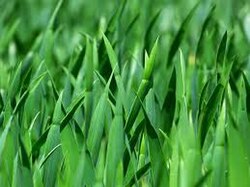
Grasses are typically annual or perennial herbs with a distinct morphology. Their stems, known as culms, are generally cylindrical and hollow, with solid plugs at the nodes where leaves attach.
The leaves of grasses are almost always alternate and distichous, meaning they grow in a single plane. Each leaf consists of a lower sheath that wraps around the stem and a blade with smooth margins. To protect the plant, many species incorporate silica phytoliths—tiny hardened particles—into their blades. These discourage grazing animals and, in some species like sword grass, can be sharp enough to cut human skin.
At the junction of the sheath and the blade lies the ligule, a membranous appendage or fringe of hairs that prevents water and insects from entering the sheath.
Growth and Development
One of the most successful evolutionary adaptations of grasses is their growth point. Unlike many plants that grow from the tips of their stems, grass blades grow from the base. This allows them to be grazed by animals or mown by humans without sustaining severe damage.
Grasses generally exhibit one of three growth habits:
- Bunch-type (caespitose): Growing in dense clumps.
- Stoloniferous: Spreading via above-ground runners.
- Rhizomatous: Spreading via underground stems.
Photosynthesis: C3 vs. C4 Grasses
The physiological diversity of Poaceae is largely defined by their carbon fixation pathways, categorized as C3 and C4.
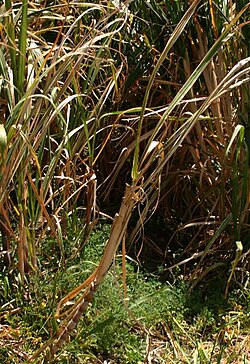
C3 grasses are known as "cool-season" grasses. Examples include wheat, rye, and oats. In contrast, C4 grasses are "warm-season" grasses, such as maize, sugarcane, and pearl millet. C4 grasses utilize a specialized Kranz leaf anatomy—a structure that allows for increased water use efficiency, making them far better adapted to hot, arid environments.
Roughly 46% of all grass species are C4 plants. Interestingly, C4 photosynthesis has evolved independently twenty or more times across various genera and subfamilies.
Evolutionary History and Taxonomy
The name Poaceae was established by John Hendley Barnhart in 1895, derived from the Ancient Greek word póa, meaning "fodder."
For years, scientists believed grasses evolved around 55 million years ago. However, recent discoveries have pushed this timeline back significantly. Phytoliths found in dinosaur coprolites (fossilized dung) from India suggest grasses existed 66 million years ago. The most definitive evidence comes from northern China, where microfossils found in the teeth of the dinosaur Equijubus normani date back 113–100 million years.
Classification and Subdivisions
The family is divided into 12 subfamilies. Some of the most prominent include:
- Pooideae: Includes wheat, barley, oats, and common lawn grasses.
- Bambusoideae: Includes all bamboo species.
- Panicoideae: Includes maize, sorghum, and sugarcane.
- Ehrhartoideae: Includes rice and wild rice.
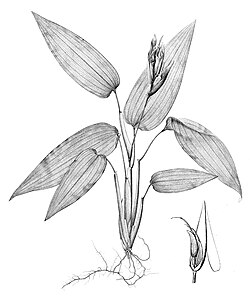
- Anomochlooideae: A small lineage of primitive, broad-leaved grasses.
Ecological Impact and Distribution
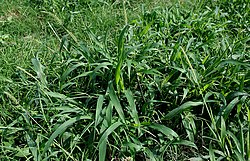
Grasses dominate several biomes, including steppes, prairies, and pampas. These grass-dominated biomes are highly resilient to fire and grazing. Grasses also play a vital role in wetlands, salt-marshes, and reedswamps.
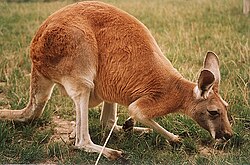
Because they serve as a primary food source, grasses support a vast array of graminivores—animals that primarily eat grass. This group includes livestock like cattle, sheep, and horses, as well as invertebrates such as grasshoppers.
Economic Importance and Human Use
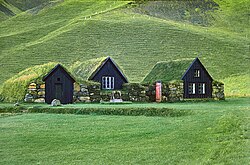
Poaceae is arguably the most economically significant plant family in human history. Beyond food, grasses provide materials for construction (bamboo, thatch, and straw), paper, clothing, and biofuel (specifically ethanol derived from maize).
Food Production
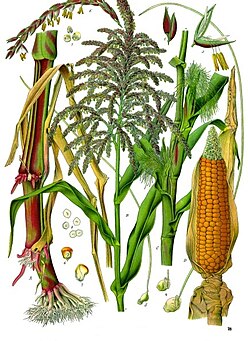
Cereals, or agricultural grasses grown for their edible seeds, provide the bulk of human caloric intake. Rice (20%), wheat (19%), and maize (5%) are the primary contributors to global dietary energy.
Lawns and Sports Turf
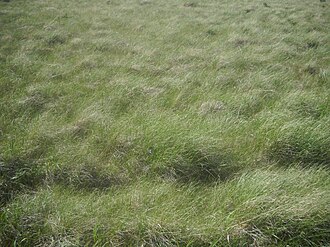
Grasses are essential for erosion control and the creation of recreational spaces. They provide the playing surfaces for numerous sports, including cricket, golf, tennis, and football.


Palaeoecological Reconstruction
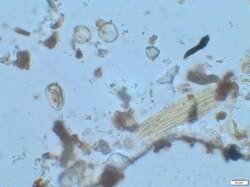
Scientists use pollen morphology to reconstruct ancient environments. While grass pollen is often similar across species—typically featuring a single pore and ranging from 20 to 100 micrometers—new techniques like Fourier-Transform Infrared Spectroscopy are helping researchers distinguish between wild and domesticated grasses in the fossil record.
Summary of Key Poaceae Groups
| Category | Key Examples | Primary Use/Role |
|---|---|---|
| Grain Crops | Rice, Wheat, Maize, Barley, Oats | Human caloric intake (staple foods) |
| Leaf & Stem Crops | Sugarcane, Bamboo | Sugar production, construction, timber |
| Lawn Grasses | Bluegrass, Fescue, Zoysia, Bermuda grass | Ornamental use, sports turf, erosion control |
| Forage/Fodder | Ryegrass, Meadow-grass | Livestock feed (hay, silage) |
Frequently Asked Questions
Why are grasses so resistant to being mown or grazed?
Grasses have evolved a low growth point at the base of the blade rather than at the stem tips. This allows the plant to regrow quickly after the top portion has been removed by a lawnmower or a grazing animal.
What is the difference between C3 and C4 grasses?
C3 grasses are "cool-season" plants, while C4 grasses are "warm-season" plants. C4 grasses possess a specialized Kranz leaf anatomy that allows them to use water more efficiently, making them better suited for hot and dry climates.
How old are the oldest known grasses?
The oldest known grass fossils were discovered in the teeth of the dinosaur Equijubus normani in China, dating back to the Albian stage of the Early Cretaceous, approximately 113–100 million years ago.
Which grasses provide the most energy for humans?
Rice is the largest contributor at 20% of global dietary energy, followed closely by wheat at 19%, and maize (corn) at 5%.
What causes the smell of freshly cut grass?
The characteristic scent of freshly cut grass is produced primarily by a chemical compound called cis-3-Hexenal.