Understanding Grass: From Botanical Families to Modern Culture
When we think of grass, we often imagine a lush green lawn or a wide-open pasture. However, the term "grass" encompasses a vast range of biological families and cultural meanings. From the essential crops that feed the global population to the modern slang used in digital spaces, grass plays a fundamental role in both our physical environment and our language.
The Botany of Grass-like Plants
In botanical terms, plants that appear grass-like are generally divided into three primary families. While they may look similar to the untrained eye, they have distinct scientific classifications:
- Poaceae: Known as the true grasses.
- Cyperaceae: Commonly referred to as sedges.
- Juncaceae: Known as rushes.
Beyond these specific families, the word "grass" is often used more broadly to describe various unrelated herbaceous plants—plants with soft, non-woody stems—that serve as food for both wild and domesticated animals.
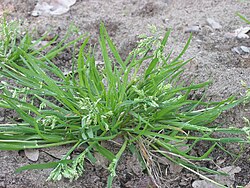
The Global Importance of True Grasses
True grasses (Poaceae) are among the most economically and ecologically significant plants on Earth. Their impact is most evident in agriculture, where they dominate arable land (land capable of being ploughed and used to grow crops).
Specifically, five types of true grasses cover approximately 46% of the world's arable land. These essential crops include:
- Rice
- Wheat
- Maize
- Barley
- Sugar cane
Cultural and Practical Applications
Etymology and Language
The word "grass" is believed to have originated from the Proto-Indo-European root *gʰreh₁-, which means "to grow." This root reflects the plant's fundamental nature of rapid growth and resilience.
Recreation and Maintenance
Grass is frequently associated with green spaces such as parks, fields, and lawns. These areas are often utilized for recreation and specific sports, including bowls and lawn tennis. To manage the high costs of upkeep, some sports venues began installing artificial grass starting in the 1970s.
Modern Digital Slang
In the early 2020s, the phrase "touching grass" emerged as a slang term. It is typically used as a critique of individuals who spend excessive time on the internet, suggesting that their lack of real-world exposure has resulted in poor social acumen.
Key Facts
- True grasses belong to the Poaceae family.
- Sedges (Cyperaceae) and rushes (Juncaceae) are the other two major grass-like families.
- Five true grass species account for 46% of all arable land globally.
- Artificial turf became a common alternative for sports venues in the 1970s.
- The term "touching grass" is a modern expression referring to disconnecting from the internet.
Summary of Major True Grass Crops
| Crop Name | Family | Global Significance |
|---|---|---|
| Rice | Poaceae | Major food staple |
| Wheat | Poaceae | Major food staple |
| Maize | Poaceae | Major food staple |
| Barley | Poaceae | Major food staple |
| Sugar cane | Poaceae | Major industrial crop |
Frequently Asked Questions
What are the three main families of grass-like plants?
The three major families are the true grasses (Poaceae), sedges (Cyperaceae), and rushes (Juncaceae).
Which crops are considered true grasses?
Rice, wheat, maize, barley, and sugar cane are all true grasses.
How much of the world's arable land is covered by these five grasses?
These five types of true grasses cover 46% of the world's arable land.
Why do some sports venues use artificial grass?
Artificial grass began being installed in the 1970s primarily to reduce the costs associated with maintenance.
What does the slang term "touching grass" mean?
It is a remark directed at people who use the internet excessively and are perceived to lack social skills, suggesting they need to spend more time in the physical world.
What is the linguistic origin of the word "grass"?
The word likely comes from the Proto-Indo-European root *gʰreh₁-, which means "to grow."