Padoa-Schioppa and the Intellectual Foundation of the Euro
Often described as the "founding father" and the "intellectual impetus" behind the Euro, Padoa-Schioppa played a pivotal role in shaping the modern economic landscape of Europe. His contributions provided the theoretical framework necessary to transition a collection of sovereign nations into a unified monetary zone.
The Theory of the Inconsistent Quartet
In 1982, Padoa-Schioppa authored an influential economics paper that identified a fundamental conflict in international finance. He argued that it is mathematically and practically impossible for a group of countries, such as those in the European Union, to simultaneously achieve four specific economic goals:
- Free trade: The unrestricted movement of goods and services.
- Capital mobility: The ability for investors to move money across borders without restriction.
- Independent domestic monetary policies: The ability of a nation to set its own interest rates and money supply.
- Fixed exchange rates: Maintaining a stable value of one currency against another.
Padoa-Schioppa termed these conflicting objectives "the inconsistent quartet," a concept closely related to the economic principle known as the Impossible Trinity. He posited that pursuing all four would lead to systemic instability.
The Path to a Single Currency
During the 1980s, the European Union worked to eliminate trade restrictions and liberalize capital movements through the Single Market programme. As these barriers fell, the "inconsistent quartet" became a pressing reality: to maintain consistency, one of the remaining two objectives—fixed exchange rates or independent monetary policies—had to be sacrificed.
Padoa-Schioppa proposed a bold solution: the abandonment of independent domestic monetary policies. By establishing a single currency and a centralized European central bank, the EU could successfully maintain free trade, capital mobility, and stable exchange rates.
This vision was formally endorsed in the Delors Report of April 1989, which recommended the creation of a European Monetary Union (EMU) and the adoption of a single currency.
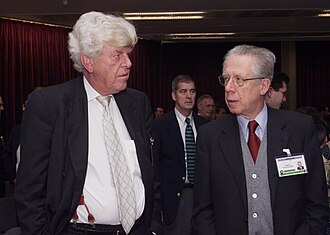
Implementing the European Central Bank
Beyond the theoretical groundwork, Padoa-Schioppa was deeply involved in the practical architecture of the new system. He worked extensively on the design and establishment of the European Central Bank (ECB), the institution responsible for managing the Euro.
His leadership culminated in his appointment as one of the first members of the ECB's Executive Board, a position he held from June 1998 until May 2005.
Key Facts
- Core Concept: Developed the "inconsistent quartet" theory in 1982.
- Proposed Solution: Suggested replacing independent monetary policies with a single currency.
- Policy Influence: His views were adopted in the 1989 Delors Report.
- Institutional Role: Served as an Executive Board member of the European Central Bank from 1998 to 2005.
| Objective | Status in the Eurozone Model | Outcome |
|---|---|---|
| Free Trade | Maintained | Achieved via Single Market |
| Capital Mobility | Maintained | Achieved via Liberalization |
| Fixed Exchange Rates | Maintained | Achieved via Single Currency |
| Independent Monetary Policy | Abandoned | Centralized at the ECB |
Frequently Asked Questions
What is the "inconsistent quartet"?
The inconsistent quartet is a theory proposed by Padoa-Schioppa stating that a group of countries cannot simultaneously have free trade, capital mobility, independent monetary policies, and fixed exchange rates.
How did Padoa-Schioppa solve the inconsistent quartet?
He proposed that European countries abandon their independent domestic monetary policies in favor of a single currency and a single central bank, allowing the other three goals to be met.
What was the significance of the Delors Report?
The Delors Report of April 1989 endorsed Padoa-Schioppa's view and officially recommended the creation of a European Monetary Union (EMU) with a single currency.
What role did Padoa-Schioppa play at the European Central Bank?
After helping design the institution, he served as one of the first members of the ECB's Executive Board from June 1998 to May 2005.
How does the inconsistent quartet relate to the Impossible Trinity?
Both concepts describe the inherent trade-offs in international economics, specifically how certain policy goals (like exchange rate stability and monetary independence) cannot coexist with free capital movement.