Central Banking: The Architecture of Global Monetary Policy
A central bank—also known as a reserve bank, national bank, state bank, or monetary authority—is the primary financial institution responsible for managing the monetary policy of a country or a monetary union. Unlike commercial banks, which serve individual and business customers, a central bank holds a legal monopoly on increasing the monetary base (the total amount of a currency that is either in general circulation in the hands of the public or in the commercial bank reserves).
Beyond managing money supply, these institutions act as the bedrock of financial stability. They often possess regulatory powers to oversee commercial banks, prevent bank runs, and combat financial crimes such as money laundering and terrorism financing. Furthermore, central banks provide critical macroeconomic forecasting to guide policy decisions during periods of economic volatility.

Key Facts
- Monopoly Power: Only central banks can increase the monetary base of their jurisdiction.
- Lender of Last Resort: They provide liquidity to commercial banks to prevent systemic financial collapse.
- Independence: Most developed nations design central banks to be institutionally independent from political interference to curb inflation.
- Diverse Naming: Depending on the region, they may be called National Banks, State Banks, Reserve Banks, or Monetary Authorities.
- Digital Evolution: Many central banks are currently exploring Central Bank Digital Currencies (CBDCs).
The Evolution and Naming of Central Banks
The terminology used to describe these institutions often reflects their historical origins or the political ideology of the state that created them.
Common Naming Conventions
- National Banks: Common in Europe and Asia, such as the National Bank of Belgium (1850) and the National Bank of Ukraine (1991).
- State Banks: Often associated with former Communist states or specific national structures, including the State Bank of Pakistan (1948) and the People's Bank of China.
- Reserve Banks: A term popularized by the U.S. Federal Reserve (1913) and adopted by former British colonies, such as the Reserve Bank of India (1935) and the Reserve Bank of Australia (1960).
- Central Banks: A direct descriptor used by the European Central Bank (1998) and the Central Bank of Brazil (1964).
- Monetary Authorities: Used by entities like the Monetary Authority of Singapore (1971) and the Hong Kong Monetary Authority (1993).

Historical Development
The trajectory of central banking has moved from early municipal experiments to sophisticated national and supranational systems. Early examples include the Bank of England, which evolved into a cornerstone of modern banking.

Throughout the 19th and 20th centuries, the model expanded globally. Brazil established a precursor to its current central bank in 1945, and many African and Asian nations created their own authorities upon gaining independence. For instance, the Reserve Bank of India was nationalized in 1949. By the 21st century, most nations had established public sector central banks, though the level of their autonomy varies significantly.

Core Operations and Mandates
Central banks operate under specific mandates, typically focusing on price stability (controlling inflation), promoting high employment, and fostering sustainable economic growth.
Primary Functions
- Monetary Policy: Controlling the money supply and setting official interest rates to manage economic activity.
- Financial Stability: Serving as the government's banker and the "lender of last resort" for commercial banks.
- Reserve Management: Overseeing the nation's gold, foreign-exchange reserves, and government bonds.
- Banking Supervision: Regulating the banking industry and currency exchange to ensure systemic health.
- Payments Systems: Managing inter-banking clearing systems and the issuance of coins and banknotes.
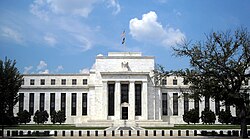
The Shift Toward Digital Currency
Since 2017, the prospect of Central Bank Digital Currencies (CBDC) has gained momentum. As of late 2018, at least 15 central banks were considering CBDCs. The People's Bank of China has been particularly active in this area since 2014, developing its own digital currency and electronic payment systems.

Governance and the Importance of Independence
A recurring theme in economic discourse is the balance between political oversight and institutional independence. While governments often hold governance rights and legislative bodies provide scrutiny, many developed nations strive for central bank independence.
Research, such as that by Alesina and Summers (1993), suggests a strong correlation between high levels of independence and lower inflation rates. The prevailing theory is that politicians may be tempted to increase the money supply to achieve short-term gains, which can lead to long-term inflation. The U.S. Federal Reserve is often cited as a prime example of a highly independent system.


![Central bank independence versus inflation. This often cited[84] research published by Alesina and Summers (1993)[85] is used to show why it is important for a nation's central bank (i.e.-monetary authority) to have a high level of independence. This chart shows a clear trend towards a lower inflation rate as the independence of the central bank increases. The generally agreed upon reason independence leads to lower inflation is that politicians have a tendency to create too much money if given the opportunity to do it.[85] The Federal Reserve System in the United States is generally regarded as one of the more independent central banks.](/images/be/11/be11e8263fd2ac63e124d51e442a9b35926cf5a1e4375c7d98d2deea285b7b91.gif)
However, this independence is not absolute and can be a point of contention. For example, the 2023 dismissal of Octavian Armașu, the governor of the National Bank of Moldova, raised international concerns regarding the erosion of central bank autonomy.
![Octavian Armașu, NBM governor, whose dismissal in 2023 raised concerns about central bank independence in Moldova[98][99][100]](/images/25/da/25dae42e7bee123c62933ab206f949fc2c3053073062df57c3b213b0512a1aff.jpg)
Global Central Bank Assets
The scale of these institutions is reflected in their total assets, which represent their capacity to influence global markets.
| Rank | Bank Name | Headquarters | Total Assets (US$ Billion) |
|---|---|---|---|
| 1 | Federal Reserve System | USA | 8,349.17 |
| 2 | Bank of Japan | Tokyo | 6,621.18 |
| 3 | European Central Bank | Frankfurt am Main | 6,590.00 |
| 4 | People's Bank of China | Beijing | 3,450.00 |
| 5 | Deutsche Bundesbank | Frankfurt am Main | 3,159.87 |
Frequently Asked Questions
What is the difference between a central bank and a commercial bank?
A central bank manages a nation's monetary policy and has a monopoly on increasing the monetary base, whereas commercial banks provide financial services to the public and businesses and operate for profit.
Why is central bank independence important?
Independence helps prevent political pressure from influencing monetary policy. This is generally believed to lead to lower inflation, as it prevents politicians from creating too much money for short-term political goals.
What does "lender of last resort" mean?
It means the central bank provides emergency liquidity to commercial banks that are facing a financial crisis or bank run, preventing the failure of one bank from triggering a systemic collapse of the entire financial system.
What is a Central Bank Digital Currency (CBDC)?
A CBDC is a digital form of a country's sovereign currency, issued and regulated by the central bank, as opposed to private cryptocurrencies or digital money held in commercial bank accounts.
What are the primary goals of a central bank?
While mandates vary, the primary goals typically include maintaining price stability (controlling inflation), supporting high employment, and ensuring the overall stability of the financial system.