Osteology: The Science of Bone Study and Its Applications
Derived from the Greek words ostéon (bones) and logos (study), osteology is the scientific study of bones. Practiced by osteologists, this field serves as a critical subdiscipline for anatomy, anthropology, archaeology, and paleontology. It involves the detailed examination of bone structure, skeletal elements, teeth, and microbone morphology, as well as the study of bone function, disease, and pathology.
Beyond simple identification, osteology explores the biophysics of bones—specifically their resistance and hardness—and the process of ossification, which is the transformation of cartilaginous molds into hard bone. While osteologists study both human and non-human remains, the specific study of non-human osteology is referred to as zooarchaeology.
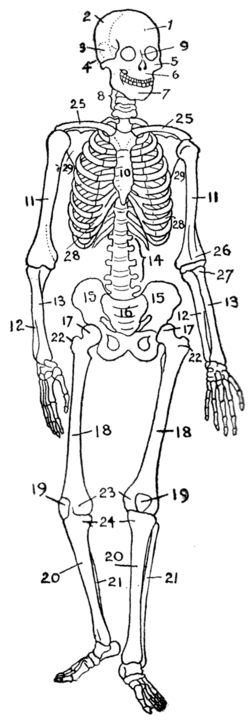
It is important to distinguish osteology from osteopathy. While osteology is a rigorous scientific study of skeletal remains, osteopathy is a separate practice and should not be confused with the academic and forensic work of an osteologist.
Key Facts
- Multidisciplinary: Integrates with forensic science, zoology, and vertebrate paleontology.
- Evolutionary Reliability: Osteological characters often align more closely with molecular phylogenies than soft tissue characters.
- Forensic Utility: Used to determine age, sex, ancestry, and cause of death in human remains.
- Professional Scope: Osteologists work as consultants for museums, research laboratories, and medical investigation firms.
Methods of Skeletal Analysis
A standard osteological analysis is a systematic process used to extract maximum data from skeletal remains. This typically includes:
- Inventory: A complete catalog of present skeletal elements and a detailed dental inventory.
- Aging Data: For subadults, age is estimated via dental eruption and epiphyseal fusion (the closing of growth plates). For adults, experts examine the deterioration of the sternal end of the ribs or the pubic symphysis.
- Metrics: Calculation of stature and other precise metric data.
- Biological Profiling: Determination of ancestry and the identification of non-metric traits.
- Pathological Review: Analysis of diseases, pathologies, or cultural modifications to the bone.
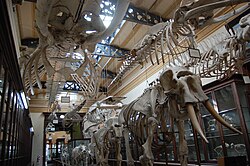
Applications of Osteology
Because bone is more durable than soft tissue, it provides a more reliable record for reconstructing evolutionary history and historical events. Osteology is applied across a vast array of research topics, including:
- Forensics and Law: Criminal investigations, identification of unknown remains, and the documentation of war crimes.
- Human History: Studies on ancient warfare, human migration, demography, and social inequality.
- Biological Science: Developmental biology, genetics of early populations, and the study of fossil assemblages.
- Health and Lifestyle: Analysis of diet, disease, and general physique.
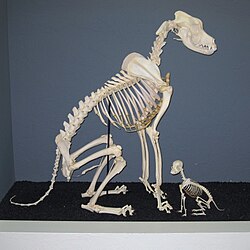
Human Osteology and Forensic Anthropology
In forensic anthropology, the examination of human bones is used to establish a biocultural context for remains. Skeletal anatomy varies based on four primary factors: ontogeny (growth), sexual dimorphism (differences between males and females), geographic variation, and idiosyncratic (individual) variation.
Osteology can also be used to determine ancestry. While historical classifications grouped humans into three categories—caucasoids, mongoloids, and negroids—these labels are now considered outdated. Due to the increase in interancestral marriages, these markers have become less defined, making the determination of ancestry a complex and sometimes controversial process, though it remains useful for labeling unidentified remains.
Case Study: The Crossrail Project
The practical power of osteology was demonstrated during London's Crossrail Project. In 2013, the expansion of the railway system uncovered 25 human skeletons at Charterhouse Square. These remains, and others found subsequently, are believed to be victims of the 14th-century Black Death.
By applying osteological analysis, scientists discovered that the population was already in poor health before the plague struck. The bones revealed widespread evidence of rickets, anemia, and malnutrition. Additionally, frequent fractures indicated a life of hard labor and physical conflict, providing a revolutionary look at the socio-economic conditions of the era.
| Analysis Category | Key Indicators | Primary Application |
|---|---|---|
| Age Estimation | Dental eruption, epiphyseal fusion, pubic symphysis | Forensic identification, Demography |
| Biological Profile | Sexual dimorphism, metric data, ancestry markers | Identification of unknown remains |
| Health & Pathology | Bone lesions, malnutrition markers (e.g., rickets) | Disease research, Ancient lifestyle studies |
| Evolutionary History | Comparative skeletal morphology | Paleontology, Molecular phylogeny |
Frequently Asked Questions
What is the difference between osteology and osteopathy?
Osteology is the scientific study of bones used in research, forensics, and archaeology. Osteopathy is a separate, pseudoscientific practice and is not related to the scientific study of skeletal anatomy.
How do osteologists determine the age of a skeleton?
For younger individuals, they look at dental eruption and the fusion of epiphyses (growth plates). For adults, they analyze the wear and deterioration of specific areas, such as the pubic symphysis or the sternal ends of the ribs.
What is zooarchaeology?
Zooarchaeology is the branch of osteology that focuses specifically on the study of non-human skeletal remains within an archaeological context.
Why are bones more reliable than soft tissue for evolutionary study?
Osteological characters have shown greater consistency with molecular phylogenies than soft tissue characters, making them more dependable for reconstructing the evolutionary history of species.
What can bone analysis reveal about a person's life?
Beyond age and sex, bones can reveal evidence of diet, malnutrition (such as rickets or anemia), chronic diseases, social status, and physical trauma resulting from labor or warfare.