Orpheus and Eurydice in Art, Literature, and Modern Culture
The tragic tale of Orpheus and Eurydice—a story of love, loss, and the devastating consequence of a single backward glance—has resonated through human history for millennia. From the grand canvases of the Renaissance to the digital landscapes of modern gaming, this myth serves as a timeless exploration of grief and the human desire to conquer death.
While the core narrative remains consistent, artists and writers have continuously reimagined the story to reflect the values of their own eras, transforming a classical Greek myth into a versatile vehicle for exploring ethics, aesthetics, and feminist theory.
Key Facts
- Musical Legacy: The myth inspired some of the earliest and most influential operas in history, including works by Monteverdi and Peri.
- Feminist Perspectives: Modern poets like H.D. and Carol Ann Duffy have rewritten the story from Eurydice's point of view.
- Scientific Influence: The name Eurydice is immortalized in geography (Antarctica), astronomy (Asteroid 75 Eurydike), and biology (lizards and snakes).
- Modern Adaptations: The story continues to evolve in popular media, from the Tony-winning musical Hadestown to the video game Hades.
Visual Arts and Classical Depictions
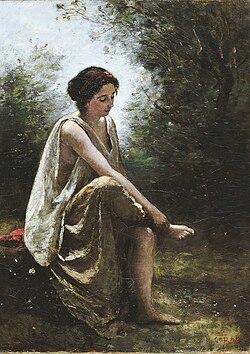
Throughout history, master painters have captured the emotional intensity of the myth. Renowned artists such as Titian, Peter Paul Rubens, and Nicolas Poussin have all lent their vision to the story. Later, Jean-Baptiste-Camille Corot provided a poignant interpretation in his work Wounded Eurydice (1868/70).
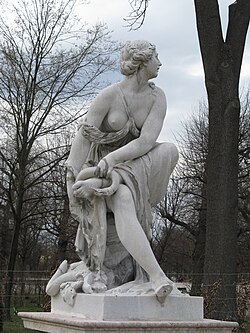
In more contemporary settings, Bracha Ettinger has explored the narrative through a series of exhibitions. Her work has been showcased at prestigious institutions including the Pompidou Centre in Paris (1996), the Stedelijk Museum in Amsterdam (1997), and The Royal Museum of Fine Arts in Antwerp (2007).
Literature and Film
The written word has allowed authors to dissect the psychology of the characters. Early adaptations include the Middle English Romance poem Sir Orfeo (late 13th or early 14th century) and a Middle Scots poem by Robert Henryson. In the 20th century, Rainer Maria Rilke retold the journey from the underworld in his 1904 poem "Orpheus. Eurydice. Hermes."
Feminist and Modern Retellings
A significant shift occurred as writers began to question the traditional narrative. In 1917, the modernist poet H.D. wrote "Eurydice," a feminist retelling from the female protagonist's perspective. This trend continued with Carol Ann Duffy's 1999 poem "Eurydice," featured in her collection The World's Wife.
Cinematic Interpretations
Film has offered diverse takes on the myth, from Jean Cocteau's Orphée (1950) to Marcel Camus' Orfeu Negro (1959), which moved the setting to Brazil. More recently, Céline Sciamma's Portrait of a Lady on Fire (2019) uses the myth as an allegory, proposing an alternative reason for Orpheus' decision to look back.
The 2024 series Kaos presents a modern adaptation where Eurydice ("Riddy") no longer loves Orpheus. In this version, Orpheus' theft of the coin intended for her passage prevents her from journeying through the Underworld, eventually leading her back to the living world to aid in the downfall of Zeus.
Operas and Stage Productions
The inherent musicality of Orpheus makes the myth a natural fit for the stage. The story is credited with helping birth the opera genre; Jacopo Peri's Euridice (1600) is the first genuine opera with surviving music, while Claudio Monteverdi's L'Orfeo (1607) is widely considered the first operatic masterwork.
Other notable musical contributions include:
- Classical Operas: Works by Christoph Willibald Gluck, Marc-Antoine Charpentier, and Yevstigney Fomin.
- Modern Theatre: Sarah Ruhl's 2003 play Eurydice, which was later adapted into an opera by Matthew Aucoin in 2020.
- Contemporary Musicals: Hadestown, originally a 2010 folk opera album by Anaïs Mitchell, became a Broadway sensation in 2019, winning eight Tony awards.
Science, Geography, and Gaming
Beyond the arts, the name Eurydice appears in the natural and physical sciences. It is used to name the Eurydice Peninsula in Antarctica, the asteroid 75 Eurydike, and two animal species: the Australian lizard Ctenotus eurydice and the Papua New Guinean snake Gerrhopilus eurydice.
In the realm of interactive media, the 2020 rogue-like game Hades by Supergiant Games integrates the myth into its gameplay. Eurydice appears as an oak nymph in Asphodel, and players can choose to reunite her with Orpheus during their playthrough.
| Medium | Notable Work | Key Characteristic |
|---|---|---|
| Opera | L'Orfeo (Monteverdi) | First operatic masterwork |
| Literature | "Eurydice" (H.D.) | Feminist perspective |
| Film | Orfeu Negro (Camus) | Brazilian adaptation |
| Musical | Hadestown (Mitchell) | Post-apocalyptic folk opera |
| Gaming | Hades (Supergiant Games) | Interactive reunion plot |
Frequently Asked Questions
Which is the oldest surviving opera based on this myth?
The oldest genuine opera whose music still survives is Euridice, composed by Jacopo Peri in 1600.
How does the story change in feminist retellings?
Feminist retellings, such as those by H.D. and Carol Ann Duffy, shift the focus from Orpheus' grief to Eurydice's perspective, often questioning the traditional dynamics of the relationship and the act of being "rescued."
What happens to Eurydice in the Saint Seiya adaptation?
In the Hades Chapter of Saint Seiya, Eurydice is turned into a half-stone figure after Orpheus looks back. It is later revealed that this was a scheme by Pandora to keep Orpheus in the Underworld and bend him to Hades' will.
In what scientific fields is the name Eurydice used?
The name is used in geography (Eurydice Peninsula), astronomy (Asteroid 75 Eurydike), and zoology (the Ctenotus eurydice lizard and Gerrhopilus eurydice snake).
What is the premise of the musical Hadestown?
Hadestown retells the myth as a folk opera set in a post-apocalyptic, Depression-era America, focusing on the relationship between Orpheus and Eurydice.