Orléans: The Historic Heart of the Loire Valley
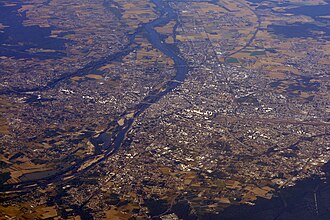
Nestled where the river Loire curves south toward the Massif Central, Orléans serves as the prefecture of the Loiret department in the Centre-Val de Loire region. Situated within a World Heritage Site, the city has evolved from an ancient commercial hub into a vibrant modern center. As of 2023, the municipal population stands at 116,357, while the broader metropolitan area hosts 454,208 residents, making it the 20th largest metropolitan area in France.
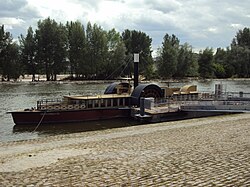
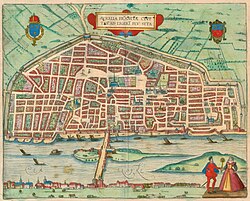
The city's identity is inextricably linked to the river that gives the region its name. Historically, Orléans flourished as a vital trade port and the headquarters for merchants navigating the Loire. Its strategic importance is mirrored in its political history, having served as the capital of the Kingdom of France during the Merovingian period.
Key Facts
- Location: Heart of the Loire Valley, Centre-Val de Loire region, France.
- Historical Significance: Former Merovingian capital and site of the pivotal siege during the Hundred Years' War.
- Cultural Icon: Deeply associated with Joan of Arc, honored annually during the Johannic Holidays.
- Education: Home to the University of Orléans, which traces its roots back to 1306.
- Climate: Oceanic climate (Cfb) with moderate temperatures and evenly distributed rainfall.
Geography and Climate
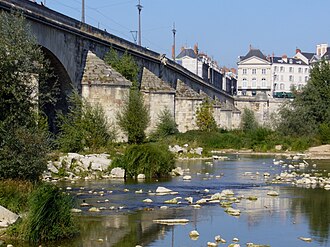
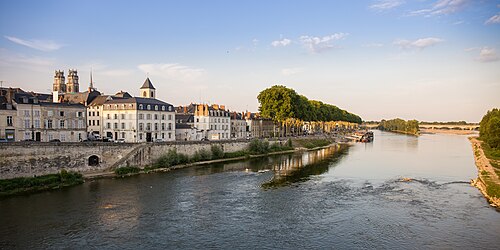
The topography of Orléans is defined by its relationship with the water. The north bank (rive droite) features a gentle rise, reaching 125 meters at la Croix Fleury. In contrast, the south bank (rive gauche) sits in a depression around 95 meters above sea level, creating a zone inondable (flood-risk zone) between the Loire and the Loiret rivers.
The city experiences an oceanic climate. Summers are warm, with July and August averaging 19.7°C (67.5°F), while winters are cool, with January averaging 4.4°C (39.9°F). Precipitation is consistent throughout the year, totaling approximately 635.5 millimeters annually, and the city enjoys about 1,822.6 hours of sunshine per year.
A Journey Through History
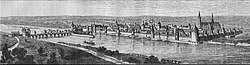
Antiquity and the Roman Era
Orléans' early history is marked by the presence of the Alans, an Iranian tribe. In 442, the Roman commander Flavius Aetius requested Goar, the head of the Alans, to help control rebellious natives and Visigoths. The Alans established their capital in Orléans, and their influence persists today in local place names such as Allaines.
The Middle Ages and Joan of Arc
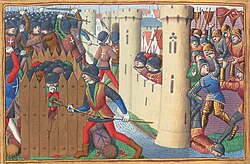
The city played a critical role in the Hundred Years' War, most notably during the siege of Orléans. The intervention of Joan of Arc, the "Maid of Orléans," became a turning point in French history. To this day, the city celebrates the Johannic Holidays every first week of May, a tradition recognized as part of France's intangible cultural heritage.

Renaissance to the Modern Era
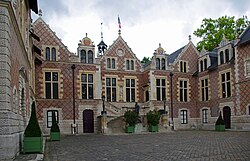
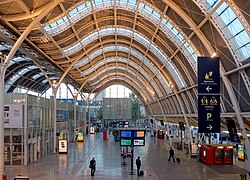
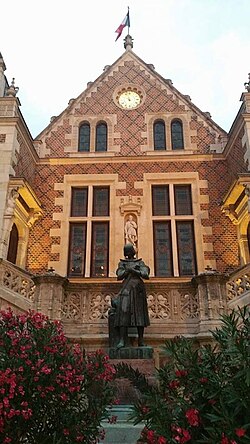
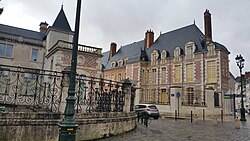
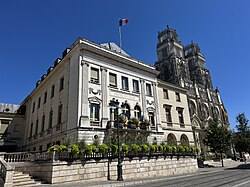
During the 16th century, Orléans remained a center of royal interest. The Hôtel Groslot, built between 1550 and 1555, served as a residence for several French kings and was the site of King François II's death in 1560. In the 19th century, the city's connectivity improved with the creation of the Paris-Orléans railway company in 1852.
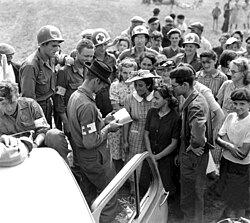
The 20th century brought significant challenges and renewal. During World War II, the city was a logistical hub for the German army and suffered heavy bombing by the American Air Force. Post-war reconstruction began in 1945, blending the restoration of historic arcades with innovative prefabrication techniques.
Cultural Landmarks and Architecture
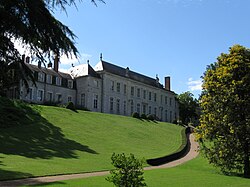
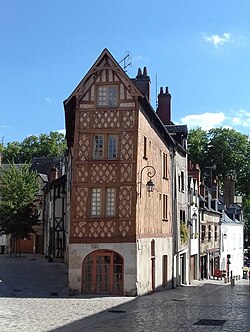
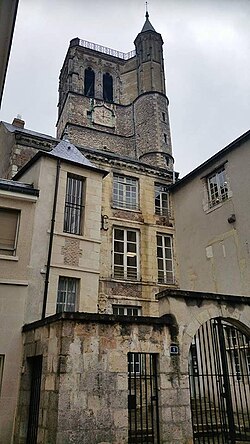
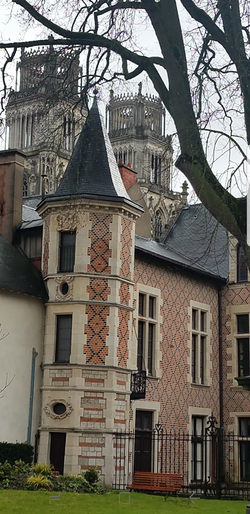
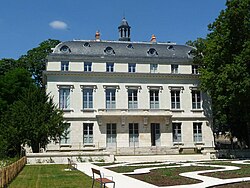
Orléans is a living museum of French architecture. Visitors can explore the 4th-century Gallo-Roman town-wall or admire the Renaissance elegance of the Hôtel Groslot. The city also features the hôtel de la Motte-Sanguin, an 18th-century princely residence associated with Louis-Philippe, Duke of Orléans.
The city's artistic and intellectual life is supported by numerous institutions, including the Musée des Beaux-Arts d'Orléans and the Charles Péguy Centre. For nature lovers, the Parc Floral de la Source and the Botanic garden offer serene escapes within the urban landscape.
City Overview Summary
| Category | Detail |
|---|---|
| Region | Centre-Val de Loire |
| Population (Municipal 2023) | 116,357 |
| Metro Population (2023) | 463,435 |
| Motto | Hoc Vernant Lilia Corde ("This heart makes lilies flourish") |
| Key Transport | TAO Tramway, A10/A71/A19 Highways |
Transport and Infrastructure

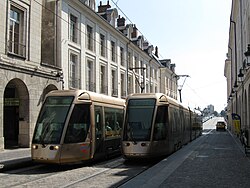
Modern Orléans is well-connected via the TAO network, which manages buses and two tram lines. The tram system, inaugurated in 2000, spans 29.3 km of rail and saw 18.46 million riders in 2022. The city is also a major road junction, served by the A10 (Paris to Bordeaux), A71 (Orléans to Bourges), and A19 (Sens to Artenay) highways.
Frequently Asked Questions



Who is the most famous historical figure associated with Orléans?
Joan of Arc is the most prominent figure, known for her role in lifting the siege of Orléans during the Hundred Years' War. She is honored annually during the Johannic Holidays in May.
What is the significance of the Hôtel Groslot?
Built in the mid-16th century, the Hôtel Groslot is a Renaissance masterpiece that hosted several French kings and served as the city's town hall from 1790 until 1981.
How is the climate in Orléans?
Orléans has an oceanic climate characterized by moderate temperatures, with warm summers (averaging 19.7°C in July) and cool winters (averaging 4.4°C in January), with rainfall spread evenly throughout the year.
What are the main transport options within the city?
The city is served by the TAO public transport network, which includes an extensive bus system and two tram lines that facilitate movement across the urban area.
Is Orléans a center for higher education?
Yes, the University of Orléans is one of the oldest in Europe, originally created in 1306 by Pope Clement V and re-founded in 1966, hosting over 20,000 students as of 2019.