Organisation internationale de la Francophonie
The Organisation internationale de la Francophonie (OIF) is a global organization dedicated to the promotion of the French language and the fostering of cooperation among its member states. Guided by the motto "Égalité, complémentarité, solidarité" (Equality, complementarity, solidarity), the OIF serves as a diplomatic and cultural bridge for nations and governments that share a linguistic bond.
Based in Paris, France, the organization represents a vast geographical area and a diverse population, working to ensure that the French language remains a vibrant tool for communication, creation, and international development.
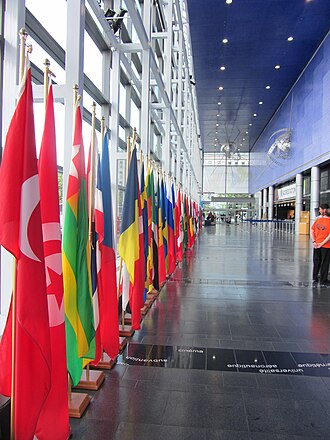
Key Facts
- Membership: 56 full members, including national, regional, and associated members.
- Global Reach: Covers a total area of 28,223,185 km² with an estimated population of 1 billion (2016).
- Economic Impact: Total nominal GDP estimated at $18.28 trillion (2023).
- Current Leadership: Led by Secretary-General Louise Mushikiwabo of Rwanda.
- Core Missions: Focuses on linguistic diversity, peace, democracy, human rights, education, and sustainable development.
History and Evolution
The organization's roots trace back to the Conference of Niamey on March 20, 1970, where it was established as the Agence de coopération culturelle et technique (ACCT). It evolved significantly over the decades, culminating in the Conference of Hanoi from November 14–16, 1997, where it was formally established as La Francophonie.
The role of the Secretary-General was created during the seventh leaders' summit in Hanoi in 1997. The first person to hold this title was Boutros Boutros-Ghali, the former Secretary-General of the United Nations. Since then, the organization has been led by prominent figures including Abdou Diouf of Senegal and Michaëlle Jean of Canada.
Organizational Structure and Governance
The OIF operates through a complex structure designed to facilitate diplomatic dialogue and cultural exchange. Central to its governance are the Summits, which bring together heads of state and government to set strategic directions.
The Executive Secretariat
The Secretary-General oversees the daily operations of the organization. The leadership has transitioned through several distinguished diplomats:
- Boutros Boutros-Ghali (1997–2002): Former UN Secretary-General.
- Abdou Diouf (2003–2014): Former President of Senegal.
- Michaëlle Jean (2015–2019): Former Governor General of Canada.
- Louise Mushikiwabo (2019–Present): Former Minister of Foreign Affairs and Cooperation of Rwanda.
Key Institutions and Agencies
Beyond the central secretariat, the OIF works with several specialized bodies, including the Parliamentary Assembly of la Francophonie (APF), the Association of Francophone Universities, and TV5Monde, the global French-language television network. It also supports the Senghor University of Alexandria and the International Association of French-speaking Mayors.
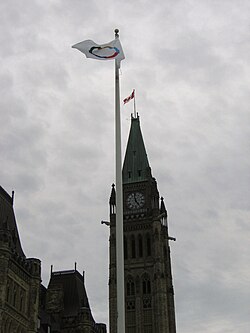
Core Missions and Strategic Goals
The role of the OIF is defined by the Charte de la Francophonie, the current version of which was adopted in Antananarivo on November 23, 2005. The organization focuses on four primary pillars:
- Language and Diversity: Promoting the French language and protecting cultural and linguistic diversity.
- Governance: Advancing peace, democracy, and human rights.
- Education: Supporting training, higher education, and scientific research.
- Sustainability: Fostering cooperation for sustainable development.
During the 2022 Summit in Djerba, Tunisia, the organization set a vision for 2030 to become a more inclusive, digital, and innovative space for solidarity. French President Emmanuel Macron emphasized three key areas for the future of the language: learning, communicating, and creating.
Membership Overview
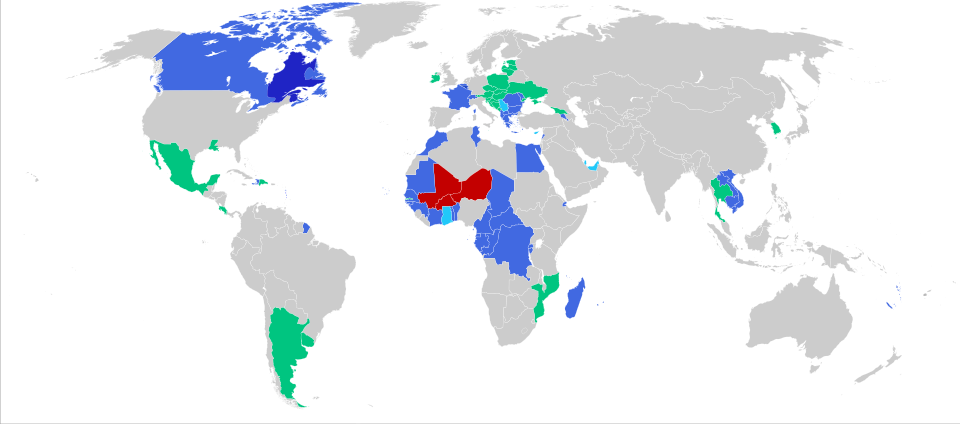
The OIF consists of a wide array of members, ranging from full national members to observers. While many are former French colonies, the organization has expanded to include non-Francophone states interested in the language's diplomatic and economic advantages.
| Category | Detail |
|---|---|
| Headquarters | Paris, France |
| Full Members | 56 |
| Total Area | 28,223,185 km² |
| Estimated Population | 1 Billion (2016) |
| Nominal GDP (2023) | $18.28 Trillion |
Challenges and Criticisms
Despite its goals, the OIF has faced criticism regarding the human rights records of some of its member governments. While the Déclaration de Bamako (2000) emphasizes democracy and human rights, critics argue that these standards are not always strictly enforced for membership. In 1999, a human rights observatory was proposed to address these concerns, though the organization continues to balance diplomatic inclusivity with its stated values.
Frequently Asked Questions
What is the main purpose of the OIF?
The main purpose of the Organisation internationale de la Francophonie is to promote the French language, cultural and linguistic diversity, and to foster cooperation in areas such as peace, democracy, human rights, and sustainable development.
Who is the current leader of the OIF?
The current Secretary-General is Louise Mushikiwabo, who has held the position since January 3, 2019.
How many members does the OIF have?
The organization has 56 full members, which include national, regional, and associated members, as well as observers.
Where is the OIF headquartered?
The headquarters of the Organisation internationale de la Francophonie are located in Paris, France.
What is the significance of the Charte de la Francophonie?
The Charte de la Francophonie defines the official role and missions of the organization; the current version was adopted on November 23, 2005, in Antananarivo.