French People: History, Identity, and the Global Diaspora
The French people (Les Français) are defined not only by their nationality within the borders of France but also as a global sociolinguistic group. Bound by a shared connection to the French language, culture, and a history rooted in Western Europe, the Francophone world represents one of the most geographically widespread linguistic communities in existence.
Key Facts
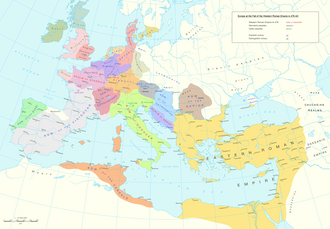
- Ancestry: Primarily descended from Gallo-Romans (Romanized Celts) and Germanic tribes including the Franks, Visigoths, Suebi, and Burgundians.
- Linguistic Diversity: While French is the primary tongue, regional languages like Breton, Occitan, and Basque persist.
- Global Presence: Significant populations of French descent exist in North America, South America, and Africa.
- Citizenship: French nationality has evolved from strict birth-and-paternity laws to modern reforms focusing on integration and language proficiency.
- Demographics: As of 2008, approximately 19% of the population in metropolitan France were immigrants or direct descendants of immigrants.
Ancestry and Ethnic Composition

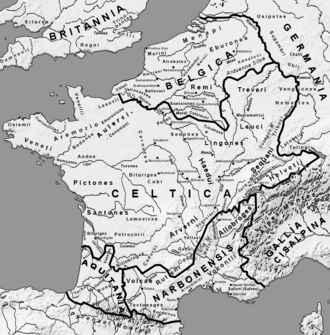
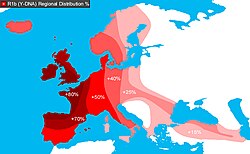
The genetic and cultural foundation of the French people is a complex blend of migrations. The primary ancestors were the Gallo-Romans—Celts who became Romanized—and various Germanic peoples who settled in Gaul after the fall of the Roman Empire. In the 10th century, Norsemen settled in Normandy, adding a significant Scandinavian element to the ancestry of the Normans.
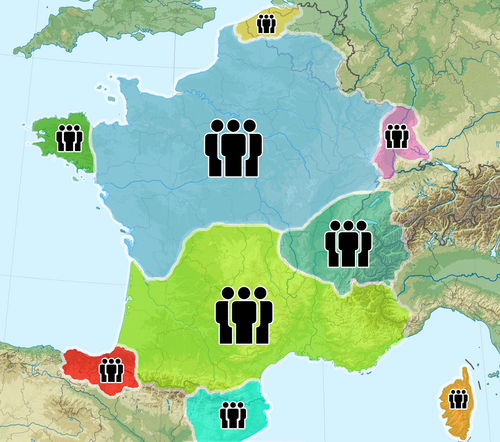
France has historically been a patchwork of regional identities. Distinct lineages and cultures remain evident among the Bretons in Brittany, Occitans in Occitania, Basques in the French Basque Country, Catalans in northern Catalonia, Germans in Alsace, Corsicans in Corsica, and Flemings in French Flanders.
Linguistic Evolution
Language has been central to the concept of the French nation. However, this was not always the case; in 1789, historian Eric Hobsbawm notes that 50% of the population did not speak French, and only 12-13% spoke it fluently. Today, while French is the mother tongue for most, regional languages such as Picard, Franco-Provencal, and Alsatian are still spoken. In the 21st century, Arabic has become arguably the largest minority language in the country.
The Evolution of French Citizenship

French identity has often balanced the tension between universalism (the ideal of equal citizenship regardless of origin) and the realities of colonialism. This is exemplified by the Crémieux decrees, which granted citizenship to North African Jews, while Muslims were governed by the 1881 Indigenous Code.
Legal Frameworks: Jus Soli and Jus Sanguinis
France has utilized different legal principles for nationality. Jus soli (right of the soil) and jus sanguinis (right of blood) were combined in the 1851 law of "double jus soli," which granted nationality to children of foreigners if both the child and parent were born in France.
The 1993 reform, influenced by the Pasqua laws of 1986, shifted this approach. Under these rules, children born in France to foreign parents must demonstrate a will to acquire nationality at age 16 by proving they were schooled in France and possess a sufficient command of the French language.
Political Rights and Gender
The right to vote for women was not granted until April 21, 1944, by the provisional government of General de Gaulle. To combat the continued under-representation of women in politics, the law on parity was introduced on June 6, 2000, establishing a de facto quota system.

Modern Demographics and Immigration
In the 20th century, France experienced massive population shifts. Between 1956 and 1967, roughly 235,000 North African Jews immigrated to France. Additionally, the decolonization era saw the arrival of 1.6 million pieds-noirs (European settlers) from Algeria, Tunisia, and Morocco, with 900,000 leaving Algeria alone in 1962.
According to 2008 INSEE statistics, 11.8 million people in metropolitan France (19% of the population) were either foreign-born immigrants (5.3 million) or direct descendants of immigrants (6.5 million). Of these, approximately 5.5 million are of European origin and 4 million are of North African origin.

The Global French Diaspora

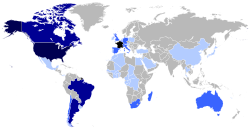
French influence and population spread globally through colonization and migration. In the Americas, the French presence is particularly strong in Canada and the United States, where 13 to 16 million people claim French descent.
North America
In Canada, the founding of Quebec City in 1608 established New France. In the United States, the French community is split between Creoles (descendants of early settlers) and Cajuns (descendants of Acadian refugees) in Louisiana, as well as a large Quebec diaspora in New England.

Latin America
France had a significant impact on South America during the 19th century. Uruguay was the second-largest receptor of French immigrants in the New World after the U.S. In Mexico, immigrants from the Barcelonnette region established textile businesses, leaving a legacy of "Maisons Mexicaines." In Chile, roughly 25,000 Frenchmen immigrated between 1840 and 1940, mostly from Southwestern France.
Other Global Movements
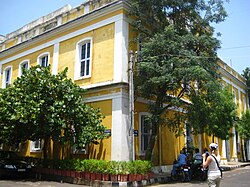
The Huguenots (French Protestants) fled persecution in large numbers, settling in the United Kingdom, Ireland, Germany, and the Netherlands. Additionally, French settlers established communities in South Africa, India (Pondicherry), and New Caledonia.
| Year | Number of Immigrants |
|---|---|
| 1913 | 1,532 |
| 1914 | 696 |
| 1915 | 410 |
| 1916 | 292 |
| 1917 | 273 |
| 1918 | 226 |
| 1919 | 690 |
| 1920 | 838 |
| 1921 | 633 |
| 1922 | 725 |
| 1923 | 609 |
| 1924 | 634 |
| Total | 7,558 |
Frequently Asked Questions

Who are the primary ancestors of the French people?
The French people are primarily descended from Gallo-Romans (Romanized Celts) and various Germanic tribes, such as the Franks, Visigoths, Suebi, and Burgundians, with additional contributions from Norsemen in the Normandy region.
What is the difference between jus soli and jus sanguinis in French law?
Jus soli refers to citizenship acquired by being born on the territory, while jus sanguinis refers to citizenship acquired through parentage. France has historically combined these, though modern laws require children of foreigners born in France to prove linguistic and educational integration to claim nationality.
Which regional languages are still spoken in France?
Several regional languages persist, including Breton, Occitan, Basque, Catalan, Corsican, Alsatian, and Flemish, among others.
Who were the pieds-noirs?
The pieds-noirs were European settlers living in French colonies in North Africa (Algeria, Tunisia, and Morocco) who migrated to mainland France, particularly during the massive relocation of 1962.
How many people of French descent live in the United States?
It is estimated that between 13 and 16 million people in the United States are of French descent, representing approximately 4 to 5 percent of the U.S. population.